This article contains affiliate links. As an Amazon Associate I earn from qualifying purchases.
Hand someone a DNA sequence and ask what kind of creature it will become. As of 2026, the honest answer is: we can get part of the way there.
“Reading” a genome happens in stages. Telling which organism the DNA belongs to. Predicting the shapes of its proteins. Predicting where and how strongly each gene is switched on. Predicting traits such as height. And finally, picturing the whole body. The first three have moved fast in the past few years. The last two are still far off. Here is where each stage stands.
Which organism it is: almost always answerable
The first stage is already routine. Compare a sequence against databases of known organisms and you can tell, almost without fail, which species it came from, or at least which group. Surveys now identify the fish living in a river from DNA floating in its water.
But this is only matching against answers we already have. Give the database a completely new sequence and matching tells you nothing. Real prediction starts at the next stage.
Protein shapes and gene activity: now within reach
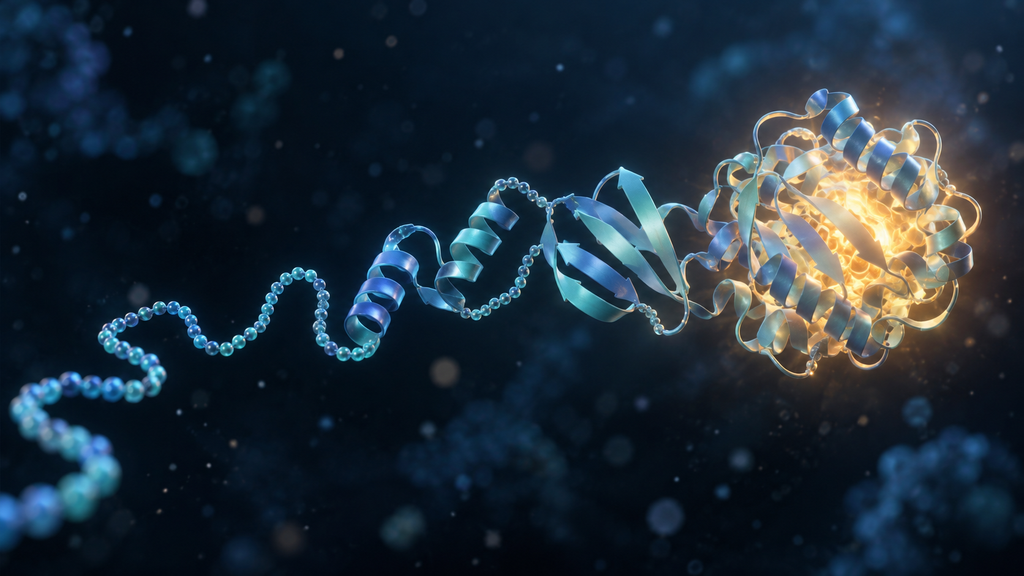
Predicting the 3D structure of a protein from its gene sequence took a huge step forward with AlphaFold. Two of its developers shared the 2024 Nobel Prize in Chemistry with David Baker, who pioneered computational protein design.
Yet the parts of the human genome that code for proteins make up only about 2% of it. Much of the remaining 98% is thought to control which genes switch on, when, in which cells and how strongly, but that control could not be read from the sequence alone.
Google DeepMind’s AlphaGenome takes on that 98%. It reads up to a million letters of sequence at once and predicts how strongly nearby genes are active in different tissues, and how a single-letter change would alter that activity. It was announced in 2025, and the paper appeared in Nature in January 2026.
Also published in Nature, in March 2026, was Evo 2, built by the Arc Institute and collaborators. It learned from roughly 9 trillion letters of genome sequence spanning bacteria, plants, humans and everything in between, picking up the patterns of DNA much as a chatbot picks up the patterns of language. It can flag disease-causing mutations and write out new sequences. Viruses designed with models from the same line have been shown to infect and multiply in bacteria. But those viruses carry just 11 genes, and the team itself says designing larger, more complex genomes is still ahead.
Height: where predictions suddenly fall short
Move one step beyond the shapes and activity of the parts, to predicting what traits a person will have, and accuracy drops sharply.
Traits controlled by a handful of genes are still predictable. Eye color is the classic case: whether eyes will be blue or brown can be called with fairly high confidence.
The hard cases are traits shaped by many genes, each with a small effect. A study of height published in Nature in 2022 analyzed the genetic data of about 5.4 million people and found 12,111 variants linked to height. Even adding all of them together explained only about 40% of the variation in height among people of European ancestry, and roughly 10 to 20% in other populations (Yengo et al., 2022). Most of the people studied were of European ancestry, so the results transfer poorly to other groups. The rest of the variation includes genetic effects not yet found, as well as nutrition and upbringing.
Simulating an entire cell
Alongside predicting traits one by one, another line of work tries to reproduce everything going on inside a cell on a computer.
In 2012, researchers simulated a whole cell of Mycoplasma genitalium, a tiny bacterium with only about 500 genes, down to the behavior of every molecule (Karr et al., 2012). The model predicted what would happen when a single gene was knocked out, and its predictions matched experiments fairly well. In August 2026, a company co-founded by Baker announced a “virtual cell” that uses AI to predict how the molecules inside a cell behave.
One result here gives pause. In 2016, the J. Craig Venter Institute stripped a bacterium’s genome down as far as it would go and produced a cell that lives and divides with just 473 genes (Hutchison et al., 2016). Every one of those genes was supposed to be essential, yet for 149 of them nobody could say clearly what they did. Even in the simplest living thing, having the complete list of genes is not the same as understanding what each one does.
Information the genome does not hold
So if computers keep getting more powerful and data keeps piling up, will we eventually draw a whole body from a sequence? Some of the reasons that is not so simple lie outside the genome altogether.
One is the egg. A fruit fly egg contains substances made by the mother, packed unevenly toward one end, and the difference in their concentration decides which end becomes the head. The body’s orientation starts to be set inside the egg the mother prepared, before the embryo has even begun using its own genes. None of this can be read from the genome sequence.
Another is the environment. In many turtles and crocodilians, the temperature during incubation decides whether a hatchling becomes male or female. These species have no sex chromosomes, so eggs from the same nest can become different sexes depending on how warm the sand around them is.
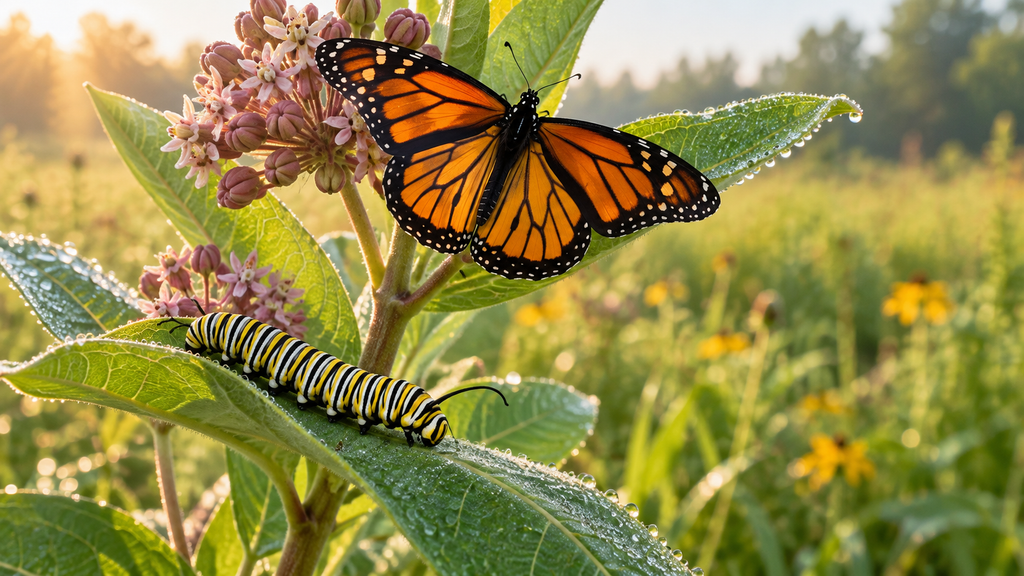
And within a single animal, the same genome can produce completely different forms. A caterpillar and the butterfly it becomes are the same individual, with not one letter of the genome changed. What changed is which genes were switched on, and when.
The difference between humans and chimpanzees is not settled by sequence alone either. The familiar claim that we share 99% of our DNA counts the letters that differ in the stretches that can be lined up side by side. When ape genomes were read end to end for the first time in 2025 (Yoo et al., 2025), more regions than expected turned out not to line up neatly with the human genome, and counting those, the difference exceeds 10% by some measures. The team suggested that chunks of DNA being duplicated and rearranged may be a bigger source of differences between species than previously thought. Where exactly the differences lie is itself still an open question.
Where things stand in 2026
In summary, as of 2026:
- Identifying which organism a DNA sample comes from: almost always possible for known organisms
- Predicting protein shapes: possible with high accuracy in many cases
- Predicting where and how strongly genes are active: greatly advanced by AlphaGenome and Evo 2
- Predicting traits such as height: works for traits shaped by few genes, but explains less than half the variation for traits shaped by many
- Picturing the whole body: not yet possible
The last stage is out of reach not only because computers are not powerful enough. What the mother packed into the egg, the temperature of the place an embryo grows, the timing of when genes switch on: part of the information that shapes a living thing is simply not written in the genome. However good sequence reading becomes, that part has to come from somewhere else.
At the same time, most of the results described here appeared within the past two years or so. We will keep following new research on how far each stage goes.
A note on disclosure: this article was written with the help of Claude, an AI made by Anthropic. Anthropic is not the developer of the AI models discussed here, but it is a company in the same AI industry.
Related products
You can find books and products related to this article on Amazon.
If you buy through the links above, this blog may earn a commission.


コメント