This article contains affiliate links. As an Amazon Associate I earn from qualifying purchases.
| Name | Seymouria (Seymouria; named after the town of Seymour, Texas, where the first fossils came from. The main species are S. baylorensis and S. sanjuanensis) |
| Classification | Tetrapoda, Seymouriamorpha (most analyses place it close to the amniotes, but this is still debated) |
| Period | Early Permian |
| Found in | United States (Texas, Utah, New Mexico, Oklahoma); Thuringia, Germany (Bromacker) |
| Length | About 60 cm for large individuals |
| Skull length | About 9 cm in adults (German specimens) |
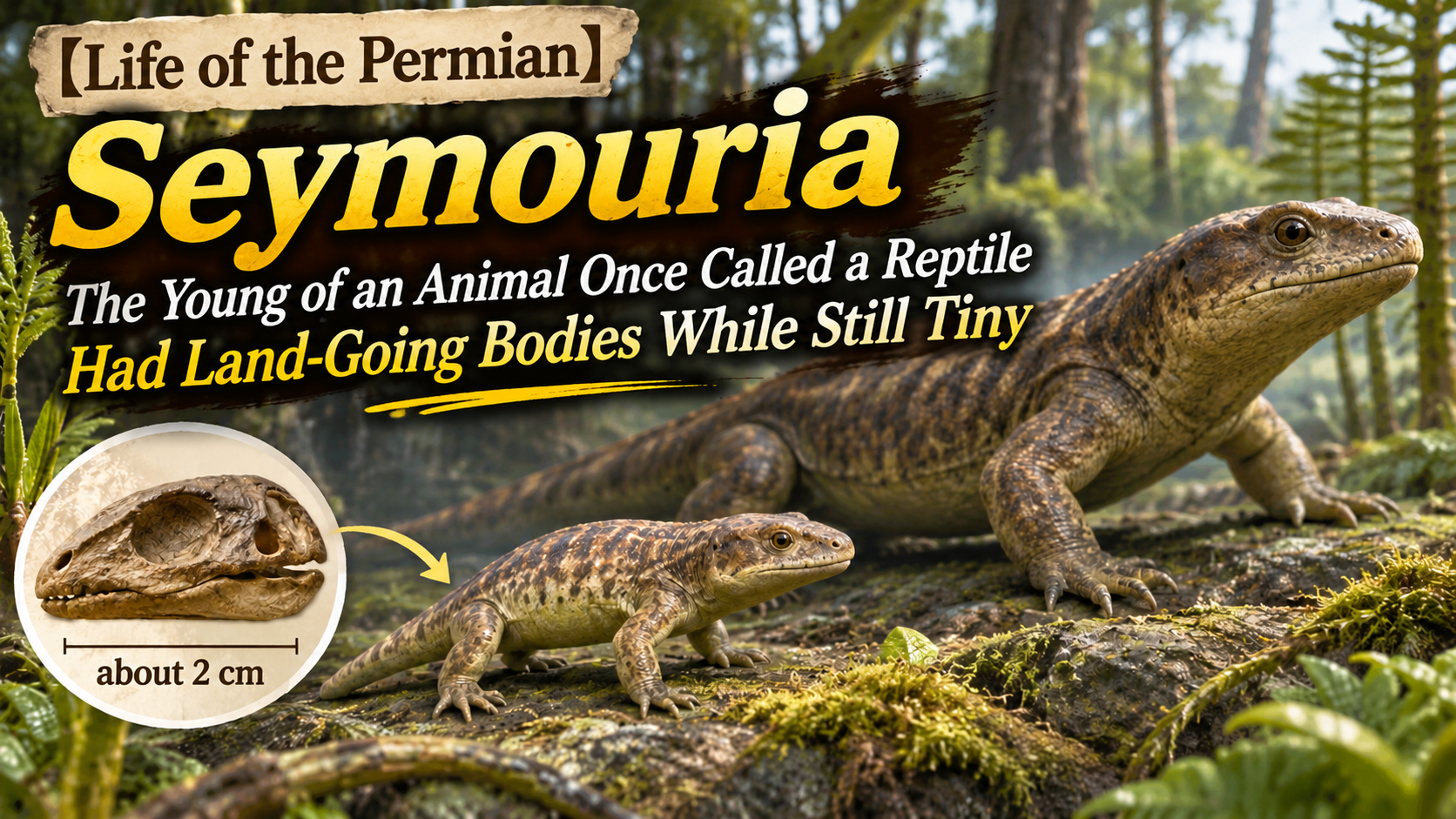
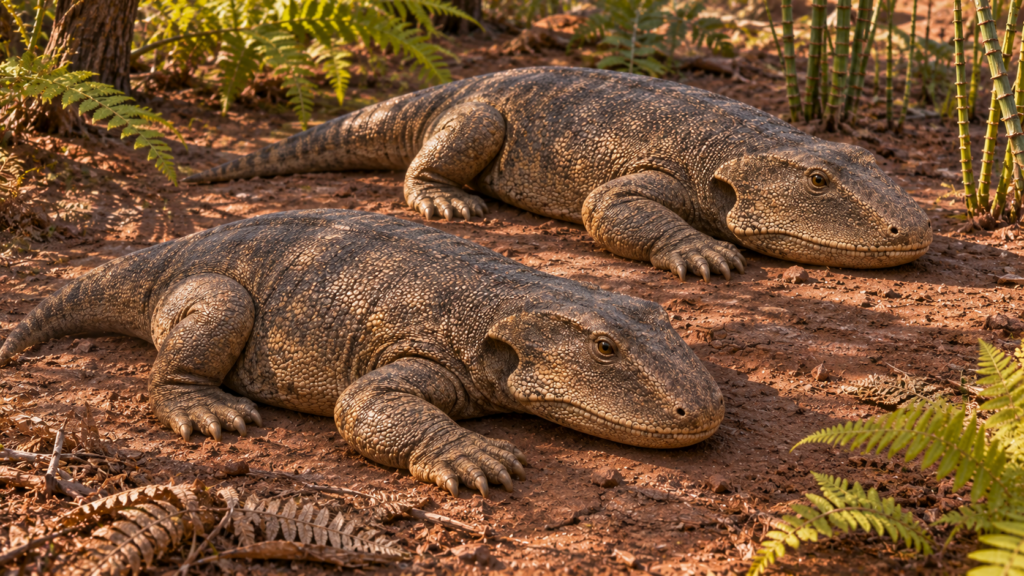
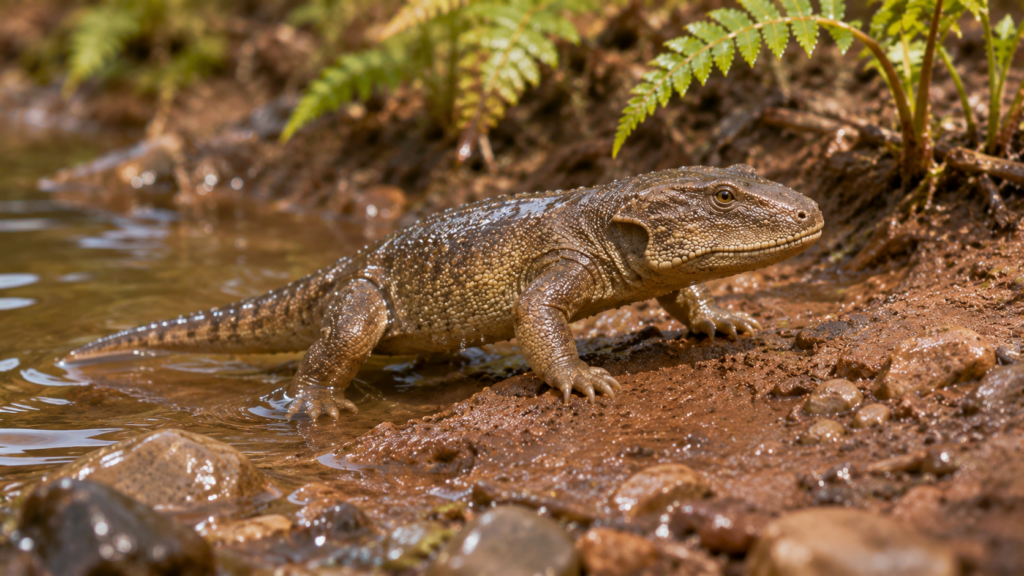
Seymouria was a lizard-like, four-legged animal that lived in North America and Europe in the first half of the Permian. It walked on land on sturdy legs, and its body shows features resembling both amphibians and reptiles. In the early twentieth century it was classified as a reptile, but studies of juvenile fossils have since led to the view that its young hatched and spent a larval stage in water, then switched to a land-going body while still very small.
Appearance and Way of Life
The first fossils were found near the town of Seymour in Baylor County, Texas, and in 1904 the German palaeontologist Ferdinand Broili named them Seymouria baylorensis. Fossils later found in Utah were named as a second species, Seymouria sanjuanensis, in 1966, and this species is also known from New Mexico. In 1993 it was reported from the Bromacker quarry near Gotha in central Germany, the first Seymouria found outside North America.
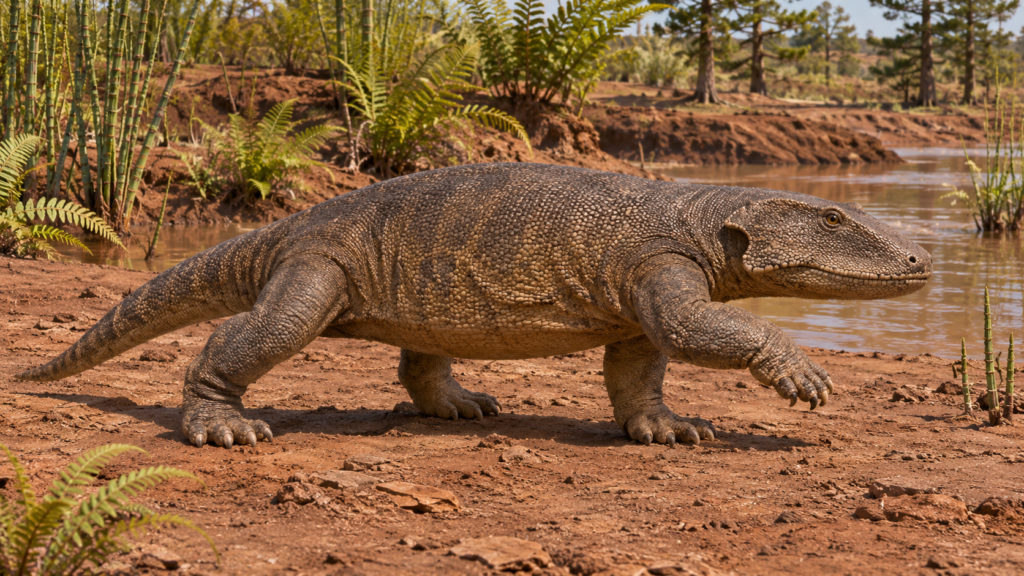
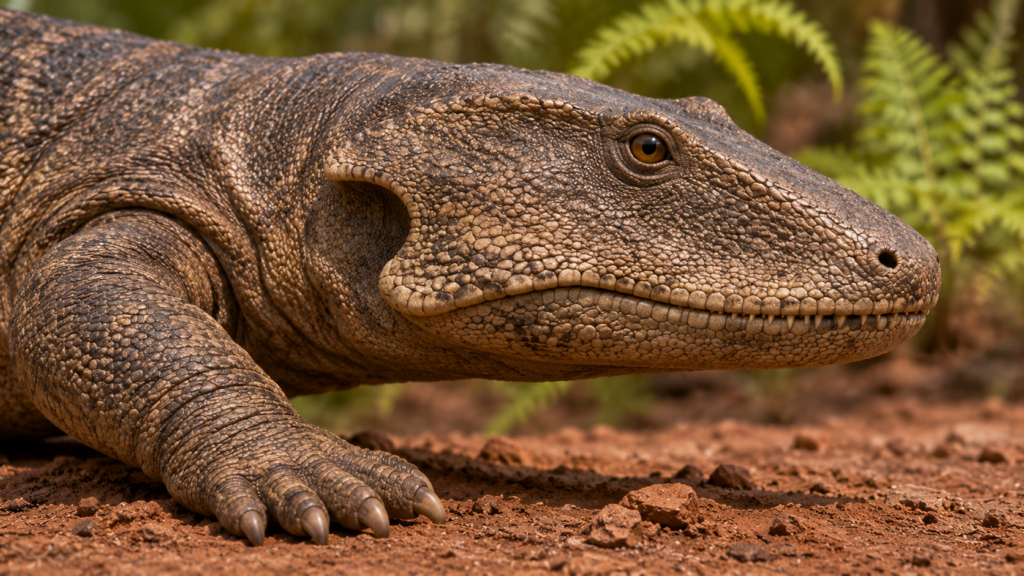
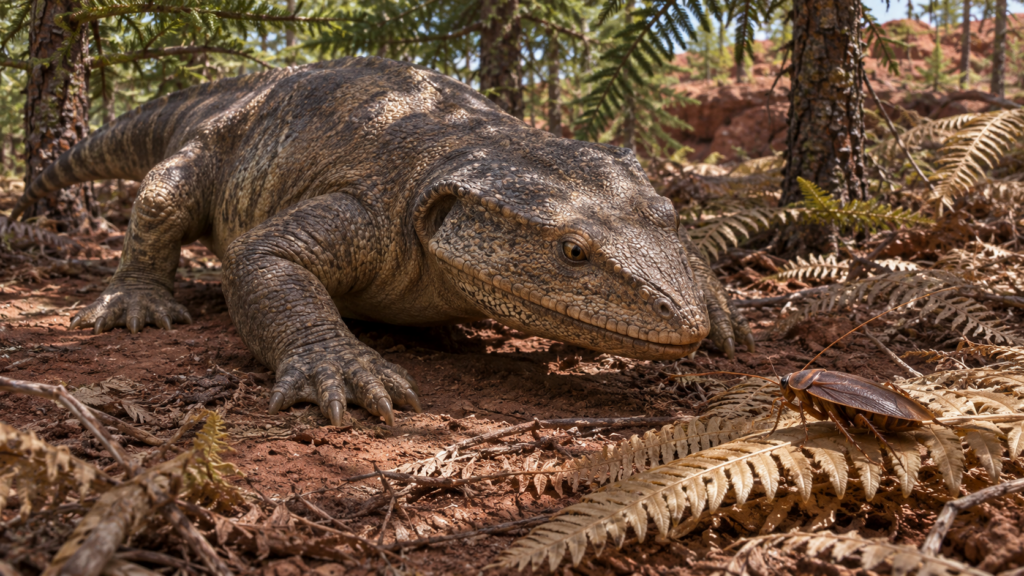
The body was stocky, and the head was a flat, broad triangle. There was a notch on each side at the back of the skull, which is thought to have held an eardrum. The four legs were thick and built to lift the trunk off the ground while walking. The jaws carried pointed teeth, and it is thought to have eaten small animals such as insects.
In the early Permian, Bromacker was a lowland with flowing rivers, and the site yields a varied assemblage that includes large plant-eaters and small reptiles alongside Seymouria. In 2000, David Berman of the Carnegie Museum of Natural History and his colleagues redescribed Seymouria from complete adult skeletons found there. These include two nearly complete individuals lying side by side, which the local museum nicknamed the “Tambach Lovers.” Berman’s team concluded that the Bromacker animals lived in a food web based entirely on land, rather than one that started with life in the water.
The Young of an Animal Once Called a Reptile
For a long time Seymouria appeared in textbooks as the classic example for thinking about the boundary between amphibians and reptiles. Its skull kept an old, amphibian-like design, while its backbone, legs and hips closely resembled those of reptiles. In the first half of the twentieth century it was treated for a while as one of the most primitive reptiles, and later studies removed it from the reptiles.
Reptiles, mammals and birds are amniotes: they lay eggs wrapped in shells or membranes on land, and their young hatch looking much like their parents. Most frogs and salamanders, on the other hand, lay their eggs in water, and their young grow up underwater as gilled larvae before metamorphosing into land-going adults. Which way Seymouria grew up cannot be settled without fossils of its young.
The first clue came from a close relative, Discosauriscus. Fossils of this animal from the Czech Republic include many larvae with traces of gills, and their skulls preserve grooves of the lateral line, the system that senses water movement. These fossils showed that at least some members of Seymouria’s group spent a larval stage in water.
In 2006 and 2007, Jozef Klembara of Comenius University in Slovakia and his colleagues described skulls of young Seymouria from Bromacker. The two smallest are only about 19 mm and 20 mm long, the smallest Seymouria known. These tiny skulls had no lateral-line grooves. The bones of the jaw joint had already turned to bone, while in a Discosauriscus of the same size these parts were still cartilage. Together with a 56 mm juvenile skull and adult skulls of 87 to 95 mm, they formed the first growth series ever assembled for a seymouriamorph. The team concluded that Seymouria finished metamorphosis at a much earlier stage than Discosauriscus.
In 2020, Kayla Bazzana of the University of Toronto and her colleagues examined Seymouria bones from Richards Spur in Oklahoma with neutron CT scanning and thin sections of bone tissue. The youngest individual was clearly younger than premetamorphic Discosauriscus specimens, yet its bones already had a post-metamorphic structure. The shape of the cavities inside the bones was also closer to that of land-living animals.
No eggs or larvae of Seymouria itself have been found, so how long it spent in the water is not known. It is now regarded as an animal on the line leading toward the amniotes, with a land-going adult body and only a very short time in the water.
Related products
You can find books and products related to this article on Amazon.
If you buy through the links above, this blog may earn a commission.
About the images
The images in this article are illustrations created with AI (ChatGPT), and you are welcome to use them. If you do, we would appreciate a link back to this article as the source.
Sources
Klembara, J., Berman, D. S, Henrici, A. C., Čerňanský, A., Werneburg, R. & Martens, T. (2007). First description of skull of Lower Permian Seymouria sanjuanensis (Seymouriamorpha: Seymouriidae) at an early juvenile growth stage. Annals of Carnegie Museum 76, 53–72. https://doi.org/10.2992/0097-4463(2007)76[53:FDOSOL]2.0.CO;2
Klembara, J., Berman, D. S, Henrici, A. C., Čerňanský, A. & Werneburg, R. (2006). Comparison of cranial anatomy and proportions of similarly sized Seymouria sanjuanensis and Discosauriscus austriacus. Annals of Carnegie Museum 75, 37–49. https://doi.org/10.2992/0097-4463(2006)75[37:COCAAP]2.0.CO;2
Bazzana, K. D., Gee, B. M., Bevitt, J. J. & Reisz, R. R. (2020). Postcranial anatomy and histology of Seymouria, and the terrestriality of seymouriamorphs. PeerJ 8, e8698. https://doi.org/10.7717/peerj.8698
Berman, D. S, Henrici, A. C., Sumida, S. S. & Martens, T. (2000). Redescription of Seymouria sanjuanensis (Seymouriamorpha) from the Lower Permian of Germany based on complete, mature specimens with a discussion of paleoecology of the Bromacker locality assemblage. Journal of Vertebrate Paleontology 20, 253–268. https://doi.org/10.1671/0272-4634(2000)020[0253:ROSSSF]2.0.CO;2

コメント