
This article contains affiliate links. As an Amazon Associate I earn from qualifying purchases.
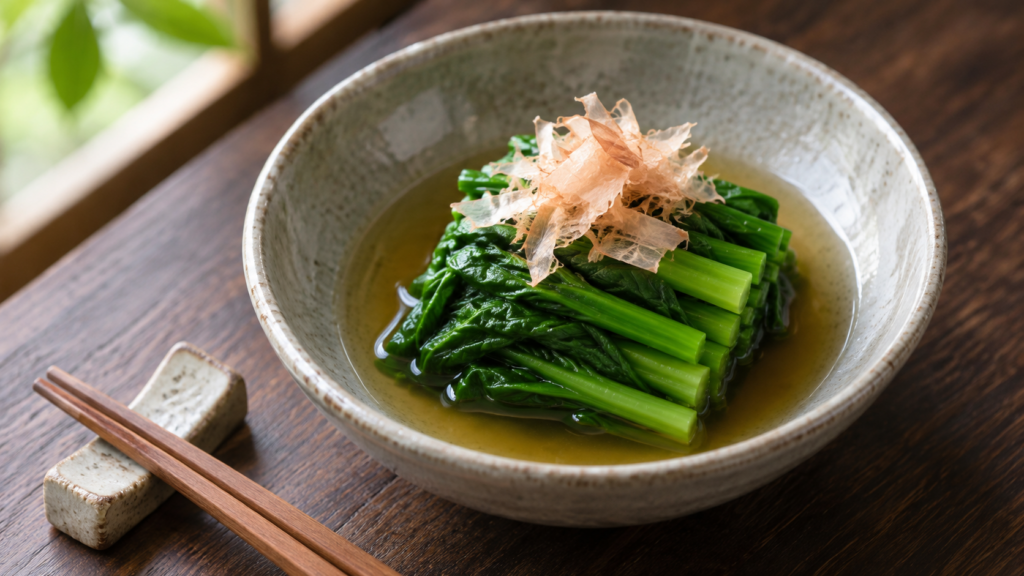
Spinach ohitashi is a Japanese side dish of boiled spinach steeped in a light, savory broth. How it turns out depends on two things: keeping the boiling time short, and squeezing the water out properly afterwards. Here is how to make ohitashi for two from one bunch of spinach, with tips for keeping it bright green and not watery.
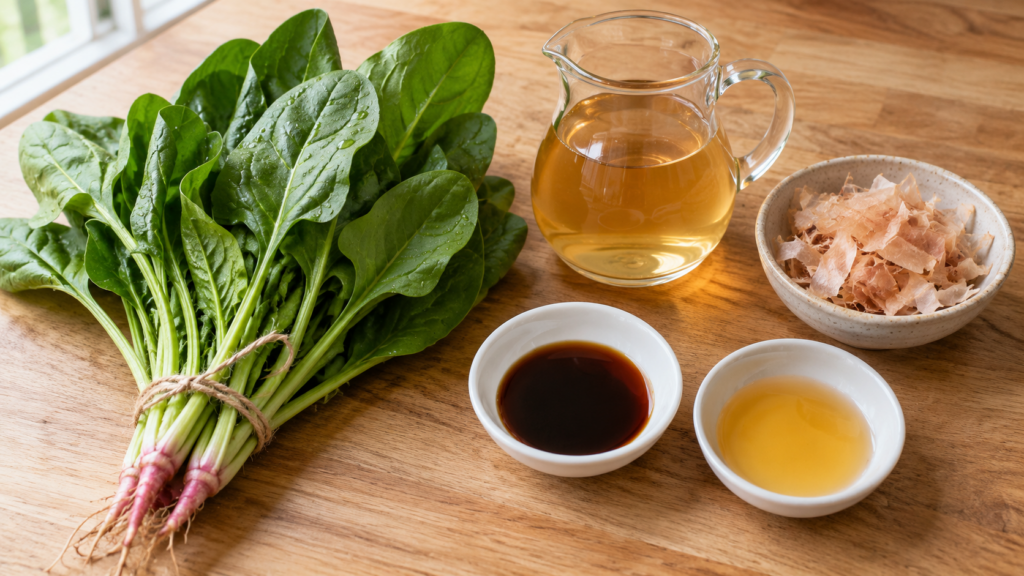
Ingredients (serves 2)
- Spinach: 1 bunch (200 g)
- Soy sauce (for the soy sauce rinse): 1/2 tbsp
- Dashi: 200 ml
- Light-colored soy sauce (usukuchi): 1 tbsp
- Mirin: 1 tbsp
- Katsuobushi (dried bonito flakes): to taste
Dashi is the basic Japanese soup stock, made from kelp and dried bonito; stock made from instant dashi granules works fine. Mirin is a sweet Japanese rice seasoning. The dashi, light soy sauce and mirin together make the steeping broth. Instead of bonito flakes, you can sprinkle toasted white sesame seeds on top.
Method
1. Make the broth and let it cool
Put the dashi, light soy sauce and mirin in a small pan over heat. When it comes to a boil, turn off the heat. Pour it into a shallow dish and let it cool to room temperature. To speed this up, set the bowl in a larger bowl of ice water.
2. Wash the spinach
Soil tends to collect at the base of spinach, so swish the root ends in a bowl of water to wash out the dirt between the stems. If a plant has a thick root, cut a cross into the base.
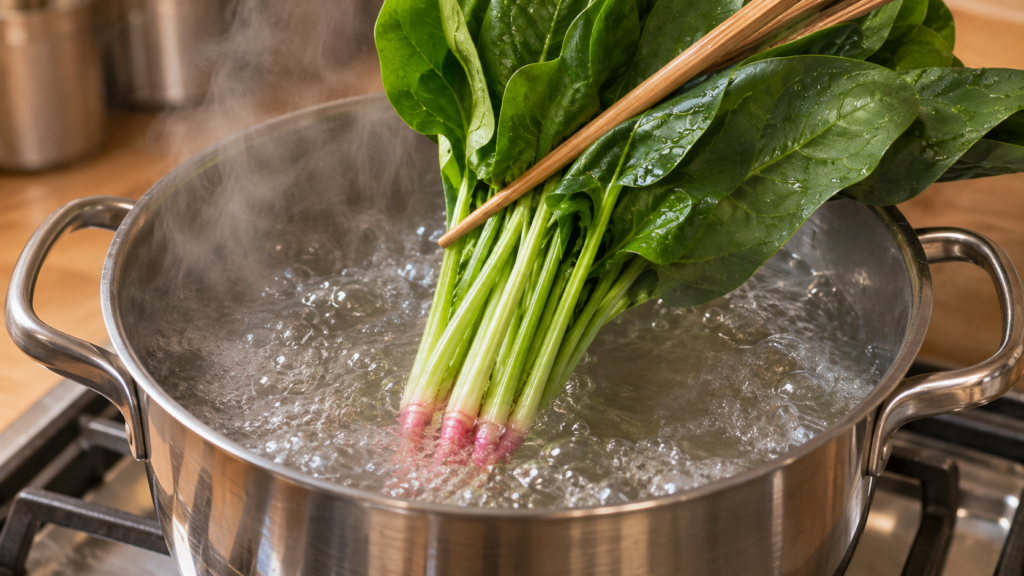
3. Boil from the roots
Bring a large pot of plenty of water to a boil. Holding the spinach by the leaves, lower just the root ends into the water and wait about 10 seconds. Then push the leaves under as well and boil for 20–30 seconds.
4. Plunge into cold water
Transfer the spinach straight into cold water. Change the water when it warms up, and keep going until the stems are cold all the way through.
5. Squeeze out the water
Line up the root ends and hold the bunch. Squeeze from the roots toward the leaf tips, moving your grip along as you go.
6. Rinse with soy sauce
Spread the spinach out in a shallow dish, drizzle the 1/2 tbsp of soy sauce evenly over it and work it in lightly. Line up the root ends again and give it a gentle squeeze.
7. Cut and steep
Trim off the root ends and cut the spinach into 3–4 cm lengths. Put it into the cooled broth and leave it for at least 15 minutes to take on the flavor.
8. Serve
Lift the spinach out, letting the excess broth drain off, and mound it in small bowls. Spoon over a little of the broth and top with bonito flakes.
Tips for getting it right
Put the stems in first
The thick stems and the thin leaves cook at different rates. Giving the stems a head start lets them soften without overcooking the leaves.
There is no need to salt the water
Salting the water is often said to keep the color bright, but with today’s refined salt you would need a great deal of it to make a difference. A short boil followed by cooling in cold water right away does more to keep the spinach a vivid green.
Cool it in cold water straight away
Spinach keeps cooking in its own heat after it comes out of the pot. Plunging it into cold water stops the color from changing and keeps the texture crisp. Oxalic acid, which gives spinach its harsh, astringent taste, dissolves easily in water, so boiling and then soaking in water reduces it.
Squeeze well, then rinse with soy sauce
If water is left in the spinach, it seeps out into the broth, dilutes it and makes the flavor flat. The soy sauce rinse after squeezing takes off the water left on the surface and seasons the spinach evenly. After adding the soy sauce, don’t squeeze too hard.
Use the broth only once it has cooled
Warm broth makes the spinach lose its color and go too soft. Don’t use the broth while it is still warm from the pan; let it cool to room temperature or chill it in the fridge first.
If it didn’t turn out right
Watery, with a weak flavor
The spinach wasn’t squeezed enough, and the water left in it has diluted the broth. Lift the spinach out, squeeze it lightly again, and steep it in fresh broth.
Limp and brownish
The spinach was probably boiled too long, or it went into the cold water too late. Long heating breaks down the green pigment and turns it brownish. Next time, take it out within 30 seconds of pushing the leaves under and put it straight into cold water. Steeping it in warm broth also makes the color fade in the same way.
The spinach flavor fades as it sits
Leaving it in the broth too long weakens the taste of the spinach itself. Steep it for between 15 minutes and an hour, and eat it the same day.
Related products
You can find books and products related to this article on Amazon.
If you buy through the links above, this blog may earn a commission.
About the images
The images in this article are illustrations created with AI (ChatGPT), and you are welcome to use them. If you do, we would appreciate a link back to this article as the source.
Sources
- Kikkoman Home Cooking, spinach ohitashi (basic Japanese cooking series, in Japanese)
- Kikkoman Home Cooking, spinach ohitashi by Kumahachi Morino (in Japanese)
- Kikkoman Home Cooking, spinach ohitashi (in Japanese)
- NHK Minna no Kyo no Ryori, spinach ohitashi by Takuji Takahashi (in Japanese)
- Ajinomoto Park, how to make spinach ohitashi (in Japanese)
- Ministry of Agriculture, Forestry and Fisheries of Japan, removing bitterness from spinach (in Japanese)


コメント