This article contains affiliate links. As an Amazon Associate I earn from qualifying purchases.
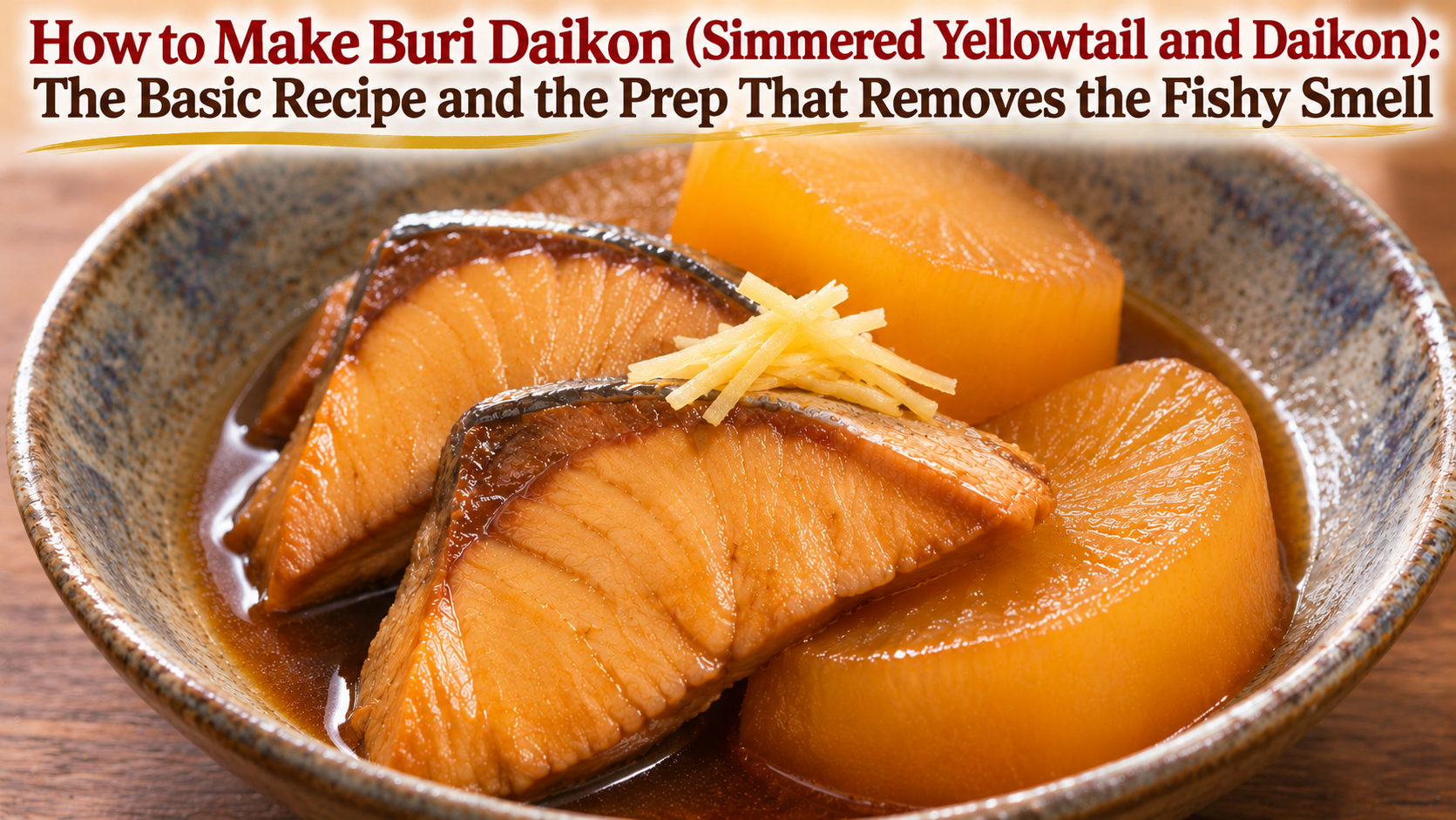
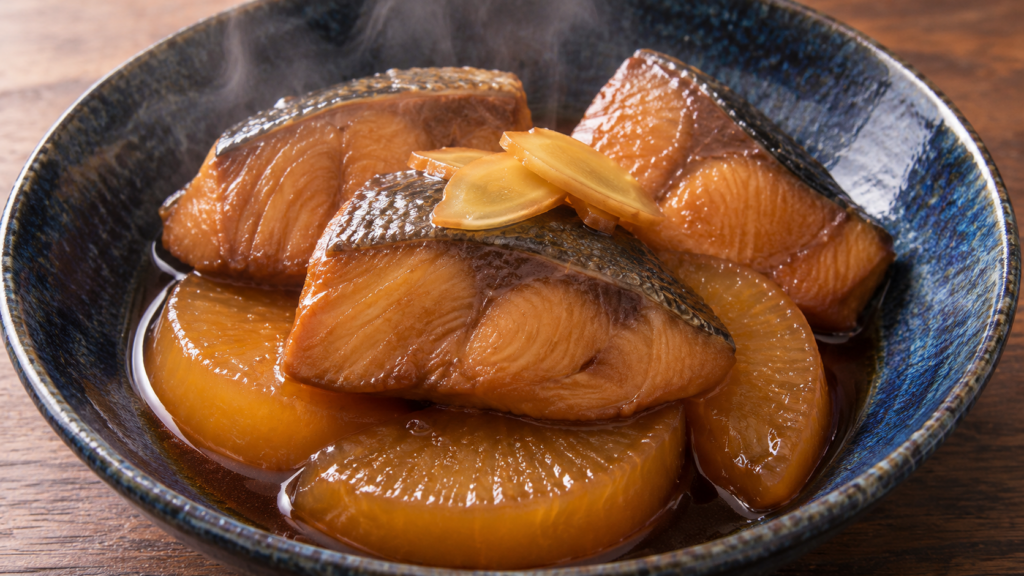
Buri daikon is a Japanese simmered dish of yellowtail (buri) and daikon radish cooked in sake, sugar, soy sauce and mirin (sweet rice wine for cooking), so that the fish flavors the radish. What decides how it turns out is the preparation before simmering. The fish is salted and then scalded with boiling water to remove its fishy smell, and the daikon is parboiled so it can take up the seasoning before it goes into the pot.
Ingredients (2 servings)
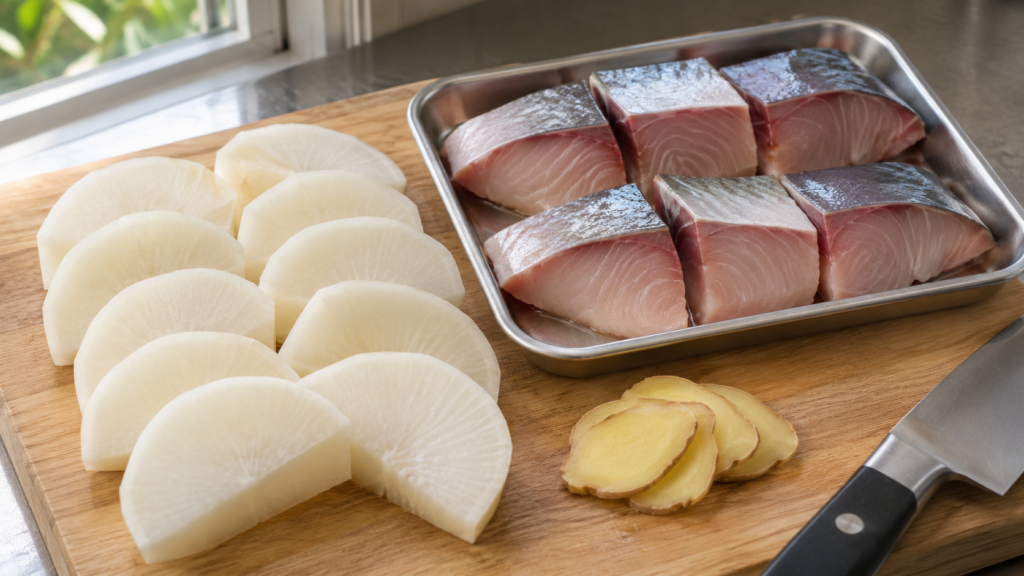
- Yellowtail fillets: 2 pieces (200 g)
- Daikon radish: 12 cm (400 g)
- Fresh ginger: 10 g
- Salt: a pinch
- Uncooked rice: 1 tbsp (for parboiling the daikon; the cloudy water from rinsing rice also works)
- Water: 300 ml
- Sake: 100 ml
- Sugar: 2 tsp
- Soy sauce: 2 tbsp
- Mirin: 1 1/2 tbsp
Instead of fillets, you can use yellowtail trimmings (the head, collar and bones, called “ara” in Japanese). They give a richer flavor from the bones and skin, but scales and blood clots tend to cling to them, so rinse them carefully after scalding.
Instructions
1. Parboil the daikon
Peel the daikon and cut it into half-moons 1.5 cm thick. Put the daikon in a pot with enough water to cover it and the rice, and bring it to a boil over high heat. Lower to medium and cook for 10 to 12 minutes, until the daikon turns translucent. Drain and rinse with water.
2. Salt the fish
Cut each fillet into 2 or 3 pieces. Sprinkle a little salt on both sides and leave for about 10 minutes, then pat off the moisture that comes out with paper towels.
3. Scald the fish
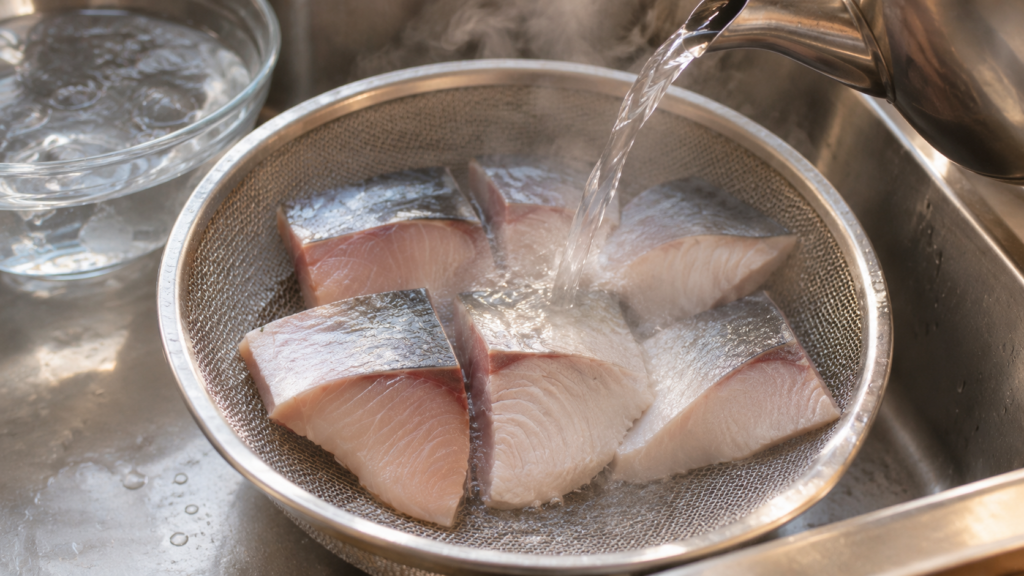
Lay the fish in a colander and pour boiling water over it. As soon as the surface turns white, move the fish into cold water, rub off any remaining scales and blood clots with your fingers, and pat it dry.
4. Simmer with sake and sugar
Slice the ginger thinly with the skin on. Put the water, sake, ginger, daikon and fish in a pot and bring to a boil over high heat, then skim off the foam. Add the sugar, cover with a drop lid (a lid or a disc of baking paper that sits directly on the food), and simmer over medium heat for about 10 minutes.
5. Add soy sauce and mirin and keep simmering
Add the soy sauce and mirin, put the drop lid back on, and simmer for about 20 minutes more. Turn off the heat when the liquid has reduced to about a third.
6. Let it rest
Cover the pot and leave it for at least 20 minutes so the flavor soaks in. Reheat before serving, and serve with the sauce.
Tips for good results
Remove the fishy smell with salt and boiling water
Salting draws out moisture that carries the fishy smell to the surface. Once that is wiped off, the boiling water sets the slime and blood on the surface so they can be rinsed away. Pour just enough to turn the surface white; the fish should not cook through.
Parboil the daikon first
Daikon takes a long time to cook through. Boiling it until translucent first means it is cooked to the center even with a shorter simmer alongside the fish, and the seasoning gets in more easily.
Use a drop lid to move the liquid around
There is only enough liquid to barely cover the food. With a drop lid, the bubbling liquid hits the lid and runs back over the top of the food, so even a small amount seasons everything. The lid also keeps the pieces still, which stops the fish and daikon from breaking up.
The flavor soaks in while it rests
Right after simmering, the daikon is colored only on the outside. If you turn off the heat, cover the pot and leave it for a while, the flavor works its way into the center of the daikon.
If something goes wrong
The fish smells fishy
The salting or scalding was not thorough enough. Next time, wipe off all the moisture after salting, and after scalding, wash away every scale and blood clot. Simmering with ginger also softens the smell.
The daikon has not taken up the flavor
The daikon was not parboiled long enough, or the dish was eaten straight off the heat. Covering the pot and resting it for at least 20 minutes lets the flavor reach the center. If you have time, let it cool completely and then reheat it.
The liquid has almost boiled away and is about to scorch
The heat was too high. Add a little water, return to medium heat, and simmer with the drop lid on.
The flavor is too weak
Too much liquid is left. Lift the fish and daikon into a serving bowl, reduce the liquid alone over medium heat, and pour it over.
Related products
You can find books and products related to this article on Amazon.
If you buy through the links above, this blog may earn a commission.
About the images
The images in this article are illustrations created with AI (ChatGPT), and you are welcome to use them. If you do, we would appreciate a link back to this article as the source.
Sources
Minna no Kyou no Ryouri (NHK), “Buri daikon” by Noriko Hamasaki (in Japanese) https://www.kyounoryouri.jp/recipe/31435_%E3%81%B6%E3%82%8A%E5%A4%A7%E6%A0%B9.html
Shirogohan.com, “Buri daikon” (in Japanese) https://www.sirogohan.com/recipe/buridaikon/
Mizkan, “Buri daikon” (in Japanese) https://www.mizkan.co.jp/ouchirecipe/recipe/?menu_id=11327
Kikkoman, “Buri daikon” (in Japanese) https://www.kikkoman.co.jp/homecook/search/recipe/00055176/
Ajinomoto Park, “Buri daikon” (in Japanese) https://park.ajinomoto.co.jp/recipe/card/800292/


コメント