This article contains affiliate links. As an Amazon Associate I earn from qualifying purchases.
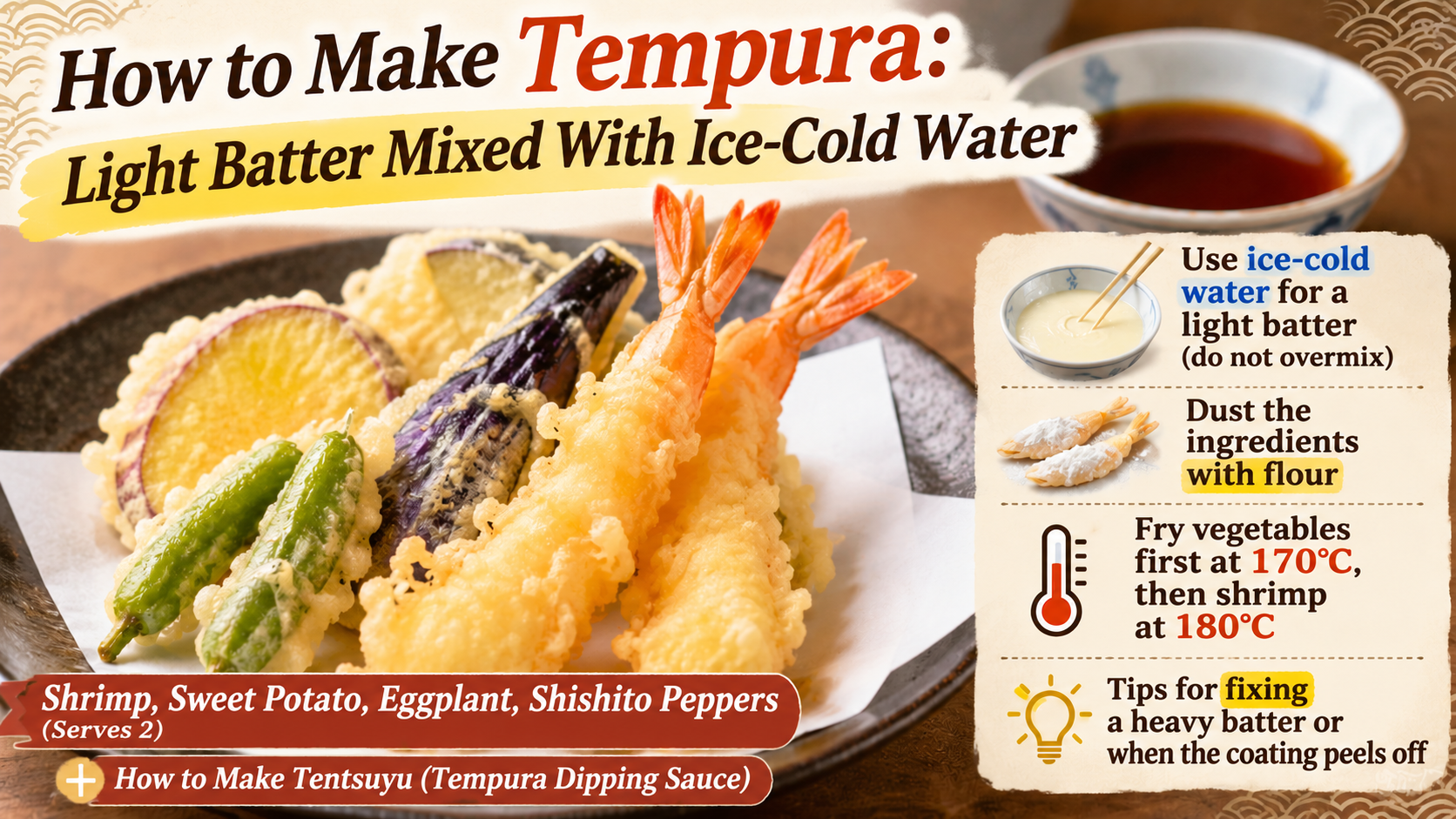
Tempura batter turns out light when you mix it with ice-cold water and stop before it is smooth. This is a basic recipe for two, using prawns and three vegetables (sweet potato, eggplant and shishito peppers), with the tips that make the frying go well. A recipe for tentsuyu, the dipping sauce, is included.
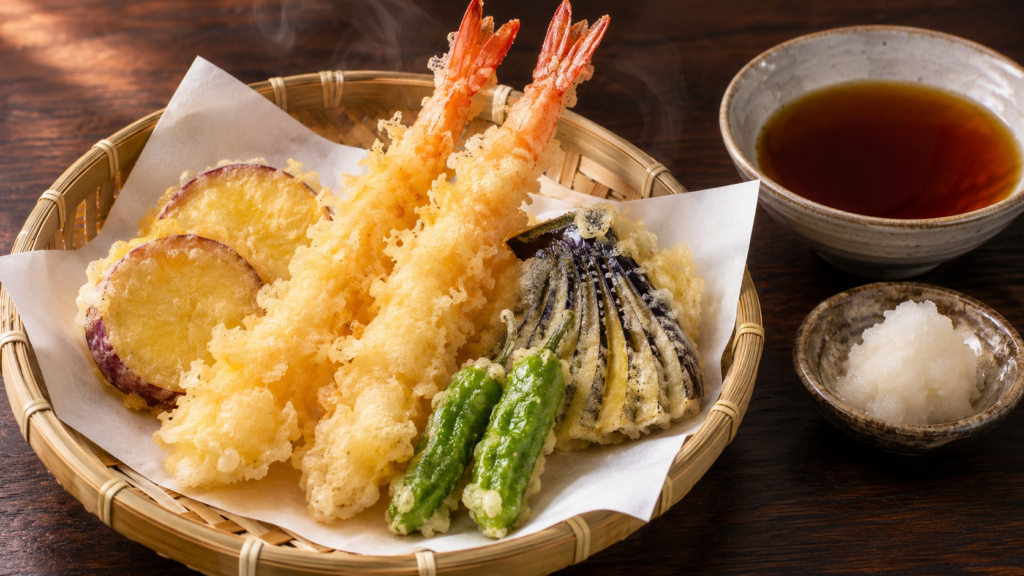
Ingredients (Serves 2)
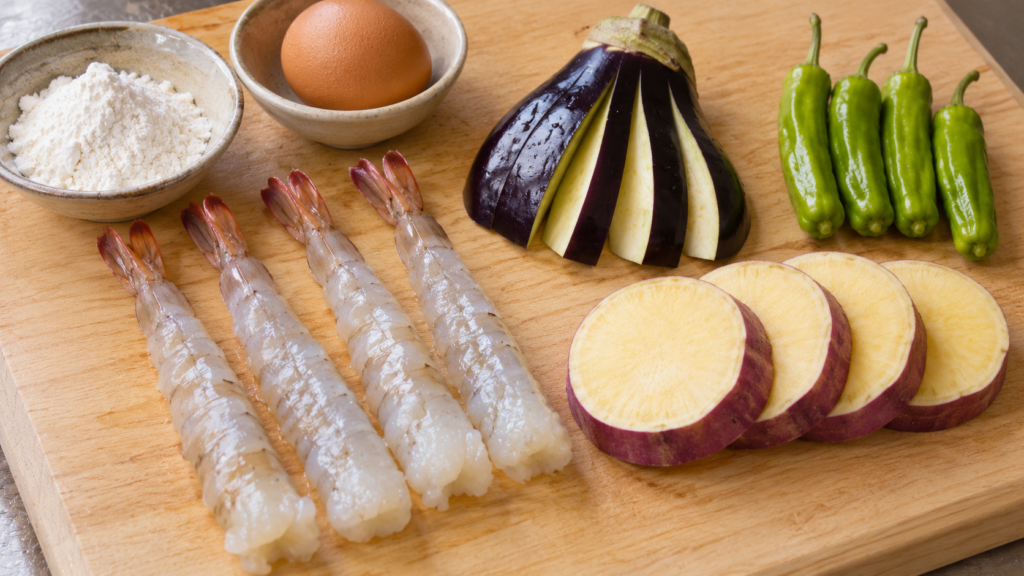
- 4 shell-on prawns (such as black tiger prawns)
- 1/4 sweet potato (about 80 g)
- 1 eggplant
- 4 shishito peppers (small, mild Japanese green peppers)
- 1–2 tbsp cake flour (or plain flour), for dusting
- Oil for deep-frying (about 3 cm deep in the pot)
Batter
- 50 g cake flour (or plain flour)
- 1/2 beaten egg
- Ice-cold water, enough to bring the egg up to 100 ml
Tentsuyu dipping sauce
- 200 ml water
- 50 ml mirin (sweet Japanese rice wine for cooking)
- 50 ml soy sauce
- 10 g katsuobushi (dried bonito flakes)
- Grated daikon radish, to serve
The dipping sauce is water, mirin and soy sauce in a 4:1:1 ratio. You can also eat the tempura with salt instead.
Method
1. Make the dipping sauce
Bring the mirin to a boil in a small pan. Add the water and soy sauce, and when it boils again, add the katsuobushi and turn off the heat. When the flakes sink, strain the sauce.
2. Prepare the prawns
Peel the prawns, leaving the last tail segment on, and remove the dark vein along the back. Cut the tip of the tail off at an angle and squeeze the water out of the tail with the tip of your knife. Make 3–4 shallow cuts across the underside, then press each prawn flat against the board to straighten it.
3. Cut the vegetables
Cut the sweet potato, skin on, into rounds or diagonal slices 1 cm thick. Soak them in water, then pat them dry. Trim the eggplant and cut it lengthwise into quarters, and make 2–3 lengthwise cuts in each quarter, leaving about 2 cm at the top uncut. Do not soak the eggplant; fry it soon after cutting. Trim the shishito stems to about 1 cm and make one lengthwise slit in each so they do not burst in the oil.
4. Dust with flour
Pat the prawns and vegetables thoroughly dry with paper towels, then dust them lightly with flour. Leave the prawn tails bare.
5. Make the batter
Put the beaten egg in a measuring jug and add ice-cold water to make 100 ml. Pour it into a bowl, add the flour and mix lightly with chopsticks, using a cutting motion. A few lumps of flour are fine. Make the batter just before you fry.
6. Fry the vegetables
Heat the oil to 170°C. At this temperature, a drop of batter sinks partway and then rises back up. Dip the sweet potato in the batter and fry it for 5–6 minutes, then lift it out when a bamboo skewer goes in with only a little resistance. Spread the eggplant cuts into a fan, coat it in batter and fry for about 1 1/2 minutes. Fry the shishito peppers for 30–40 seconds. Fill no more than half of the oil’s surface at a time.
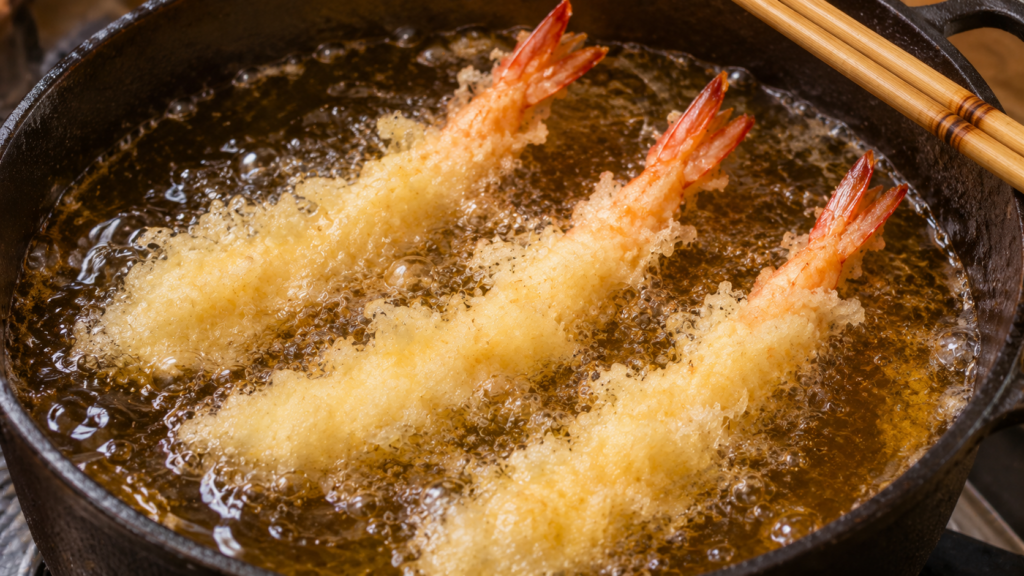
7. Fry the prawns
Raise the oil to 180°C. At this temperature, a drop of batter rises to the surface right away. Holding each prawn by the tail, coat it in batter, leaving the tail bare, and fry for 2–3 minutes. Lift it out when the bubbles get smaller and the prawn floats.
8. Drain and serve
Drain the tempura on a wire rack, leaning the pieces upright without overlapping. Serve with the dipping sauce and grated daikon, or with salt.
Tips for Better Tempura
Use ice-cold water and don’t overmix
The more flour is worked with water, and the warmer the water, the more gluten forms and the stickier the batter becomes. Mixing with cold water and stopping while a few lumps remain keeps the batter from turning gluey, so it fries up light. Batter left standing also grows stickier over time, so make it right before frying.
Dust with flour before battering
A light dusting of flour helps the batter cling, so it doesn’t come away during frying. Any water left on the surface makes the batter slip off and the oil spatter, so dry everything well before dusting.
Drain the prawn tails and cut the undersides
Water collects inside a prawn’s tail, and it makes the oil spit if left there. Cutting off the tip and squeezing out the water prevents this. The cuts on the underside keep the prawns from curling up as they fry.
Fry the vegetables first and the prawns last
Vegetables need a slightly lower temperature and a longer time to cook through. Prawns stay tender when fried quickly at a higher temperature. Frying the vegetables first and then raising the heat lets you use the same oil for both.
Don’t crowd the pot
Adding too much at once drops the oil temperature, and the batter soaks up oil and turns greasy. Keep the pieces to about half the surface and fry in small batches. Skim off stray bits of batter as you go.
If Something Goes Wrong
The batter is heavy and soggy. The batter was overmixed, the water wasn’t cold enough, or the oil was too cool. Make the batter with ice-cold water just before frying and don’t overmix it. Check the oil temperature with a drop of batter, and don’t add too many pieces at once.
The batter fell off. The pieces weren’t dusted with flour, or they were still wet. Dry them, dust with flour, coat them in batter and put them straight into the oil.
The prawns curled up. The cuts on the underside weren’t enough. After cutting, press the prawns flat against the board to stretch them.
The oil spattered. Water on the ingredients, especially in the prawn tails, causes this. Cut off the tail tips and squeeze out the water, dry everything, and lower the pieces gently into the oil.
The sweet potato is hard in the middle. The oil was too hot, or the slices were too thick. Keep the oil at 170°C, fry for 5–6 minutes and test the centre with a skewer.
Related products
You can find books and products related to this article on Amazon.
If you buy through the links above, this blog may earn a commission.
About the images
The images in this article are illustrations created with AI (ChatGPT), and you are welcome to use them. If you do, we would appreciate a link back to this article as the source.
Sources
- Nisshin OilliO, “Tempura” (basic recipe, in Japanese)
- Nisshin Seifun Group, “Basics and Tips: Tempura” (in Japanese)
- Kikkoman, “Vegetable Tempura” (in Japanese)
- Kikkoman, “Basic Prawn Tempura” (in Japanese)
- Minna no Kyou no Ryouri, “Prawn and Vegetable Tempura” by Hiromitsu Nozaki (in Japanese)
- Minna no Kyou no Ryouri, “Tentsuyu” by Takashi Tamura (in Japanese)
- Ministry of Agriculture, Forestry and Fisheries of Japan, consumer Q&A on deep-frying at home (in Japanese)


コメント