
This article contains affiliate links. As an Amazon Associate I earn from qualifying purchases.
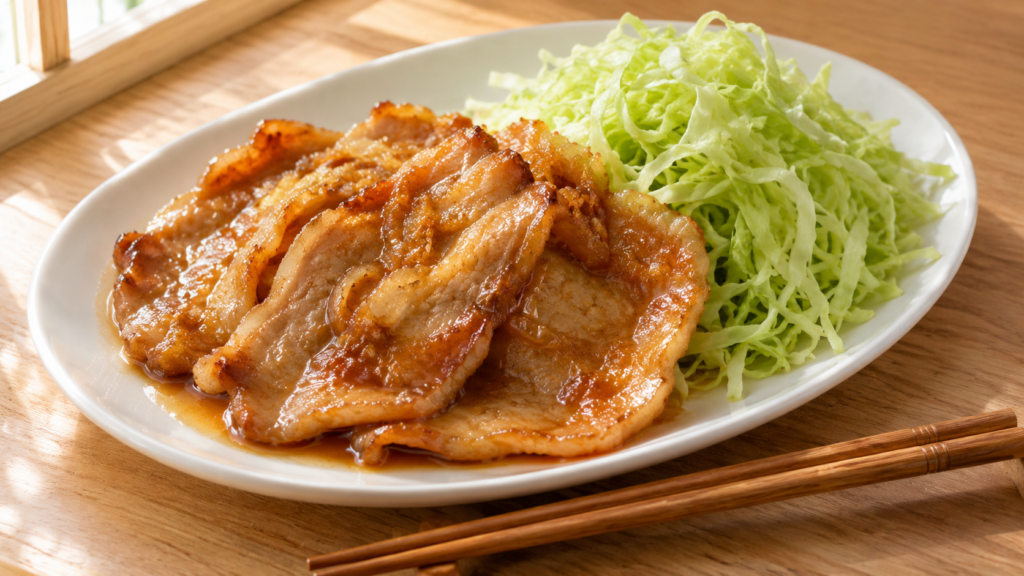
Japanese ginger pork, shogayaki, comes down to three things: cutting through the sinew, dusting the meat lightly with starch, and adding the sauce only after the meat is browned. Here is a basic recipe for two servings using thinly sliced pork loin, along with tips for getting it right.
Ingredients (Serves 2)
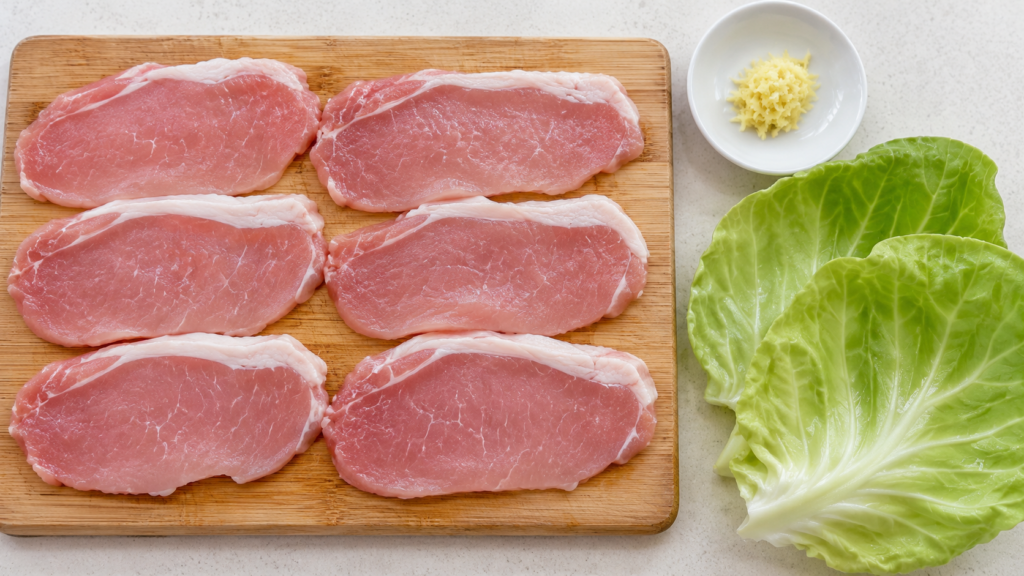
- 200 g pork loin, sliced about 2–3 mm thick
- Potato starch or cornstarch, as needed
- 2 tsp vegetable oil
- 2 cabbage leaves
- 1 1/2 tbsp soy sauce
- 2 tbsp mirin (a sweet Japanese rice seasoning)
- 1 tbsp sake
- 1 tsp sugar
- 1/2 tbsp grated fresh ginger
The last five ingredients, from the soy sauce to the ginger, make the sauce. The meat is not marinated, so the sauce only needs to be mixed before you start cooking.
How to Make It
1. Shred the cabbage and mix the sauce
Cut the cabbage into fine shreds. In a small bowl, mix the soy sauce, mirin, sake, sugar and grated ginger.
2. Cut the sinew
With the tip of a knife, make several small cuts along the line between the fat and the lean meat on each slice.
3. Dust with starch
Just before cooking, dust both sides of each slice lightly with starch.
4. Brown both sides
Heat the oil in a frying pan over medium heat and lay the pork slices out flat. Cook until both sides are browned. If excess oil is left in the pan, wipe it out with a paper towel.
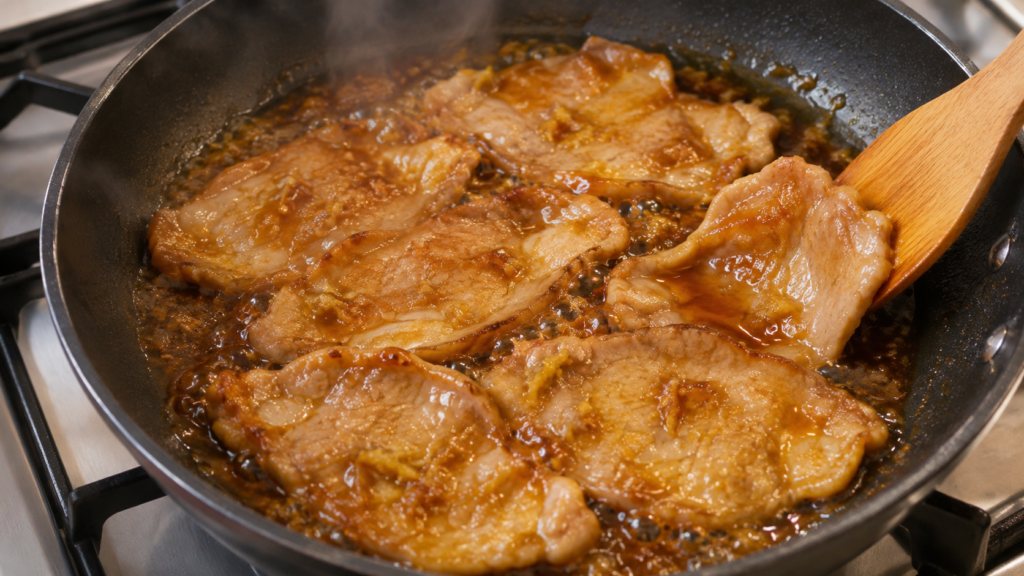
5. Glaze with the sauce
Pour in the sauce and turn the meat in it, letting it reduce until almost no liquid is left.
6. Serve
Arrange the shredded cabbage and the ginger pork on plates, and spoon any sauce left in the pan over the meat.
Tips for Getting It Right
Cut the sinew first
The sinew between the fat and the lean shrinks as it cooks and makes the slice curl. Cutting it lets the meat stay flat in the pan and cook evenly.
Let the starch hold the sauce
A light coat of starch helps the sauce cling to the surface of the meat, so it picks up plenty of flavor without marinating. Dust the slices just before they go into the pan.
Add the sauce after the meat is browned
Some recipes marinate the pork before cooking, but here the meat is browned on its own first and the sauce goes in at the end. Before adding it, wipe out the excess oil that has collected in the pan.
If Something Goes Wrong
The meat curled up. The sinew was not cut. Make several firm cuts along the line between the fat and the lean before cooking.
The sauce won’t cling to the meat. The meat was not dusted with starch, or the sauce was not reduced enough. Dust both sides lightly before cooking, and keep turning the meat in the sauce until almost no liquid is left.
Related products
You can find books and products related to this article on Amazon.
If you buy through the links above, this blog may earn a commission.
About the images
The images in this article are illustrations created with AI (ChatGPT), and you are welcome to use them. If you do, we would appreciate a link back to this article as the source.


コメント