This article contains affiliate links. As an Amazon Associate I earn from qualifying purchases.
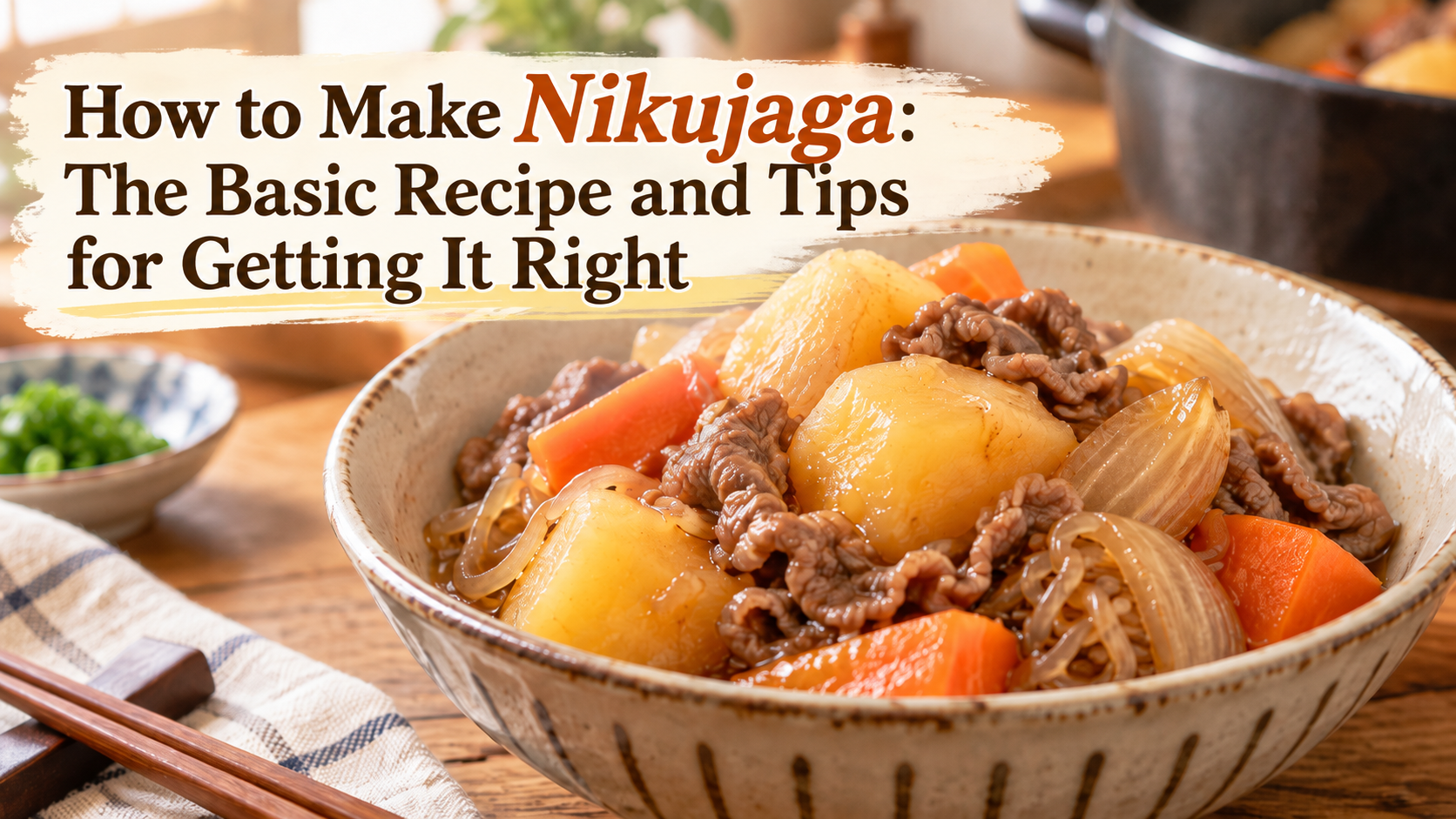
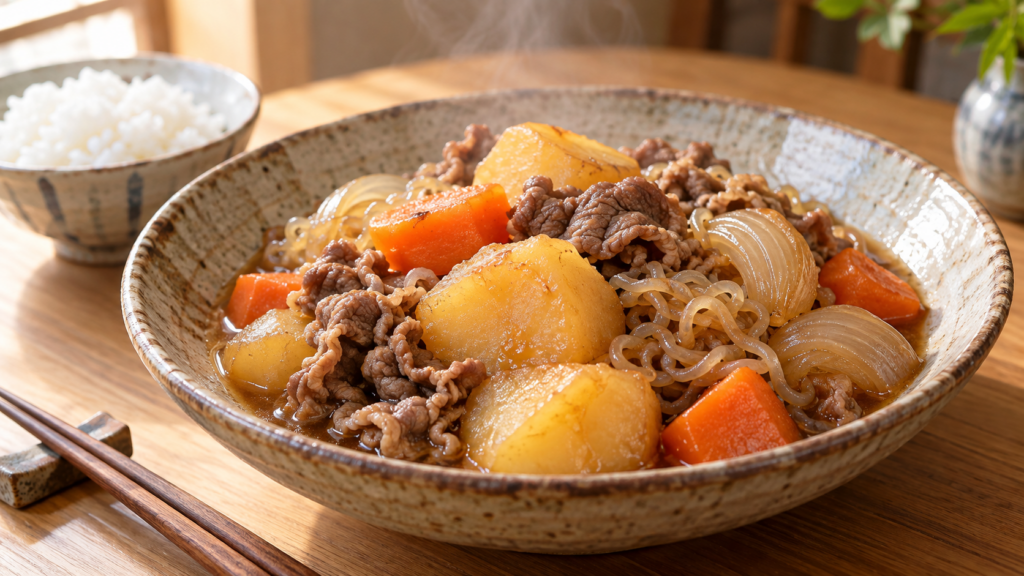
Nikujaga is a Japanese home-style dish of potatoes and thinly sliced beef simmered in soy sauce, mirin and sugar. It uses only a few ingredients and seasonings, so how you heat it and how you handle the simmering liquid make a clear difference to the result. Below is a basic recipe for two to three servings, followed by the points that help it turn out well.
Ingredients (serves 2–3)
- Potatoes: 3 (about 350 g)
- Thinly sliced beef: 150 g (thinly sliced pork also works)
- Onion: 1/2
- Carrot: 1/2
- Shirataki noodles: 100 g
- Vegetable oil: 2 tsp
- Water (or dashi stock): 300 ml
- Soy sauce: 2 tbsp
- Mirin: 2 tbsp
- Sugar: 1 tbsp
Using equal amounts of soy sauce and mirin makes the seasoning easy to get right. Add a little more sugar if you like it sweeter, or use less for a lighter taste. Dashi gives more aroma, but the beef and onion release plenty of flavor, so water works fine.
How to make it
1. Cut the ingredients
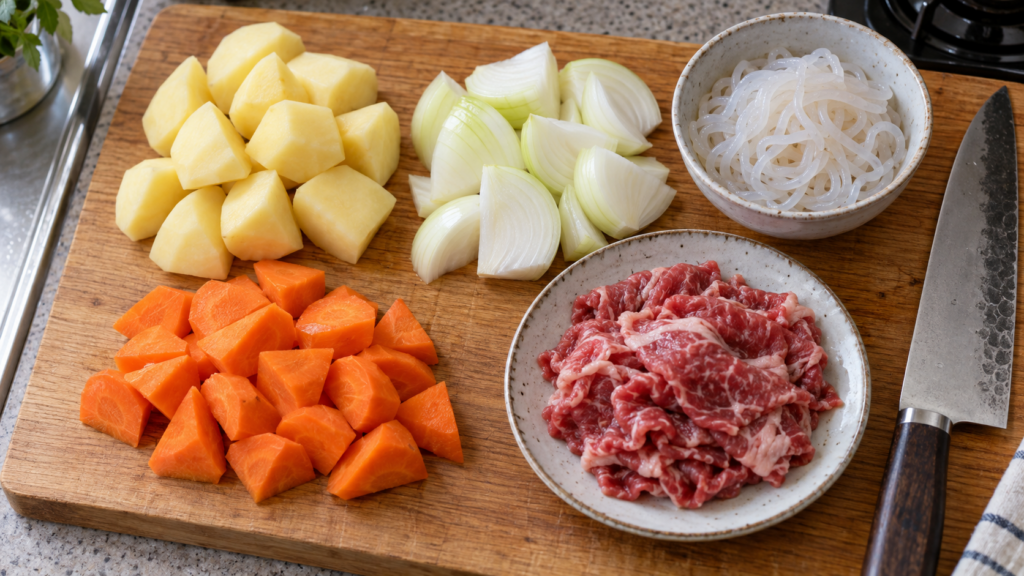
Peel the potatoes, cut them into bite-size pieces, soak them briefly in water and drain. Cut the onion into wedges and the carrot into irregular chunks. Cut the beef into bite-size pieces if the slices are large. Parboil the shirataki and cut it into easy-to-eat lengths.
2. Stir-fry
Heat the oil in a pot over medium heat and stir-fry the beef. When it changes color, add the onion, carrot, potatoes and shirataki, and stir until everything is coated with oil.
3. Simmer
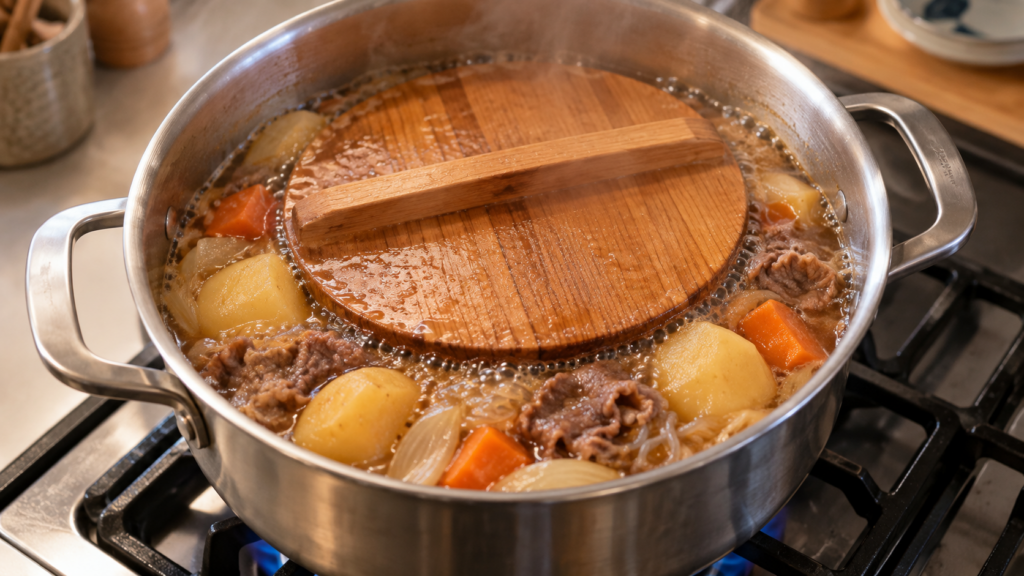
Pour in the water and bring it to a boil, skimming off any scum that rises. Add the sugar and mirin, then the soy sauce. Cover with a drop lid and simmer over medium-low heat for 15 to 20 minutes. Turn off the heat when a skewer slides easily into the potatoes and a little liquid remains at the bottom of the pot.
4. Let it rest before eating
After turning off the heat, leave the pot as it is for a while. Reheat before serving.
Tips for getting it right
Cut the potatoes and carrots to the same size
If the pieces vary in size, the small ones start falling apart while the large ones are still hard. Carrots take longer to cook than potatoes, so cutting them slightly smaller lets both finish at the same time. Soaking the cut potatoes in water rinses off surface starch, which keeps the liquid from turning cloudy.
Stir-fry the potatoes before simmering
Coating the surface of the potatoes with oil helps keep their edges from breaking down as they simmer. Add the vegetables as soon as the beef changes color. Beef that is stir-fried on its own for too long shrinks and turns tough.
Use little liquid and let a drop lid circulate it
The liquid does not need to cover the ingredients. A drop lid is a lid that sits directly on the food inside the pot. The boiling liquid hits the lid and flows back over the top, so the potatoes at the top also cook and take on flavor. If you don’t have one, cut a circle of aluminum foil or parchment paper to fit the pot, make a hole in the center, and lay it on the food. Stirring as little as possible while it simmers keeps the potatoes in shape.
Stop with a little liquid left, and let the flavor soak in as it cools
Boiling the liquid away completely makes it easy to scorch and leaves the taste too strong. If you turn off the heat with a little liquid left and let the pot sit, the flavor works its way into the center as it cools. If you have time, let it cool completely and reheat it before eating, and the potatoes will be colored all the way through.
If it didn’t turn out well
The potatoes fell apart and the liquid turned mushy. This happens when it simmers too long over high heat. Lower the heat, and when you stir, turn the food gently from the bottom of the pot without moving it around much. Floury potatoes such as Russets break down easily, while waxy potatoes hold their shape, so use a waxy variety if you want the pieces to stay intact.
It tastes bland, or the flavor hasn’t soaked in. Usually it hasn’t rested long enough. Turn off the heat with a little liquid left, let it cool, then reheat it. If it is still bland, add soy sauce and mirin in equal amounts.
The beef is tough. Beef shrinks and toughens when it is stir-fried too long. Add the vegetables as soon as it changes color.
Related products
You can find books and products related to this article on Amazon.
If you buy through the links above, this blog may earn a commission.
About the images
The images in this article are illustrations created with AI (ChatGPT), and you are welcome to use them. If you do, we would appreciate a link back to this article as the source.


コメント