This article contains affiliate links. As an Amazon Associate I earn from qualifying purchases.
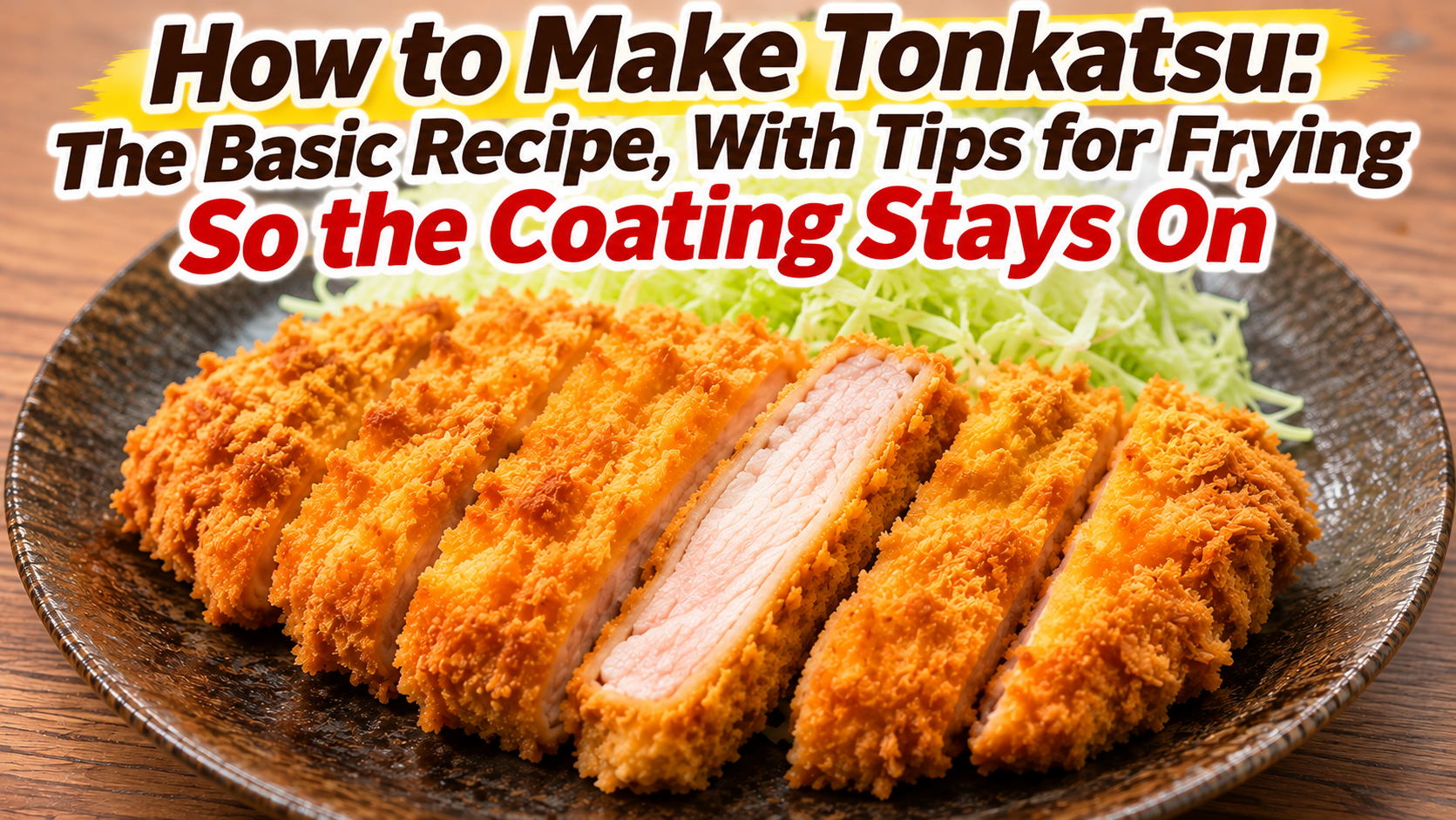
How tonkatsu turns out comes down to three things: cutting the sinew in the pork, coating it evenly, and how you handle it while it fries. This is a recipe for two servings of tonkatsu, a Japanese breaded pork cutlet, made with two slices of pork loin, along with tips for frying it so the coating stays on.
Ingredients (serves 2)
- Pork loin cutlets, about 1 cm thick: 2 slices (200–250 g in total)
- Salt: 1/4 tsp
- Pepper: a pinch
- All-purpose flour: 1 tbsp
- Beaten egg: 1/2 egg
- Water: 1/2 tbsp
- Panko (Japanese breadcrumbs): 1 cup
- Oil for deep-frying: enough to fill the pot about 3 cm deep
- Cabbage: 2 leaves
- Tonkatsu sauce: to taste
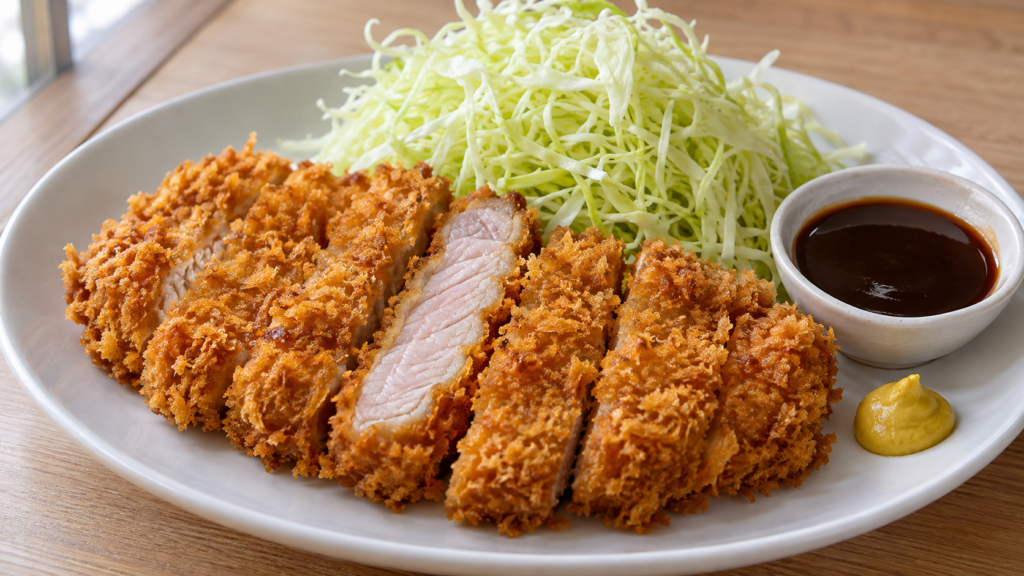
The beaten egg is thinned with water. Tonkatsu sauce is a thick, sweet-savory brown sauce; a Japanese medium-thick Worcestershire-style sauce (chuno sauce) works too. Serve with Japanese mustard (karashi) if you like.
Method
1. Shred the cabbage
Remove the core from the cabbage, stack 2–3 leaves, roll them up and slice thinly from one end. Soak the shredded cabbage in water for 1–2 minutes, then drain it well in a colander.
2. Cut the sinew
With the tip of a knife, make small cuts every 2 cm along the line where the fat meets the lean meat. Turn the pork over and do the same on the other side.
3. Pound and reshape
Lightly pound both sides of the pork with a meat mallet or the back of a knife. Then push the spread-out meat back with your hands to its original size and thickness.
4. Season
Just before coating, sprinkle both sides of the pork with salt and pepper.
5. Coat
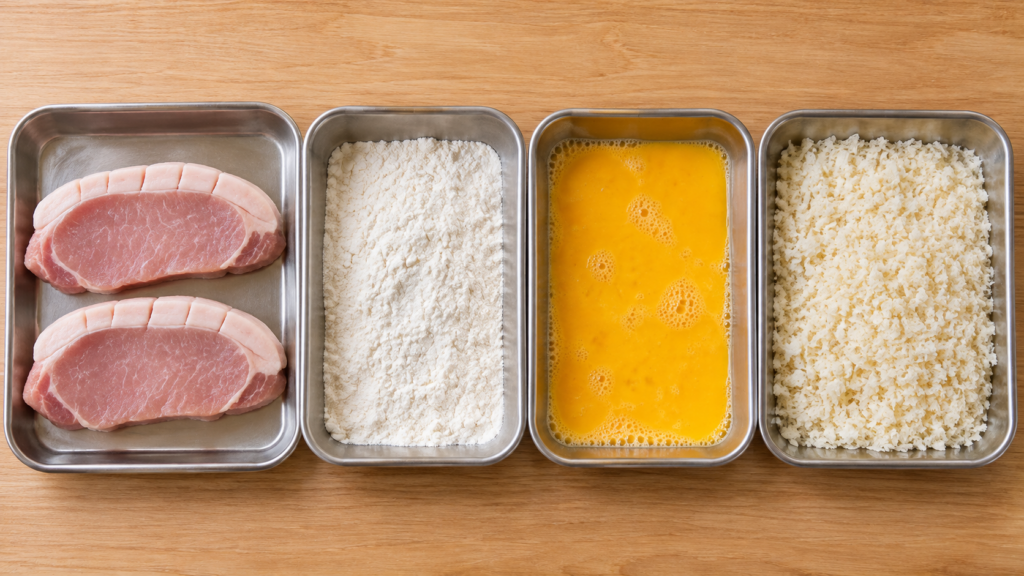
Mix the beaten egg with the water. Dust the pork with flour and pat off the excess. Dip it in the egg, then cover it evenly with panko and press lightly with your hands.
6. Heat the oil to 170°C (340°F)
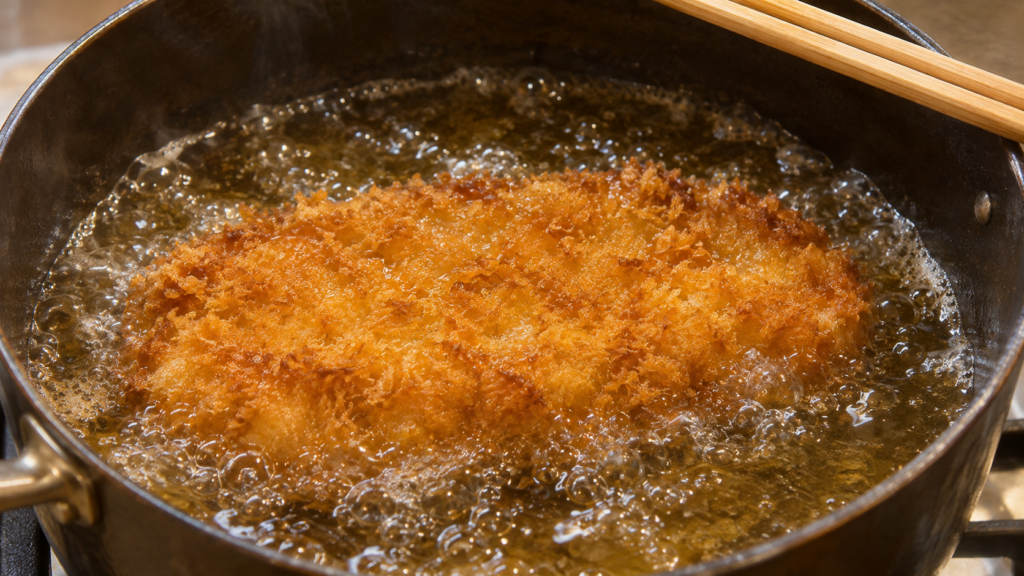
Pour oil into a pot to a depth of about 3 cm and heat it to 170°C. If a few crumbs of panko dropped in bubble up and scatter right away, the oil is at about the right temperature.
7. Fry
Gently slide in the pork and fry for 1–2 minutes. Once the coating has set, turn it over and fry for another 2–4 minutes. Take it out when the bubbles get smaller, the frying sound turns higher and crisper, and the whole cutlet is golden brown.
8. Drain and slice
Stand the cutlets up at an angle on a rack to drain. Slice them into strips 1.5–2 cm wide by pressing the knife straight down. Serve with the cabbage and the sauce.
Tips for Better Tonkatsu
Cut the sinew so the pork stays flat
There is sinew along the line between fat and lean. Left uncut, it shrinks in the oil and makes the pork curl up and shrink. Cutting it from both sides lets the cutlet fry flat.
Thin the egg with water
A little water makes the egg runnier, so it coats the flour thinly and evenly. Wherever the coating is patchy or has gaps, it lifts and comes away.
Don’t touch it right after it goes in
The coating hasn’t set yet when the pork first goes into the oil. Moving or turning it with chopsticks at this stage makes the coating come off. Wait until the coating has set before turning it.
Slice by pressing straight down
Sawing back and forth shifts the coating and pulls it off. Pressing the blade straight down keeps the coating and the meat together.
Troubleshooting
The coating came off. Either the pork was moved early in frying, or there were gaps in the coating. Next time, cover it evenly with panko, press it on with your hands, and leave it alone until the coating has set.
The pork curled up. The sinew wasn’t cut enough. Next time, cut along the line between fat and lean from both sides.
The coating slid off when slicing. The knife was moved back and forth. Press straight down instead.
Related products
You can find books and products related to this article on Amazon.
If you buy through the links above, this blog may earn a commission.
About the images
The images in this article are illustrations created with AI (ChatGPT), and you are welcome to use them. If you do, we would appreciate a link back to this article as the source.


コメント