This article contains affiliate links. As an Amazon Associate I earn from qualifying purchases.
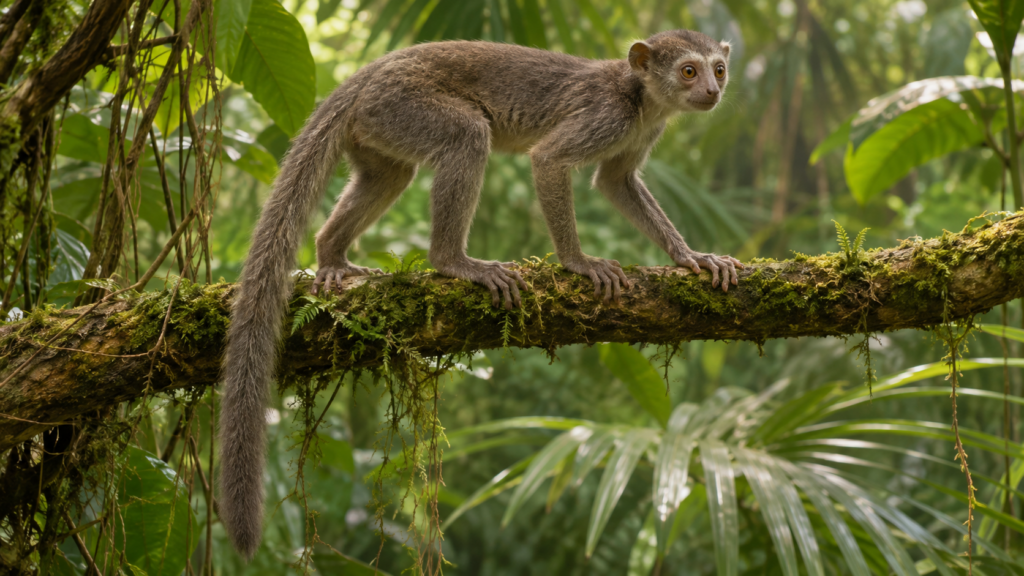
| Name | Darwinius masillae. The genus honors the 200th anniversary of Charles Darwin’s birth; the species name comes from “Masilla,” an old name for Messel, where the fossil was found. The specimen is nicknamed “Ida” |
| Classification | Mammals; Primates; Adapiformes |
| Period | Paleogene, Middle Eocene (about 47 million years ago) |
| Found in | Messel Pit, Germany (1983) |
| Length | About 58 cm in total (head and body without the tail about 24 cm); both figures are for a juvenile less than a year old |
| Weight | About 485 g at death; an adult is estimated at about 650–900 g |
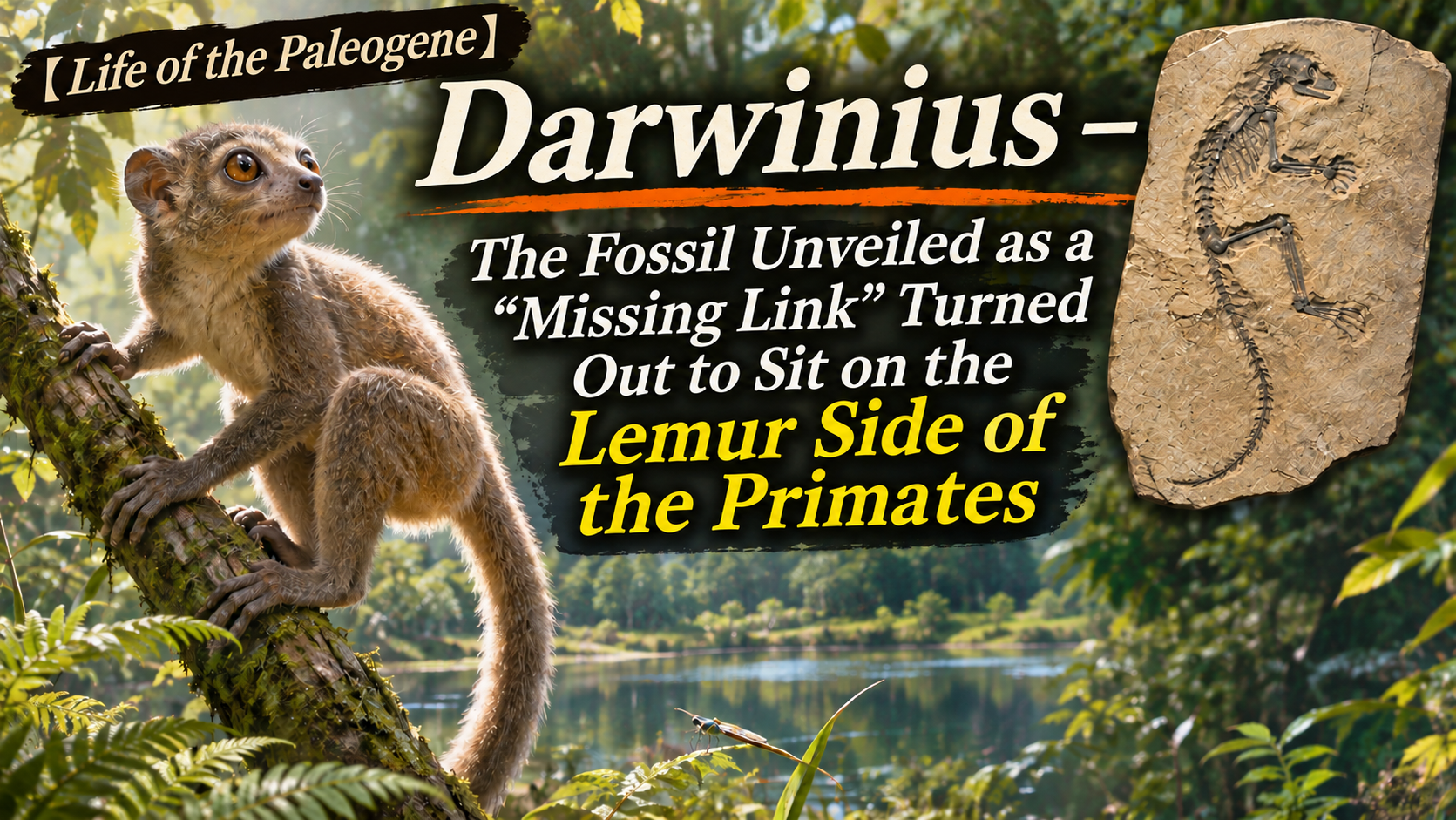
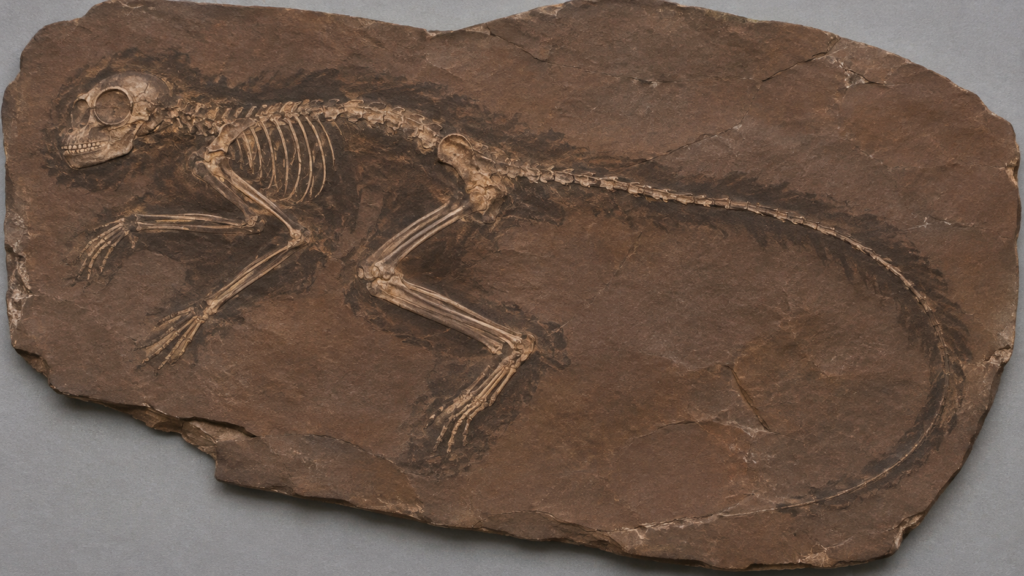
Darwinius is a small primate that lived in the forests of Eocene Europe. The only known specimen is a single complete skeleton from Messel, Germany, preserved with the outline of its body and traces of its stomach contents. It was unveiled in 2009 with great fanfare as a “missing link” leading toward humans, but before the year was out, a study placed it on the side of the primate family closer to lemurs.
Appearance and Life
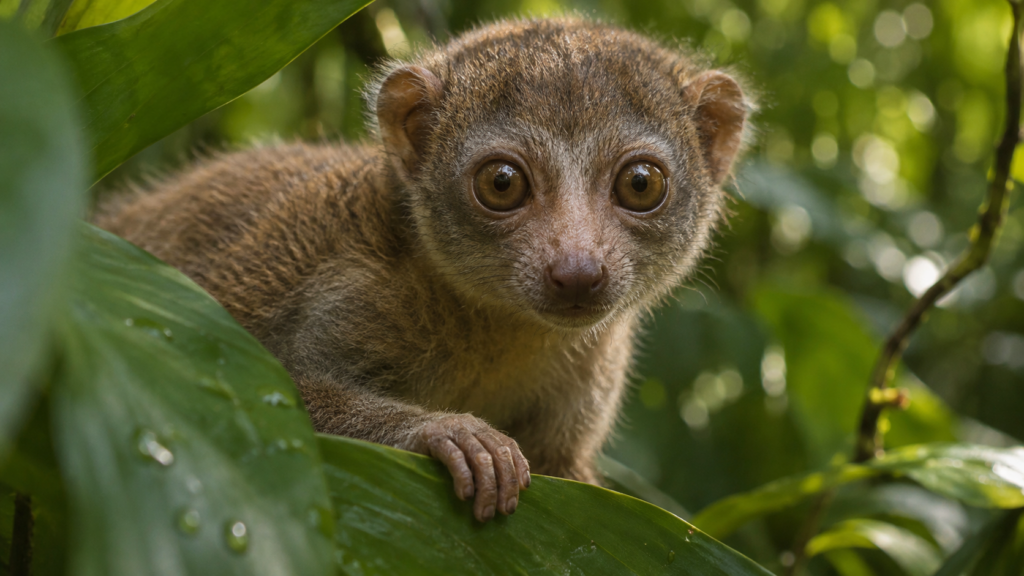
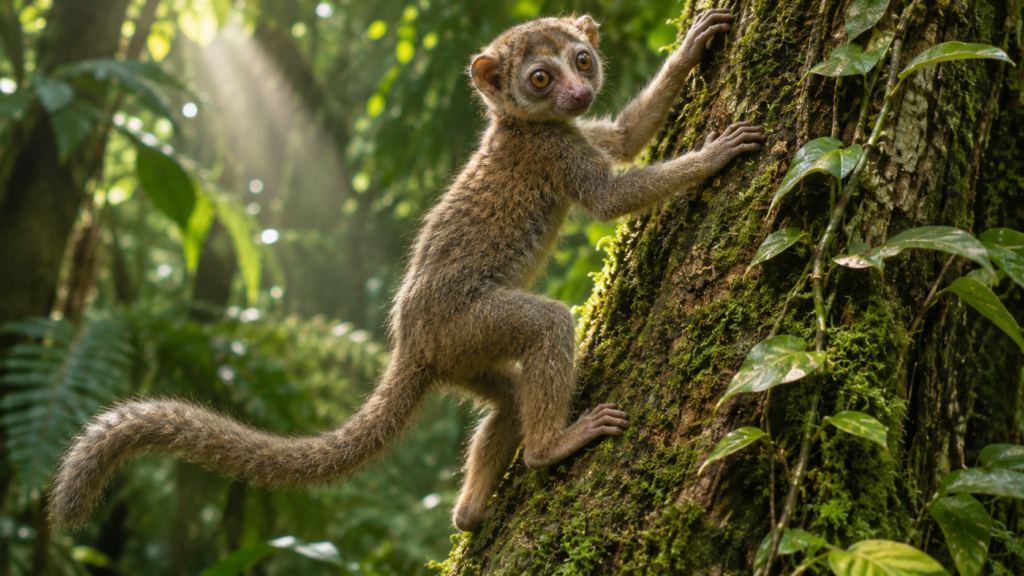
Darwinius was a tree-dwelling primate with a long tail. The specimen is about 58 cm long in total, of which the head and body without the tail make up about 24 cm. Its fingers and toes carried flat nails rather than claws, and it is thought to have moved nimbly on all fours through the trees of the forest.
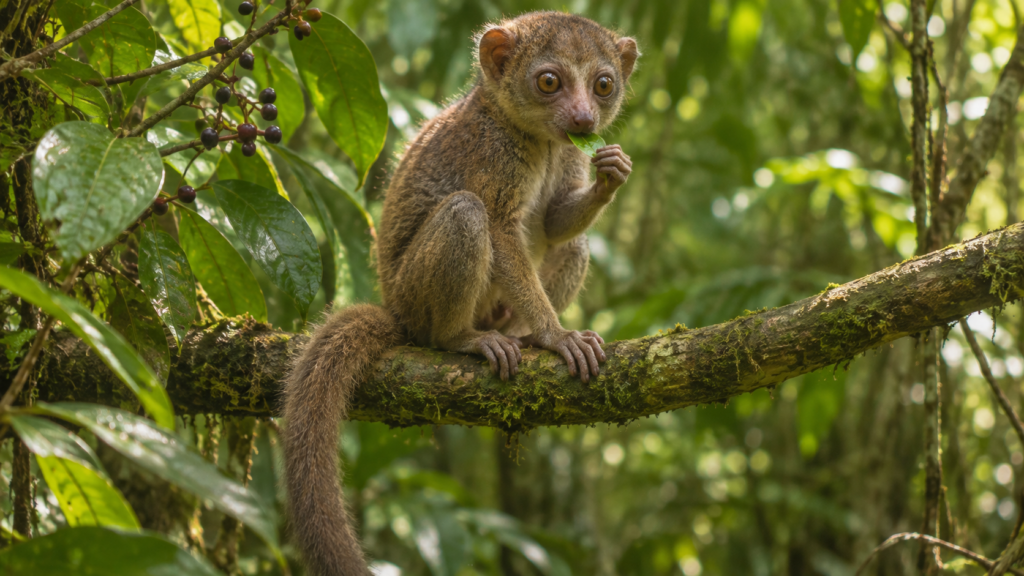
According to Jens Franzen of the Senckenberg Research Institute in Germany and colleagues, who described it in 2009, the specimen is a female about 9 to 10 months old that had already been weaned. Remains of leaves and fruit lie in the area of the stomach, and no insects were found. There are fractures near the right wrist and in the left thumb.
Messel is an old quarry near Frankfurt, Germany. During the Eocene a lake lay here, and the rock formed from its mud has yielded large numbers of fossil mammals, birds, fish and insects. The site was named a UNESCO World Heritage Site in 1995. In Darwinius’s time, a tropical rainforest surrounded Messel.
The “Missing Link” Announcement and What Followed
The fossil was dug up at Messel in 1983 by a private collector. The rock split into two slabs, and the skeleton was preserved across both. One slab was bought in 1991 by a dinosaur museum in Wyoming, but later examination showed that parts of its hands, feet and tail had been fabricated. The other slab, unaltered and more complete, was bought in 2007 by the Natural History Museum at the University of Oslo in Norway. The museum describes the price as “several million Norwegian kroner.” Jørn Hurum of the museum, who led the research, named the specimen “Ida” after his daughter.
The paper was published in the journal PLoS ONE on May 19, 2009, and on the same day a press conference was held at the American Museum of Natural History in New York. The mayor of New York attended, and the BBC broadcast the event live. A documentary for the US channel History and a book, both titled The Link, were ready to coincide with the announcement. The next day, Google put Ida into the logo on its home page.
The paper itself did not say that Darwinius was a direct ancestor of humans. Franzen and his colleagues pointed out that Darwinius lacks the “toothcomb” (lower front teeth arranged like a comb) and the grooming claw found in lemurs and their kin. Based on features such as the shape of its ankle bone, they argued that it represented an early branch of the haplorhines, the group that includes tarsiers, monkeys, apes and humans.
That placement was shaken five months later. In October 2009, Erik Seiffert of Stony Brook University in the US and colleagues reported Afradapis, a new adapiform from rocks about 37 million years old in Egypt. When 360 features were compared across 117 living and fossil primates, adapiforms fell not on the haplorhine side but next to the strepsirrhines, the group that includes lemurs and lorises. Darwinius and Afradapis grouped together in a branch of adapiforms that left no descendants, and the team concluded that their monkey-like traits had evolved independently, through convergence.
In 2010, a team led by Blythe Williams published a reply to Franzen and colleagues. They argued that Darwinius lacks features shared by haplorhines, such as a middle ear divided into two chambers and a bony wall separating the eye from the chewing muscles, and that it belongs with the strepsirrhines. Franzen’s side responded with a reply of its own. Today, the view that adapiforms are closer to the lemur side is widely accepted.
Related products
You can find books and products related to this article on Amazon.
If you buy through the links above, this blog may earn a commission.
About the images
The images in this article are illustrations created with AI (ChatGPT), and you are welcome to use them. If you do, we would appreciate a link back to this article as the source.
Sources
Franzen, J. L. et al. (2009). Complete primate skeleton from the Middle Eocene of Messel in Germany: morphology and paleobiology. PLoS ONE 4(5), e5723. https://doi.org/10.1371/journal.pone.0005723
Seiffert, E. R. et al. (2009). Convergent evolution of anthropoid-like adaptations in Eocene adapiform primates. Nature 461, 1118–1121. https://doi.org/10.1038/nature08429
Williams, B. A. et al. (2010). Darwinius masillae is a strepsirrhine—a reply to Franzen et al. (2009). Journal of Human Evolution 59(5), 567–573. https://doi.org/10.1016/j.jhevol.2010.01.003
Natural History Museum, University of Oslo, How Ida was found (discovery and purchase) https://www.nhm.uio.no/english/discover/ida/funnet/
Natural History Museum, University of Oslo, Book and movie (documentary and book) https://www.nhm.uio.no/english/discover/ida/book-and-movie/
Natural History Museum, University of Oslo, Reception (Google logo) https://www.nhm.uio.no/english/discover/ida/reception/
sciencenorway.no, The fossil Ida – five years on (press conference and BBC live broadcast) https://partner.sciencenorway.no/forskningno-fossils-media-coverage/the-fossil-ida–five-years-on/1401554
ScienceDaily (2010), ‘Missing link’ fossil was not human ancestor as claimed, anthropologists say (summary of the reply by Williams and colleagues) https://www.sciencedaily.com/releases/2010/03/100302131719.htm
Grube Messel (World Heritage listing) https://www.grube-messel.de/en/

コメント