This article contains affiliate links. As an Amazon Associate I earn from qualifying purchases.
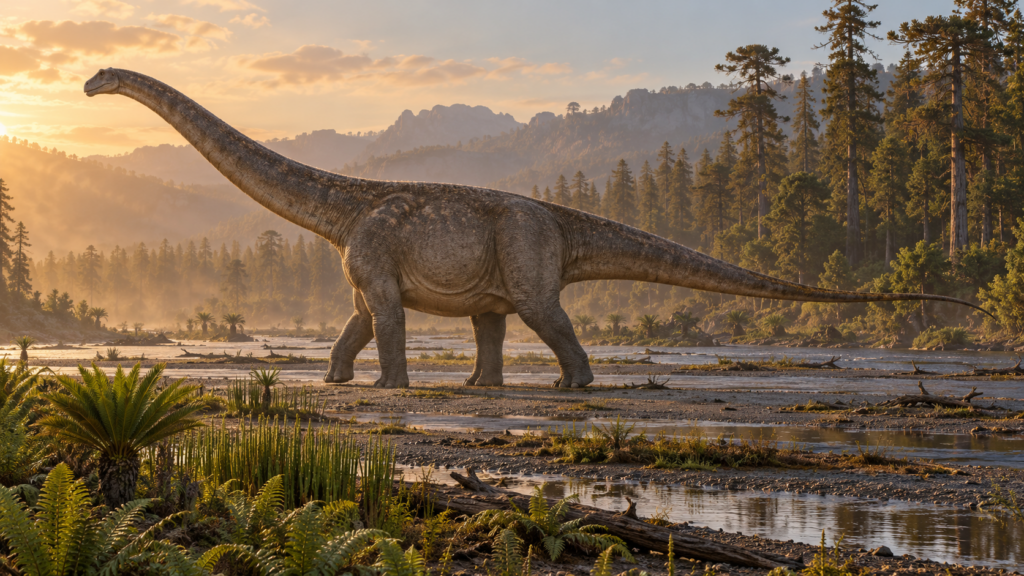
| Name | Brontosaurus, Greek for “thunder lizard” |
| Classification | Sauropoda, Diplodocidae, Apatosaurinae |
| Age | Late Jurassic (about 154–150 million years ago) |
| Where found | Wyoming and Utah, USA, in the rocks of the Morrison Formation |
| Length | About 20–22 m (Brontosaurus excelsus) |
| Weight | Estimates vary widely with the method, from about 15 to around 30 tonnes |
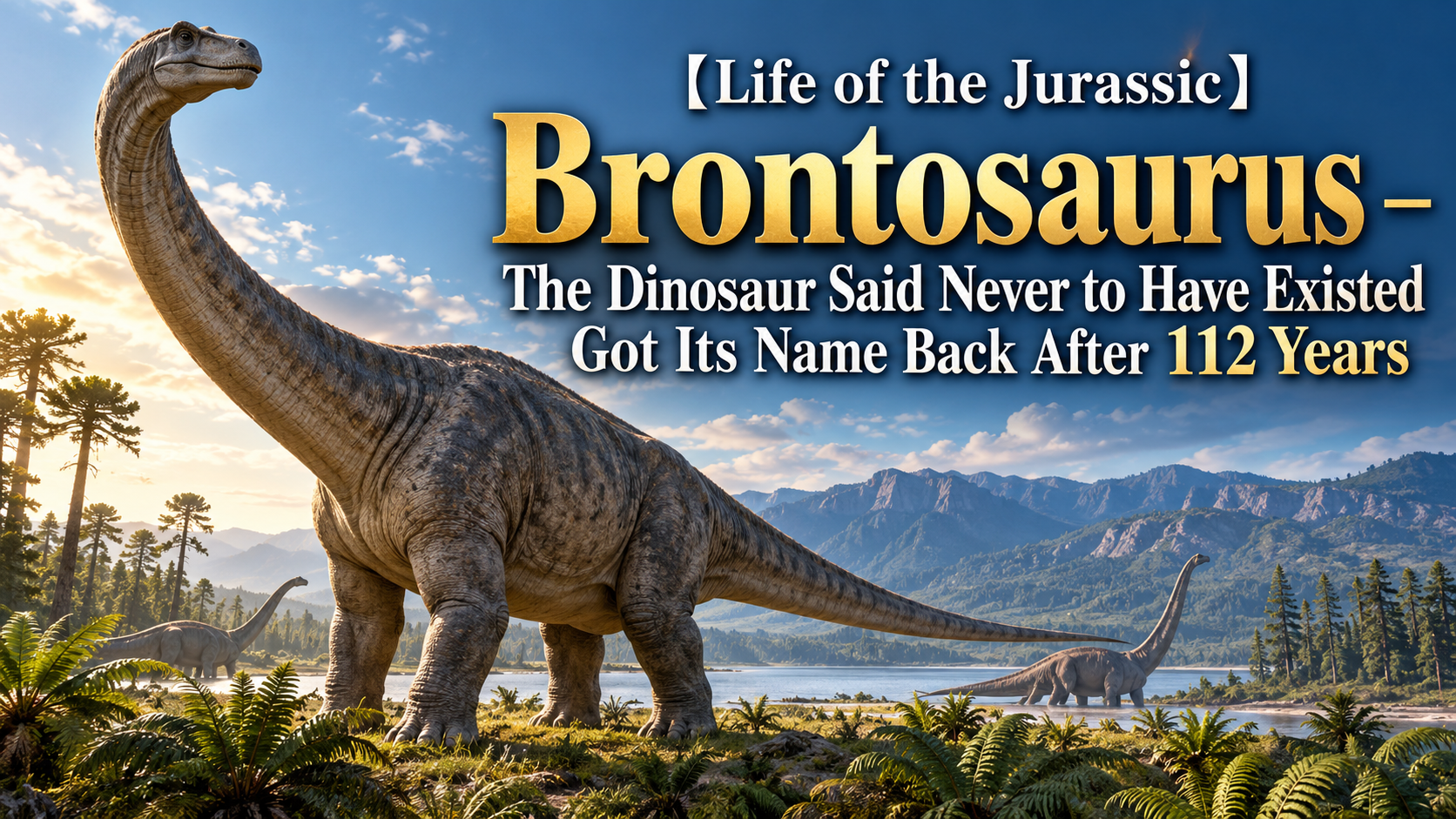
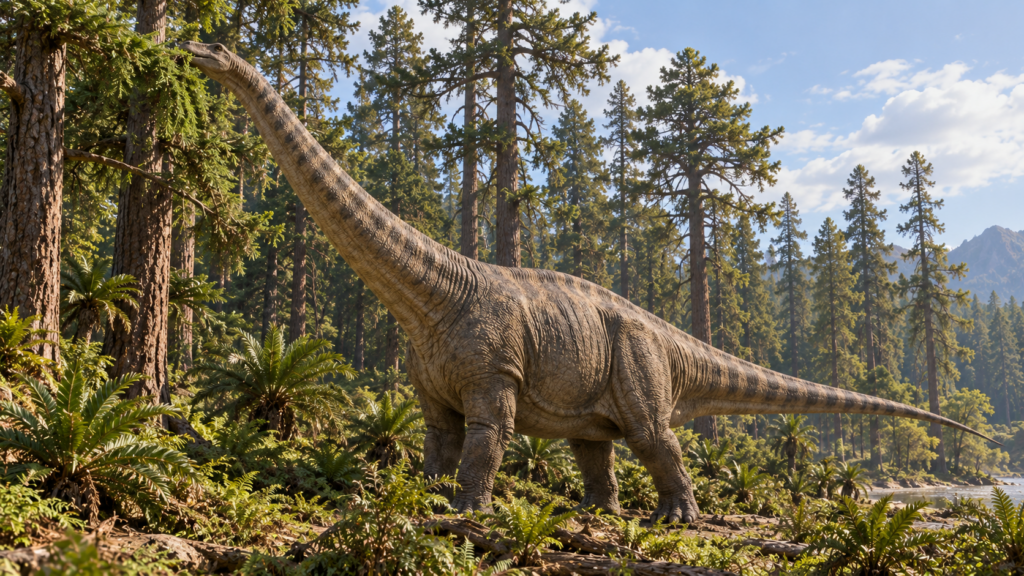
Brontosaurus was a plant-eating sauropod that lived in North America in the Late Jurassic. With its long neck and long tail, it has the shape most people picture when they think of a dinosaur. It was named in 1879, but in the early 20th century it was judged to be the same animal as Apatosaurus and its scientific name fell out of use. A study in 2015 recognized it again as a separate genus.
Appearance and Way of Life
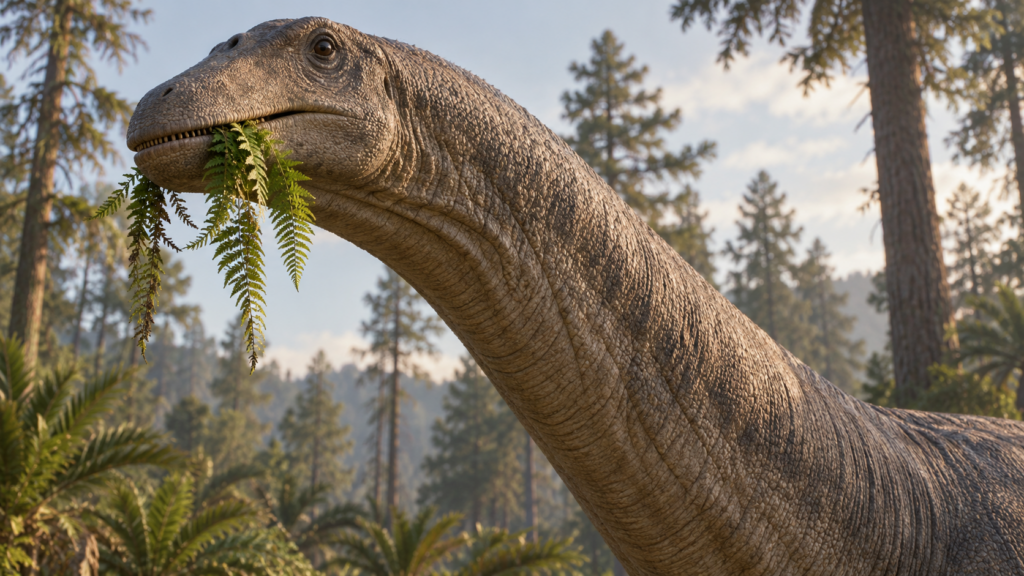
Brontosaurus carried its body on four thick, pillar-like legs, with a long neck stretching forward and an even longer tail behind. Compared with its relative Diplodocus, its neck bones were broad and sturdy and its body heavier, giving it a stockier build. Its head was tiny for the size of the animal, with thin, pencil-like teeth at the front of the mouth. It is thought to have used these teeth to strip plants and swallow them without chewing.
Three species are recognized. Besides Brontosaurus excelsus, named in 1879, there is Brontosaurus parvus, first described in 1902 as a separate genus, Elosaurus, and Brontosaurus yahnahpin, described in 1994 as a species of Apatosaurus. All of them come from the Morrison Formation of Wyoming and Utah.
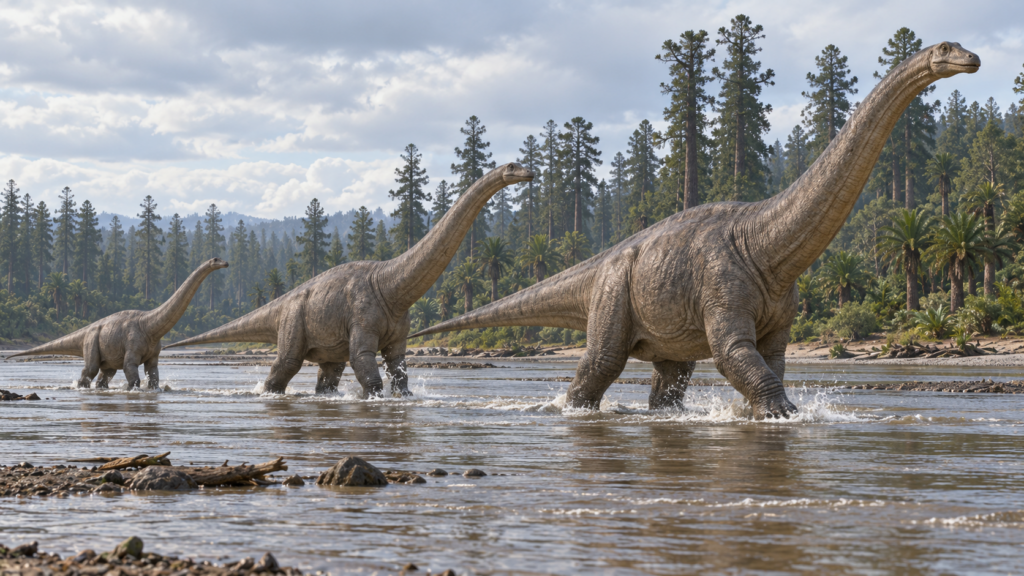
The Morrison Formation is a sequence of river and floodplain deposits that spread across the interior of North America in the Late Jurassic. The land had wet and dry seasons, and conifers, cycad relatives and ferns grew along the rivers. There were no grasses and no flowering plants yet. The same rocks have yielded the sauropods Diplodocus, Brachiosaurus and Camarasaurus, the plated Stegosaurus and the meat-eating Allosaurus, and Brontosaurus shared the land with them.
The type specimen (YPM 1980) was dug out of a quarry in Wyoming and is housed at Yale University’s Peabody Museum of Natural History. It is a well-preserved skeleton, and in 1883 it became the basis for the first published reconstruction of a complete sauropod skeleton.
A Name That Vanished and Came Back
Brontosaurus was named by the American paleontologist Othniel Charles Marsh. In 1877 Marsh gave the name Apatosaurus ajax to a sauropod found in Colorado. Two years later, in 1879, he gave a different name, Brontosaurus excelsus, to a large skeleton from Wyoming.
In 1903 Elmer Riggs of the Field Columbian Museum in Chicago studied a newly excavated sauropod skeleton and concluded that the differences between Brontosaurus and Apatosaurus were nothing more than differences in age within the same kind of animal. If the two belong to one genus, the name given first becomes the official one. Apatosaurus dated from 1877 and Brontosaurus from 1879, so Brontosaurus came to be treated as another name for Apatosaurus, and Brontosaurus excelsus became Apatosaurus excelsus.
Even after it dropped out of scientific use, the name Brontosaurus lived on in picture books, films and museum displays. The skeleton at Yale’s Peabody Museum, built from Marsh’s type specimen, went on display in 1931 and was known by that name for decades. Along the way, the idea that “Brontosaurus never existed” became widely known as well.
In 2015 Emanuel Tschopp and Octávio Mateus of NOVA University Lisbon in Portugal and Roger Benson of the University of Oxford published a paper that reviewed the classification of the whole family Diplodocidae. Rather than recording features species by species, the study recorded them specimen by specimen. It compared 81 specimens and species across 477 anatomical features to build a family tree, then turned the size of the differences between specimens into numbers to decide whether two groups should be separate genera or just separate species.
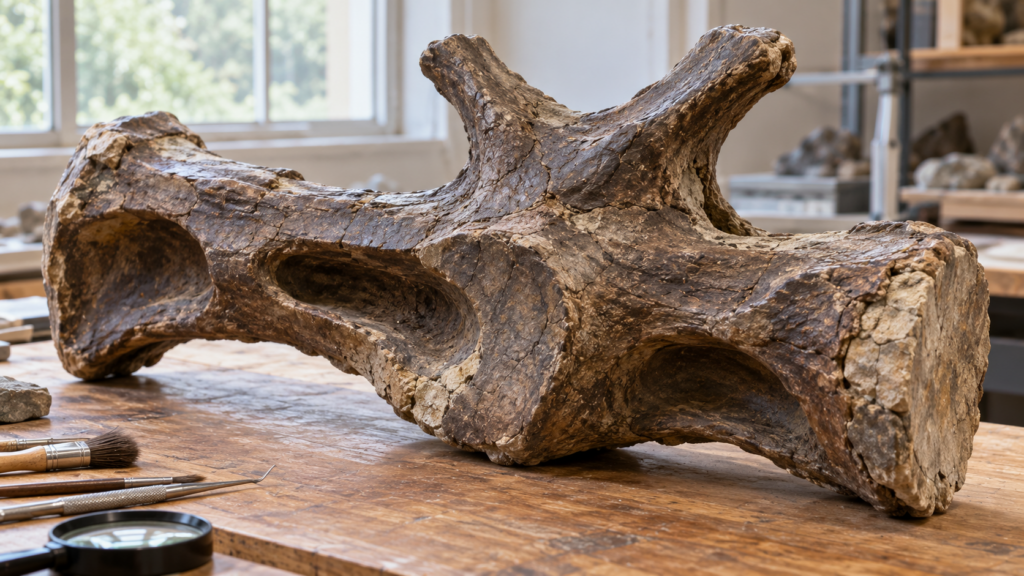
On that scale, different genera typically differ by more than about 0.222, while species within the same genus differ by less than 0.181. The difference between Apatosaurus and Brontosaurus came out at 0.2545, above the threshold for separate genera. The study also listed features found only in Brontosaurus, such as the shape of the base of the spines on the rear back vertebrae, the shape of the shoulder blade, and the proportions of an ankle bone. The team recognized Brontosaurus as a valid genus and placed in it the species previously described as Elosaurus and Eobrontosaurus.
After 112 years, counted from 1903, the name Brontosaurus returned as a scientific name. Even so, how to divide genera is partly a matter of judgment, and some researchers remain cautious about the conclusion. Apatosaurus and Brontosaurus are still very similar, close relatives, and the 2015 study itself places them as separate genera within the same subfamily, Apatosaurinae.
Related products
You can find books and products related to this article on Amazon.
If you buy through the links above, this blog may earn a commission.
Sources
Tschopp, E., Mateus, O. & Benson, R. B. J. (2015). A specimen-level phylogenetic analysis and taxonomic revision of Diplodocidae (Dinosauria, Sauropoda). PeerJ 3, e857. https://doi.org/10.7717/peerj.857
Marsh, O. C. (1879). Notice of new Jurassic reptiles. American Journal of Science (series 3) 18, 501–505. https://doi.org/10.2475/ajs.s3-18.108.501
Marsh, O. C. (1877). Notice of new dinosaurian reptiles from the Jurassic formation. American Journal of Science (series 3) 14, 514–516. https://doi.org/10.2475/ajs.s3-14.84.514
Riggs, E. S. (1903). Structure and relationships of opisthocoelian dinosaurs. Part I: Apatosaurus Marsh. Field Columbian Museum, Geological Series 2, 165–196.
Yale News (2019). Peabody Museum bids ‘Heads-Off’ to its beloved Brontosaurus. https://news.yale.edu/2019/12/12/peabody-museum-bids-heads-its-beloved-brontosaurus


コメント