This article contains affiliate links. As an Amazon Associate I earn from qualifying purchases.
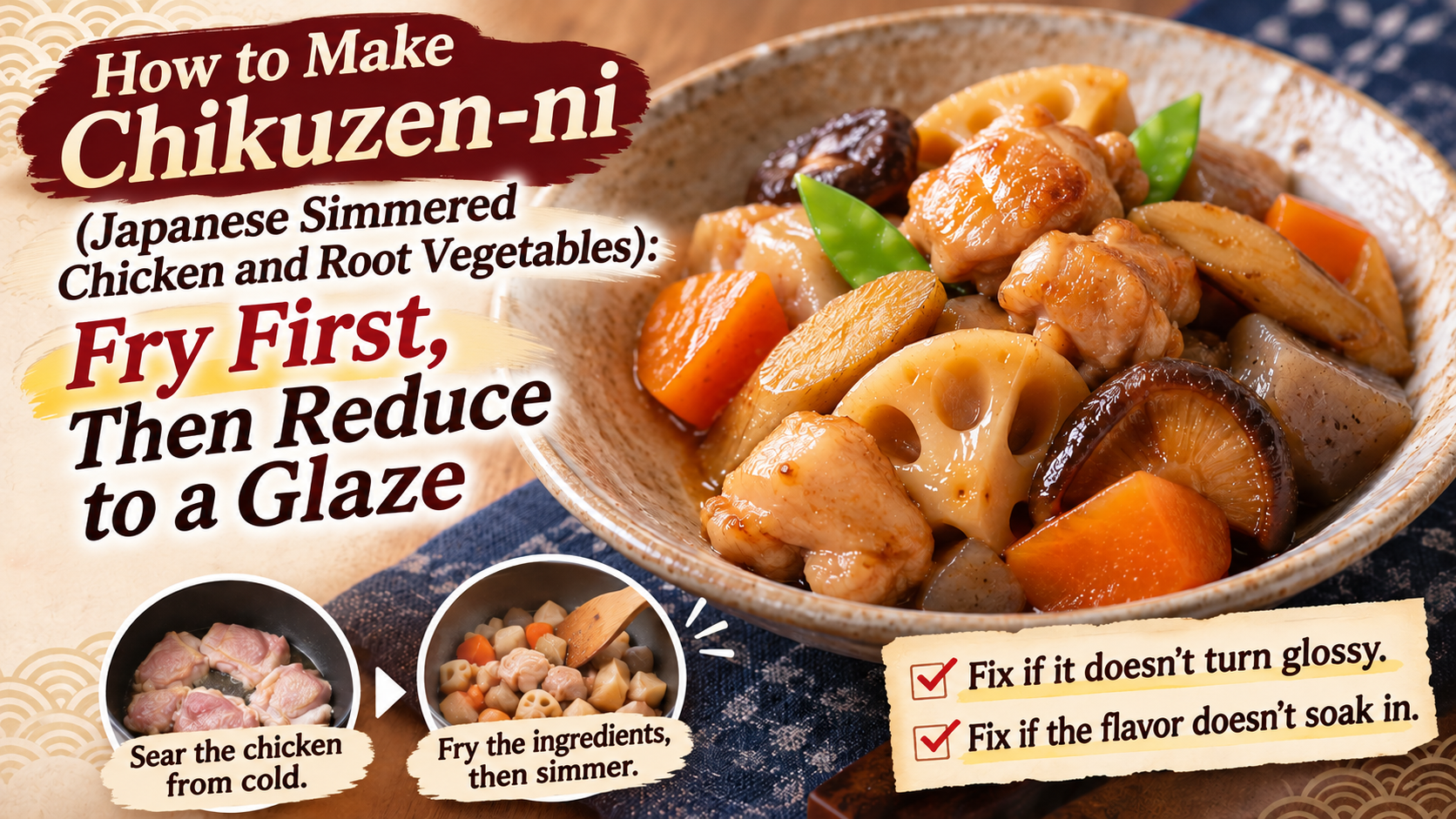
Chikuzen-ni is a Japanese dish of chicken and root vegetables simmered in a soy-based broth. Its gloss and depth of flavor come from two things: stir-frying everything in oil before it simmers, and cooking the liquid down until almost none is left. This is a basic recipe for four servings made with chicken thigh, burdock root, lotus root, carrot, konnyaku and dried shiitake mushrooms, along with tips for getting it right.
Ingredients (4 servings)
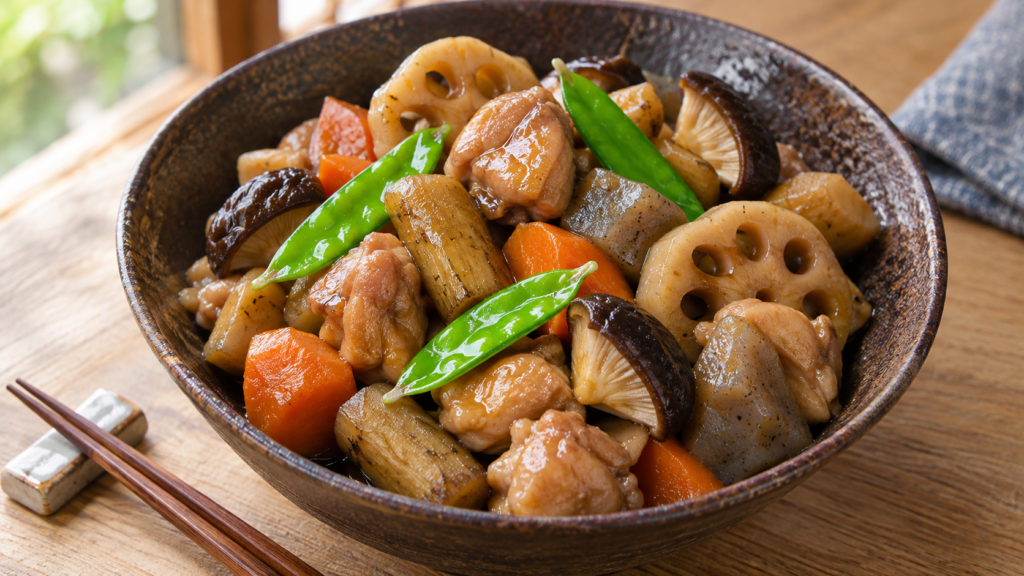
- Boneless chicken thigh: 300 g
- Burdock root (gobo): 120 g
- Lotus root (renkon): 200 g
- Carrot: 170 g
- Konnyaku: 1/2 block (about 125 g)
- Dried shiitake mushrooms: 6
- Snow peas: a few
- Vegetable oil: a little
- Shiitake soaking liquid and water: 540 ml combined
- Soy sauce: 4 tbsp (60 ml)
- Mirin: 55 ml (about 3 2/3 tbsp)
- Sugar: 25 g
- Sake: 2 tsp
Konnyaku is a firm, grey jelly made from the konjac plant; mirin is a sweet Japanese rice seasoning. Both are sold at Japanese and Asian grocery stores, as are burdock and lotus root. Some recipes use dashi (Japanese soup stock) instead of the shiitake soaking liquid. You can also add taro or boiled bamboo shoots.
Method
1. Rehydrate the shiitake
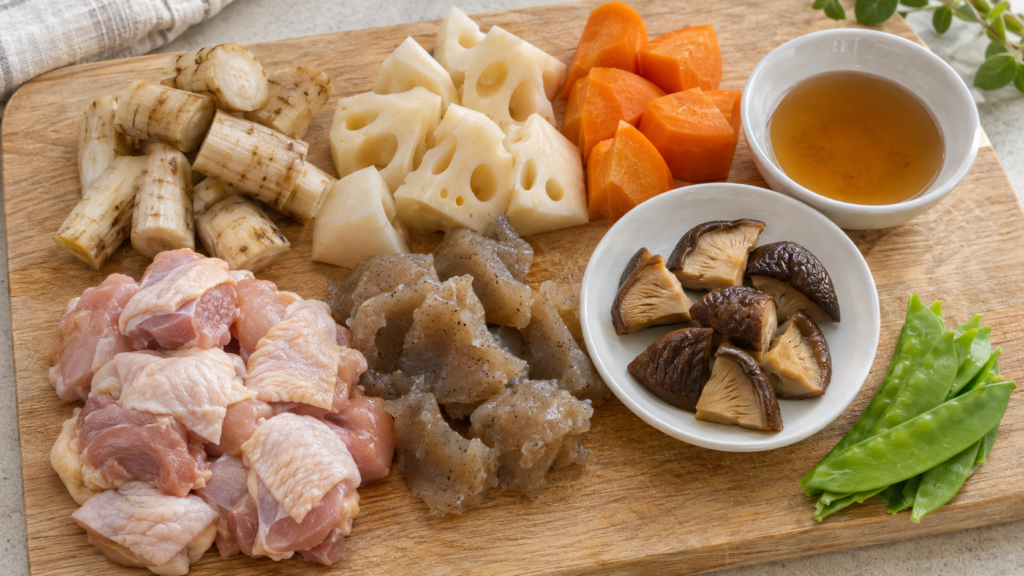
Soak the dried shiitake in water until soft. Remove the stems and cut each cap into quarters. Keep the soaking liquid.
2. Cut the vegetables and konnyaku
Peel the burdock, lotus root and carrot and roll-cut them (cut on the diagonal, turning the vegetable a quarter turn between cuts). Soak the burdock and lotus root in water, then drain. Tear the konnyaku into bite-size pieces by hand, boil it briefly and drain it in a colander.
3. Cut the chicken and blanch the snow peas
Cut the chicken into bite-size pieces. String the snow peas and blanch them briefly.
4. Brown the chicken skin side down
Put the oil in a cold pot and lay the chicken in it skin side down before turning on the heat. Cook until the skin is browned.
5. Stir-fry the vegetables
Add the burdock, lotus root, carrot, konnyaku and shiitake and stir until everything is coated with oil.
6. Simmer under a drop lid
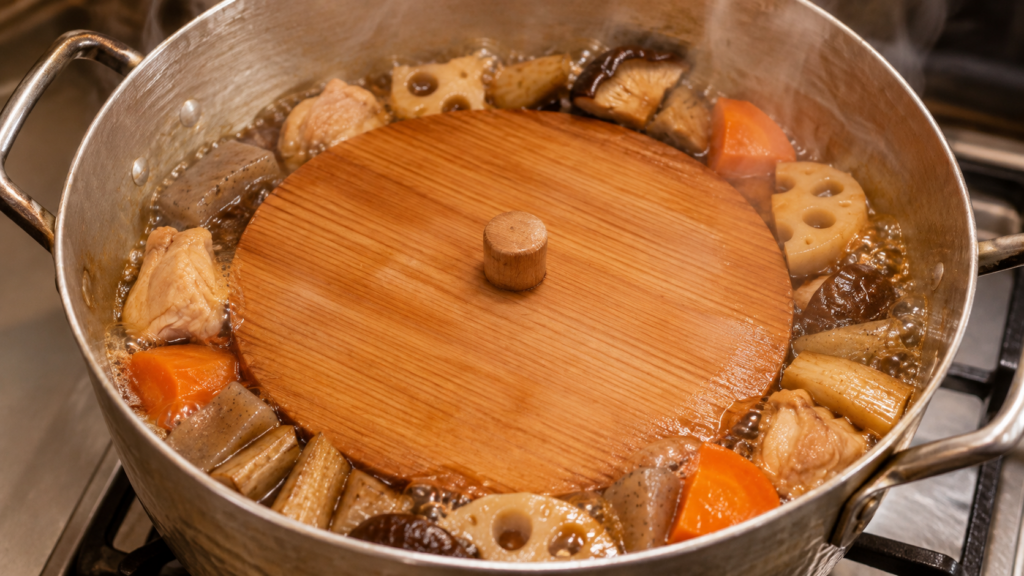
Make the shiitake soaking liquid up to 540 ml with water and add it, then add the soy sauce, mirin, sugar and sake. Cover with a drop lid (a lid that sits directly on the food) and simmer over medium-high heat. Shake the pot now and then so the pieces on the bottom come to the top.
7. Reduce to a glaze
When only a little liquid is left in the bottom of the pot, remove the drop lid and keep shaking the pot so the liquid coats the pieces. Turn off the heat once everything is glossy.
8. Let it cool, then serve
Let it cool in the pot so the flavors settle in. Reheat before eating, serve in a bowl and garnish with the snow peas.
Tips for getting it right
Start the chicken in a cold pot, skin side down
When the chicken goes into a cold pot before the heat is on, the skin warms slowly and renders its fat. That fat is what the vegetables are fried in, so you need very little added oil.
Fry everything before it simmers
Adding the liquid only after the root vegetables and konnyaku are coated in oil gives the finished dish more richness and helps the surface take on a glaze.
Tear the konnyaku by hand and boil it first
Torn pieces have rough, uneven surfaces that hold the sauce better than knife-cut ones. Boiling them first keeps the konnyaku’s smell out of the broth.
Use a drop lid to move the liquid around
Even with only a little liquid in the pot, a drop lid makes it bubble up over the top of the food so everything is seasoned evenly. A sheet of aluminum foil laid on the food works if you don’t have one.
Cooling lets the flavor soak in
Simmered dishes absorb their seasoning as they cool. Finish cooking a little ahead of time, let it cool in the pot, and reheat it to serve; the flavor will reach the centers of the root vegetables.
If something goes wrong
Too much liquid is left and there’s no gloss: It hasn’t been reduced enough. Remove the drop lid, turn the heat up a little, and keep shaking the pot until the liquid is almost gone.
The root vegetables taste bland inside: If you eat it straight away, the seasoning stays on the surface. Let it cool in the pot and reheat it.
The lotus root or burdock turned dark: The cut surfaces darken when left exposed to the air. Put them in water as soon as they’re cut.
The konnyaku smells: It wasn’t boiled first. Boil the torn konnyaku once before simmering and drain it.
Related products
You can find books and products related to this article on Amazon.
If you buy through the links above, this blog may earn a commission.
About the images
The images in this article are illustrations created with AI (ChatGPT), and you are welcome to use them. If you do, we would appreciate a link back to this article as the source.
Sources
- Kikkoman cooking class, Satoshi Ogino, “Chikuzen-ni” (PDF, Japanese)
- NHK Kyo no Ryori, Takashi Tamura, “Chikuzen-ni” (Japanese)
- NHK Kyo no Ryori, Masaaki Nakamura, “Chikuzen-ni” (Japanese)
- NHK Kyo no Ryori, Hideko Noguchi, “Chikuzen-ni” (Japanese)
- Fukuoka City Jonan Ward Health Center, “Gameni” (PDF, Japanese)


コメント