This article contains affiliate links. As an Amazon Associate I earn from qualifying purchases.
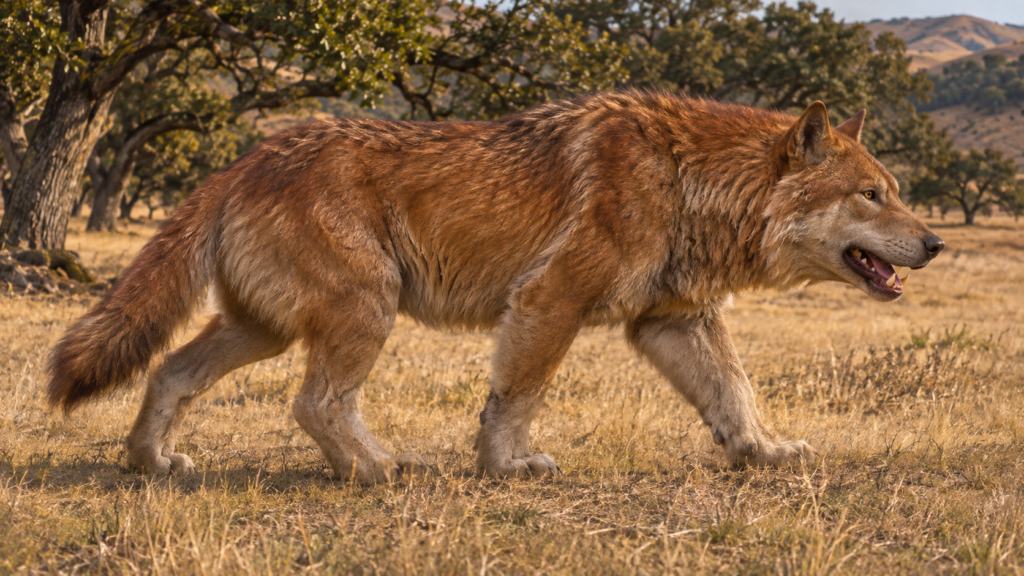
| Name | Dire wolf, Aenocyon dirus. The genus name means “terrible dog.” Long known as Canis dirus |
| Classification | Mammalia, Carnivora, Canidae |
| Age | Quaternary, Pleistocene (about 250,000 to about 12,900 years ago) |
| Found in | Across North America (including La Brea in Los Angeles) and parts of South America |
| Length | About the size of the largest modern gray wolves |
| Weight | Estimated at about 60 kg for the western subspecies and about 68 kg for the eastern subspecies |
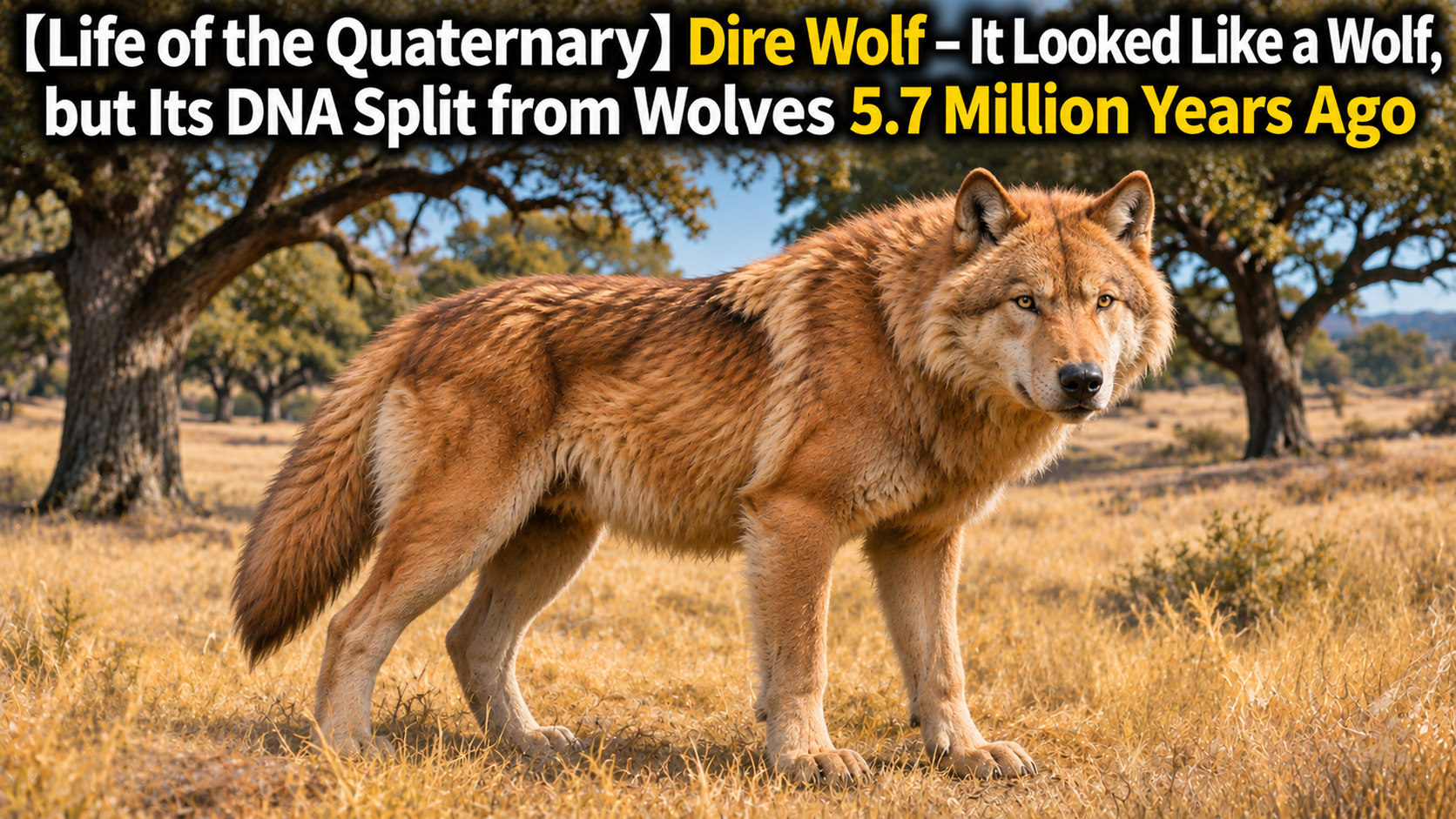
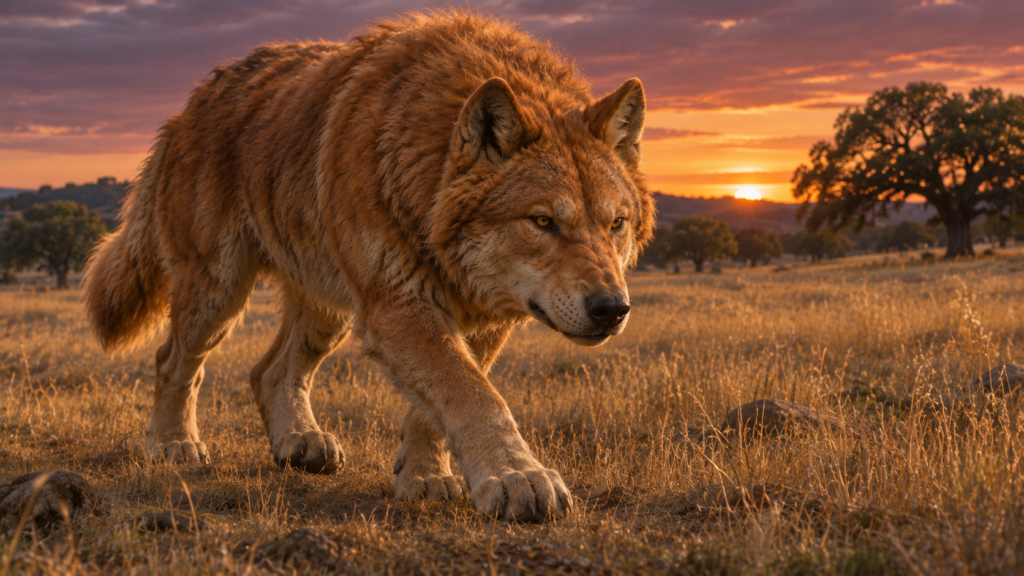
The dire wolf was a carnivore of the dog family that lived in North and South America during the Pleistocene. It looked very much like the modern gray wolf and was long placed in the same genus, Canis. In 2021, a study of DNA recovered from its fossils showed that it belonged to an entirely separate lineage that had split from wolves about 5.7 million years ago.
Appearance and Life
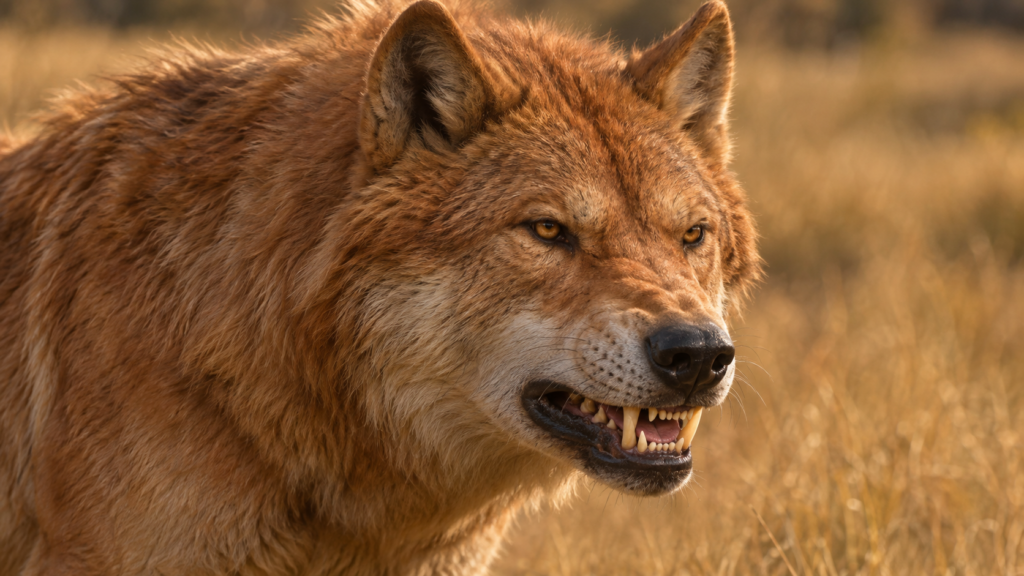
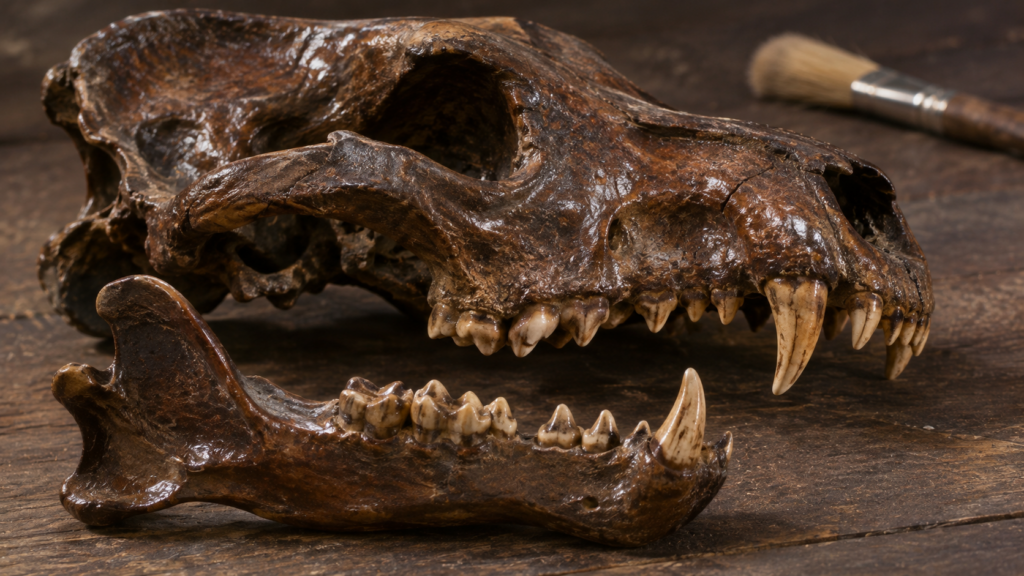
Dire wolves were about as large as the biggest modern gray wolves. Body mass estimates are about 60 kg for the western subspecies and about 68 kg for the eastern one. The skull was broad and solid, the teeth were large, and the temporalis muscles that close the jaws were bigger than a gray wolf’s, which points to a stronger bite.
The species was first described in the mid-nineteenth century. The American paleontologist Joseph Leidy studied fossils including a jaw from the bed of the Ohio River in Indiana, and in 1858 he gave the name Canis dirus. In 1918 the paleontologist John Merriam proposed a genus of its own, Aenocyon, but the name did not catch on, and for most of the twentieth century the dire wolf was treated as a member of Canis alongside the gray wolf.
Dire wolves appear in the North American fossil record about 250,000 years ago and ranged widely across North and South America until the end of the Pleistocene. Their fossils are especially abundant at La Brea in present-day Los Angeles. There, herbivores became stuck in natural asphalt seeping to the surface, and the carnivores drawn to them were trapped as well. More than 4,000 dire wolves have been excavated at La Brea, making it the most common large animal at the site. By comparison, the saber-toothed cat Smilodon is represented by more than 2,000 individuals.
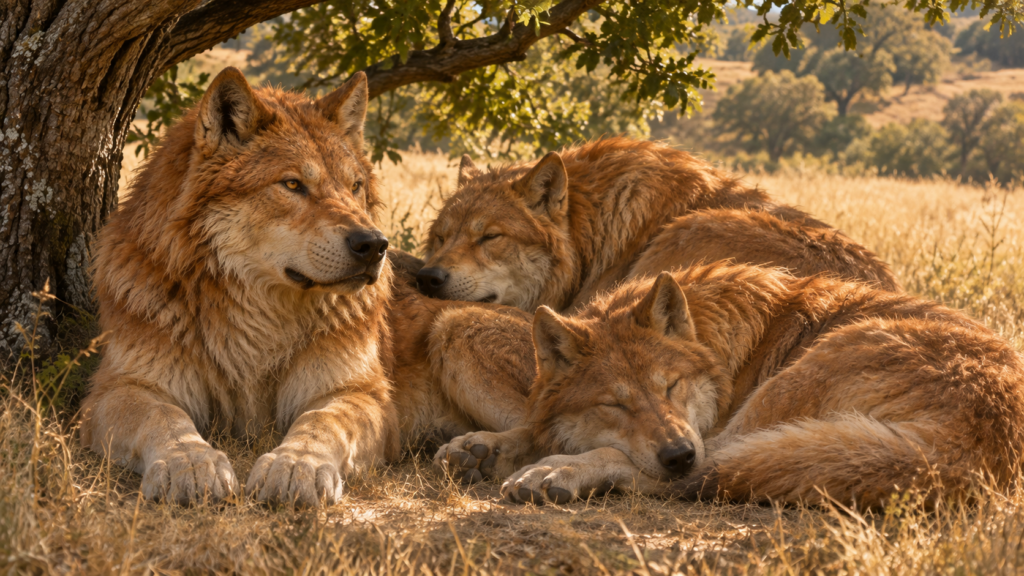
That imbalance is read as a sign that dire wolves moved in packs. A 2009 study compared the proportions of fossils at La Brea with field experiments in Africa in which recordings of distressed prey were played to attract carnivores. Dire wolves make up 51 percent of the carnivores at La Brea, matching the pattern in which social lions and hyenas arrived in large numbers. In 2017, a study of injuries on more than 35,000 La Brea bones reported that dire wolves often had injuries around the neck, interpreted as the result of being dragged by struggling prey.
Dire wolves disappeared by about 12,900 years ago. Around the same time, many other large animals in North America, including mammoths and Smilodon, went extinct.
A Wolf That Was Not a Wolf
In 2021, a team led by Angela Perri of Durham University sequenced genomes from five dire wolf fossils dating from about 13,000 to more than 50,000 years ago and compared them with living members of the dog family. The result contradicted the animals’ appearance. The dire wolf lineage had split from the lineage leading to gray wolves and coyotes about 5.7 million years ago.
Members of the dog family are known to interbreed readily across species; gray wolves and coyotes, for example, hybridize. Yet although dire wolves shared North America with gray wolves and coyotes, the team found no trace of gene flow between them. The researchers concluded that dire wolves evolved in isolation in the New World from an early date, while the ancestors of gray wolves and coyotes evolved in Eurasia and reached North America only relatively recently. They noted that their results were consistent with removing the dire wolf from Canis and placing it in Aenocyon, the genus proposed in 1918.
Work on the details of the family tree has continued. In 2026, a team that included many researchers from the genetic engineering company Colossal Biosciences published more detailed genomes from two dire wolves, one more than 72,000 years old and one more than 13,000 years old. According to that study, about two-thirds of dire wolf ancestry came from a lineage close to the common ancestor of gray wolves, coyotes and dholes, and the remaining third from a lineage that branched off earlier in the dog family, so the dire wolf arose from a mix of two old lineages. This study also uses the genus name Aenocyon.
In 2025, the same company announced three pups as “dire wolves.” They were gray wolves with 20 edits across 14 genes. The IUCN’s Canid Specialist Group issued a statement saying the three animals are not dire wolves, and the company’s chief scientist later described them as gray wolves with 20 edits.
Related products
You can find books and products related to this article on Amazon.
If you buy through the links above, this blog may earn a commission.
About the images
The images in this article are illustrations created with AI (ChatGPT), and you are welcome to use them. If you do, we would appreciate a link back to this article as the source.
Sources
Perri, A. R. et al. (2021). Dire wolves were the last of an ancient New World canid lineage. Nature 591, 87–91. https://doi.org/10.1038/s41586-020-03082-x
Gedman, G. L. et al. (2026). On the ancestry and evolution of the extinct dire wolf. Cell Genomics 6(8), 101306. https://doi.org/10.1016/j.xgen.2026.101306
Anyonge, W. & Roman, C. (2006). New body mass estimates for Canis dirus, the extinct Pleistocene dire wolf. Journal of Vertebrate Paleontology 26(1), 209–212. https://doi.org/10.1671/0272-4634(2006)26[209:NBMEFC]2.0.CO;2
Carbone, C. et al. (2009). Parallels between playbacks and Pleistocene tar seeps suggest sociality in an extinct sabretooth cat, Smilodon. Biology Letters 5(1), 81–85. https://doi.org/10.1098/rsbl.2008.0526
Brown, C. et al. (2017). Skeletal trauma reflects hunting behaviour in extinct sabre-tooth cats and dire wolves. Nature Ecology & Evolution. https://doi.org/10.1038/s41559-017-0131
Dundas, R. G. (1999). Quaternary records of the dire wolf, Canis dirus, in North and South America. Boreas 28, 375–385. https://doi.org/10.1111/j.1502-3885.1999.tb00227.x
Natural History Museum of Los Angeles County, La Brea Tar Pits fossil count (more than 4,000 dire wolves, more than 2,000 Smilodon) https://nhm.org/sites/default/files/2021-12/tar_pits_fossil_count.pdf
Scientific American (2025) (Colossal’s announcement; 20 edits in 14 genes) https://www.scientificamerican.com/article/the-dire-wolf-isnt-back-but-heres-what-de-extinction-tech-can-actually-do
Live Science (2025) (explanation by Colossal’s chief scientist) https://www.livescience.com/animals/extinct-species/our-animals-are-gray-wolves-colossal-didnt-de-extinct-dire-wolves-chief-scientist-clarifies
Wikipedia, Dire wolf (naming history, size comparison) https://en.wikipedia.org/wiki/Dire_wolf


コメント