This article contains affiliate links. As an Amazon Associate I earn from qualifying purchases.
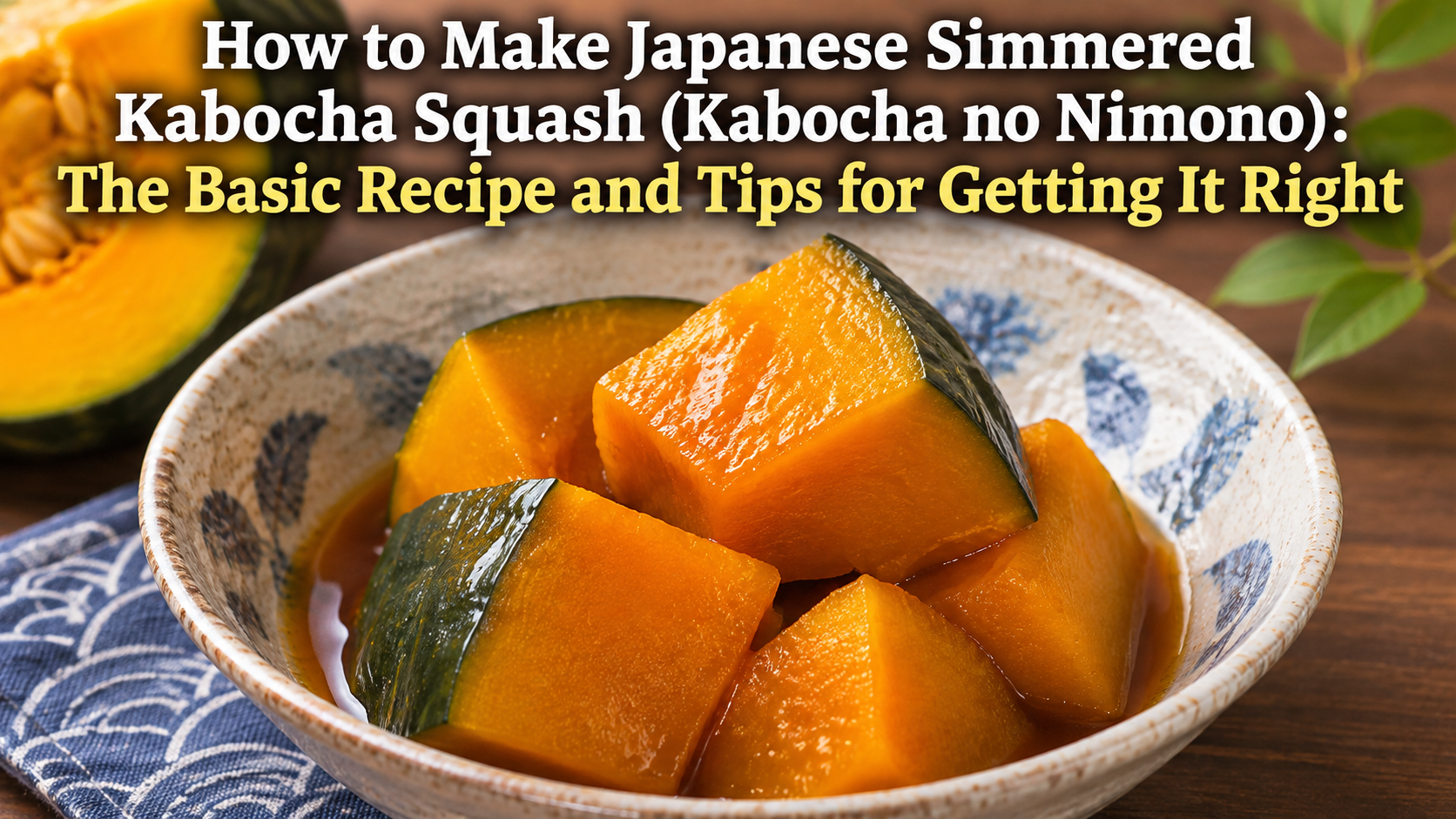
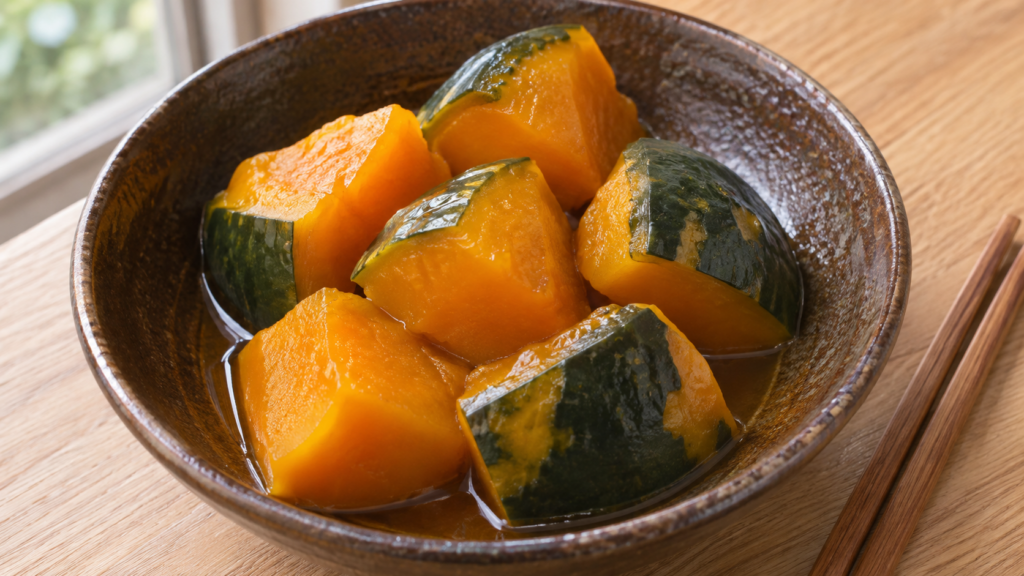
Kabocha no nimono is Japanese kabocha squash simmered in a light, sweet soy-based liquid. How it turns out depends on two things: scooping out the pulp and rounding off the corners before cooking, and turning off the heat before the squash is overcooked. Below is a basic recipe for two servings made with a quarter of a kabocha, followed by the points that help it turn out well.
Ingredients (serves 2)
- Kabocha squash: 1/4 (about 300 g)
- Water: 200 ml
- Sugar: 1 tbsp
- Mirin: 2 tbsp
- Soy sauce: 1 1/2 tbsp
Kabocha is a Japanese winter squash with dark green skin and dense, sweet orange flesh. Mirin is a sweet Japanese rice seasoning used in cooking. Replacing the water with the same amount of dashi, Japanese soup stock, adds savory depth. For a less sweet result, cut back on the sugar and let the mirin provide the sweetness.
How to Make It
1. Remove the seeds and pulp
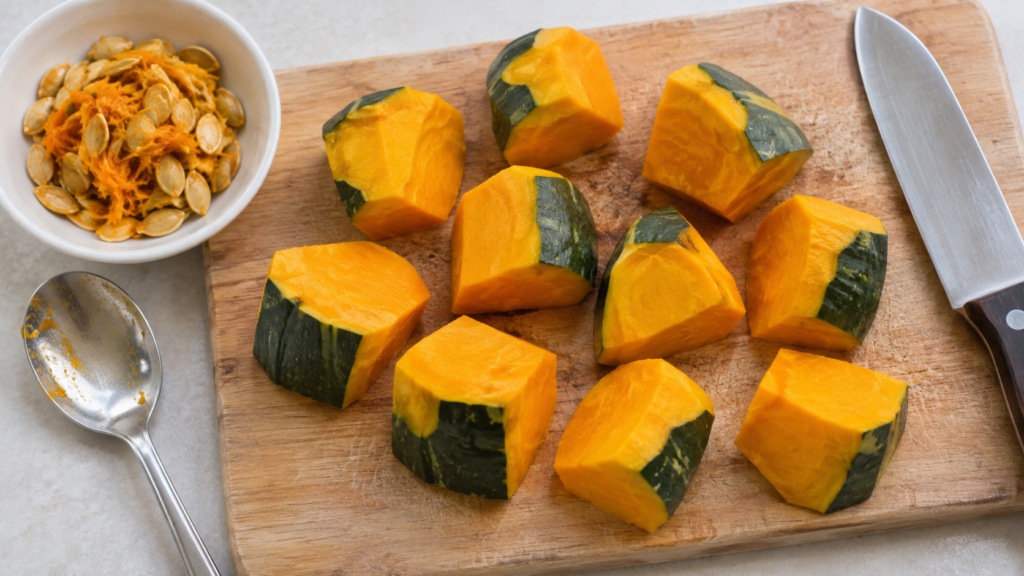
Scoop out the seeds and the stringy pulp with a spoon, scraping the cavity clean.
2. Cut and round off the edges
Cut the kabocha into pieces about 4 cm across. Peel away the skin here and there, then shave a thin slice off the sharp edges of each piece with a knife (this is called mentori). Cut the thicker parts a little smaller.
3. Arrange in the pot and heat
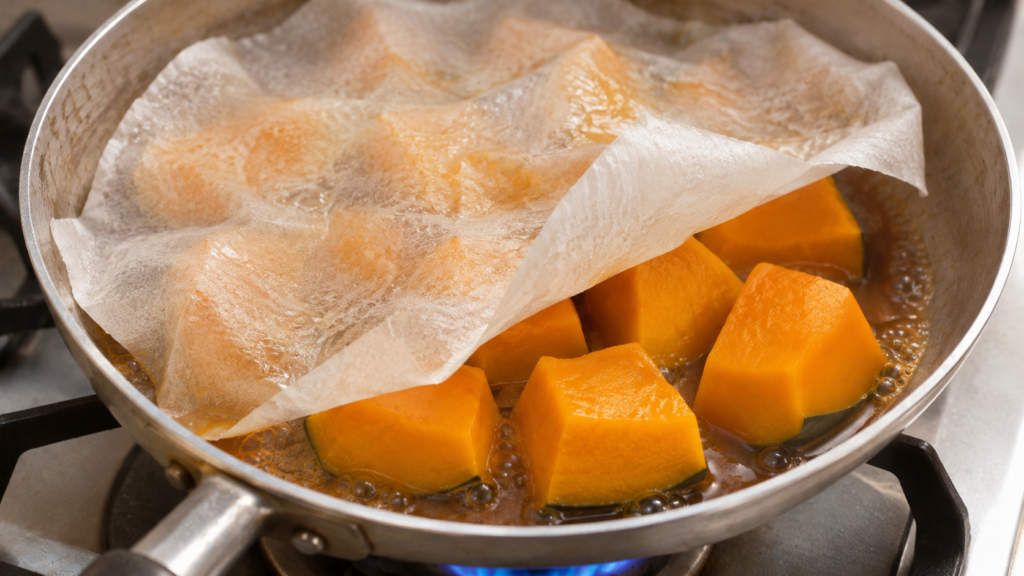
Use a pot wide enough to hold the pieces in a single layer. Arrange them skin side down, add the water, sugar, mirin and soy sauce, and set over medium heat.
4. Cover with a drop lid and simmer
When the liquid comes to a boil, lay a sheet of damp paper towel directly on top of the squash as a drop lid (otoshibuta), turn the heat to low and simmer for 10 to 15 minutes. Insert a bamboo skewer into the thickest piece; when it slides in easily, turn off the heat.
5. Let it rest, then serve
Remove the drop lid and leave the squash in the pot for about 10 minutes. Serve in bowls with a little of the simmering liquid spooned over.
Tips for Getting It Right
Remove the pulp and round off the edges
Kabocha tends to break apart where the flesh meets the skin and the pulp. Scraping out all the pulp and shaving off the corners helps the pieces hold their shape while they simmer.
Cut evenly and cook in a single layer
Cutting the thicker parts a little smaller so all the pieces are about the same size helps them cook evenly. Use a pot wide enough that the pieces don’t overlap.
Simmer skin side down
Simmering with the skin side down makes the skin softer and lets the flavor soak in well. If keeping the shape matters most, some cooks simmer the pieces skin side up instead.
Don’t overcook; finish with residual heat
Kabocha falls apart if it keeps cooking after it is tender. Turn off the heat as soon as the skewer goes in easily and let the residual heat finish the job. As it rests, the flavor settles and the pieces firm up.
If Something Goes Wrong
The squash fell apart. It was cooked too long, or pulp and sharp corners were left on. Next time, turn off the heat as soon as the skewer slides in, and remove the pulp and round off the edges before simmering. Leaving the pieces untouched after you turn off the heat also helps them keep their shape.
Some pieces were done and others weren’t. The pieces were not the same size or thickness. Cut the thick parts smaller and simmer in a pot that holds everything in a single layer.
Related products
You can find books and products related to this article on Amazon.
If you buy through the links above, this blog may earn a commission.
About the images
The images in this article are illustrations created with AI (ChatGPT), and you are welcome to use them. If you do, we would appreciate a link back to this article as the source.
Sources
- Kikkoman Home Cooking, Basic Japanese Cooking: Simmered Kabocha (in Japanese)
- Kikkoman Home Cooking: Simmered Kabocha (in Japanese)
- NHK Kyou no Ryouri Beginners: Simmered Kabocha, by Eiko Oba (in Japanese)
- NHK Kyou no Ryouri: Sweet Simmered Kabocha (in Japanese)
- Delish Kitchen: Basic Simmered Kabocha (in Japanese)
- Mizkan: Basic Simmered Kabocha (in Japanese)


コメント