This article contains affiliate links. As an Amazon Associate I earn from qualifying purchases.
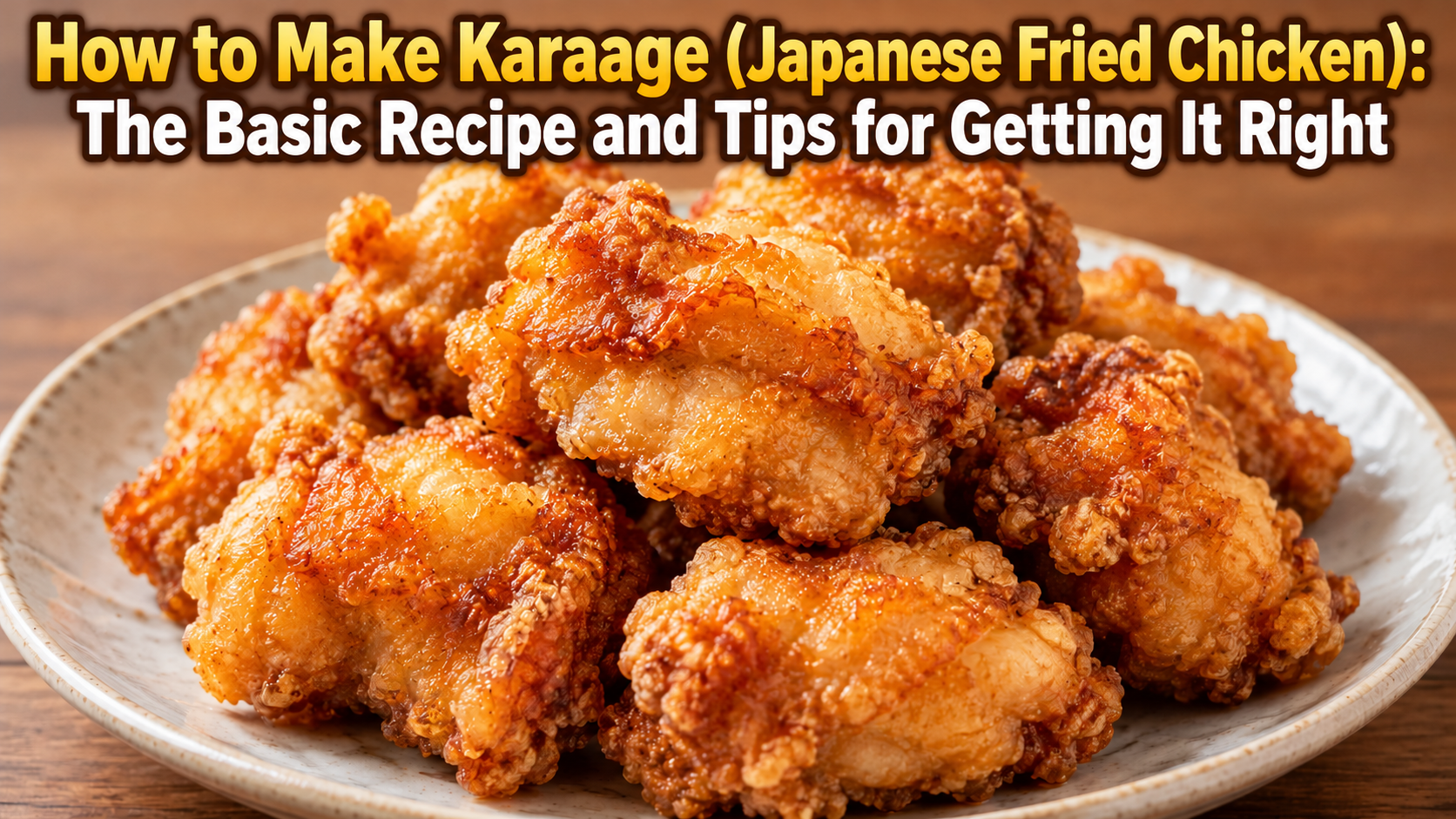
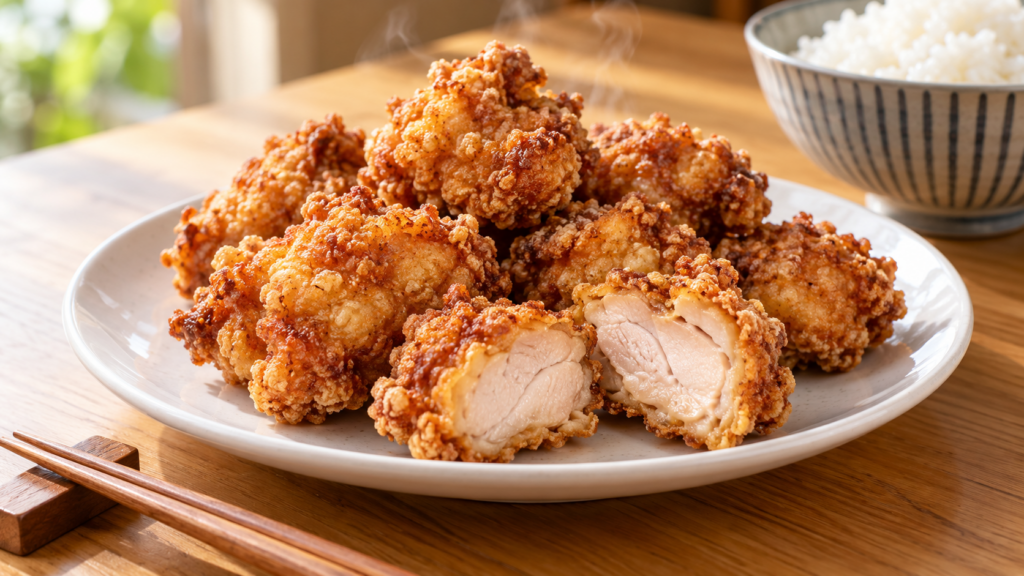
Karaage, Japanese fried chicken, comes down to two things: working the seasoning into the meat, and frying in two rounds at different temperatures. Here is a basic recipe for two, made with one boneless chicken thigh, along with tips for getting it right.
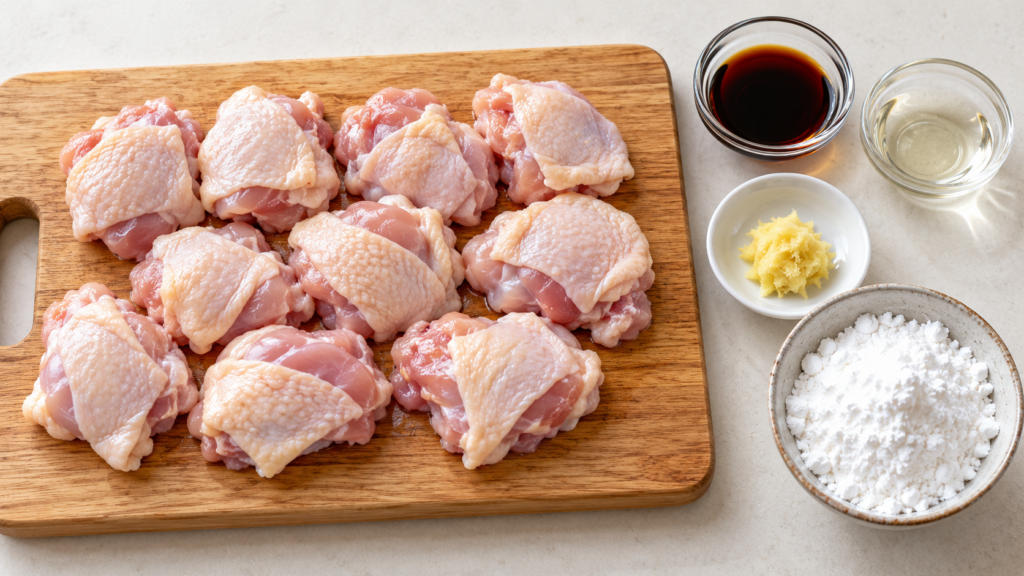
Ingredients (Serves 2)
- 1 boneless chicken thigh, skin on (about 300 g)
- 1 tbsp soy sauce
- 1 tbsp sake (Japanese rice wine)
- 1 tsp grated fresh ginger
- 4 tbsp potato starch
- Oil for frying (enough for a depth of 3 cm in a frying pan)
The coating is potato starch alone. If you have no sake, use the same amount of water.
Instructions
1. Cut the chicken
Trim off any excess yellow fat and make a few small cuts across the white sinews on the meat side. Slice into the thick parts and open them out so the thickness is even. Cut into large bite-sized pieces.
2. Work in the seasoning
Put the chicken, soy sauce, sake and ginger in a bowl and work them together with your hands for about 1 minute, until little liquid remains. Leave for 15 minutes.
3. Coat with potato starch
Just before frying, add the potato starch to the bowl and toss to coat.
4. First fry at 170°C
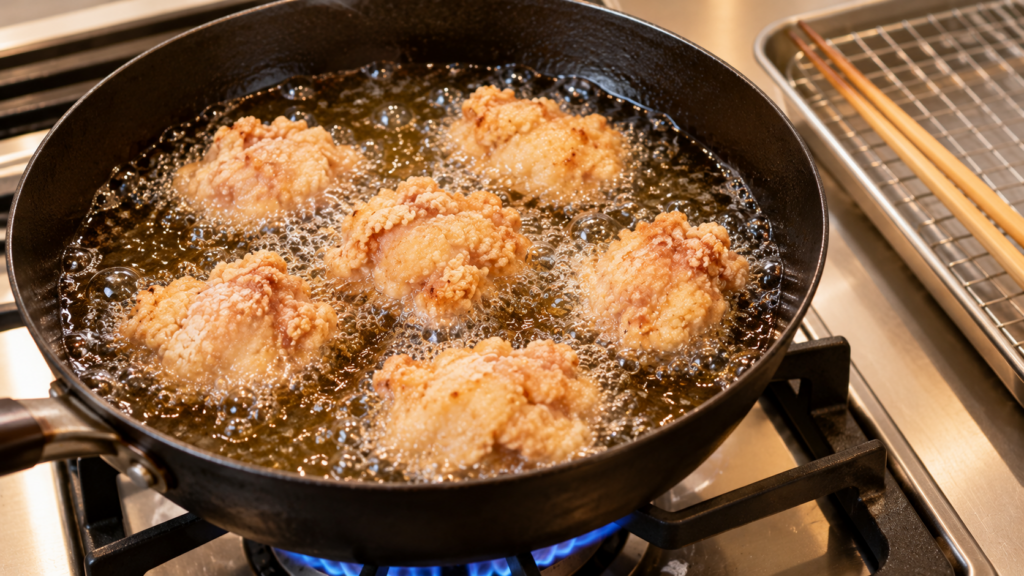
Pour oil into a frying pan to a depth of about 3 cm and heat to 170°C. At this temperature, a dampened and wiped chopstick placed in the oil gives off a stream of fine bubbles. Add the chicken without letting the pieces overlap. Leave them alone until the surface sets, then fry for 3 to 4 minutes in all, turning partway through. Stay by the stove while the oil is hot.
5. Rest
When the pieces are lightly colored, lift them onto a wire rack to drain and rest for about 2 minutes. Meanwhile, raise the oil to 180°C. At this temperature, a chopstick gives off vigorous, fizzing bubbles.
6. Second fry at 180°C
Return the chicken to the oil and fry for about 1 minute, lifting the pieces with chopsticks now and then to expose them to the air. When the coating is crisp and a deep golden brown, drain on the rack and serve.
Tips for Getting It Right
Keep the pieces even
If thickness and size vary, the small pieces finish while the large ones are still raw inside. Cutting the sinews keeps the meat from shrinking as it fries.
Work the seasoning in until the liquid is nearly gone
Massaging the seasoning in by hand, rather than just pouring it over, gets flavor into the meat quickly and keeps it tender. Too much leftover liquid makes the coating sticky.
Add the potato starch just before frying
Added too early, the starch absorbs moisture from the meat and turns sticky. It does not need to be perfectly even. A coating with thicker and thinner patches fries up crisper.
Do not touch the pieces until the surface sets
Fresh in the oil, the coating is still soft and comes off easily. Wait until it has set before turning the pieces.
Fry twice, at two temperatures
The first fry at 170°C cooks the inside. While the pieces rest, residual heat keeps cooking them through. A short second fry at 180°C drives moisture out of the coating and makes it crisp. Lifting the pieces into the air helps moisture escape too.
If Something Goes Wrong
The coating is soggy. The oil was too cool in the second fry, or the fried pieces were piled on top of each other. Bring the oil up to 180°C first, and spread the pieces out on a rack to drain. Leftovers crisp up again with a short fry in 180°C oil.
The coating came off. The pieces were touched before the surface set, or too much liquid was left from the seasoning. Work the seasoning in until little liquid remains, and wait for the surface to set.
The outside is brown, but the inside is undercooked. The oil was too hot or the pieces too large. Cut one open, and if the inside is still red, return the chicken to 170°C oil to cook through. Next time, cut the pieces evenly and hold the oil at 170°C.
The coating is too dark or burnt. The oil was too hot, or too much soy seasoning stayed on the surface. Grated ginger also burns easily, so use only the squeezed juice if this bothers you.
The meat is tough. It was fried too long. Take the pieces out after about 1 minute in the second fry.
Related products
You can find books and products related to this article on Amazon.
If you buy through the links above, this blog may earn a commission.
About the images
The images in this article are illustrations created with AI (ChatGPT), and you are welcome to use them. If you do, we would appreciate a link back to this article as the source.
Sources
- Kikkoman, chicken karaage, basic Japanese cooking series (in Japanese)
- Kikkoman Home Cooking, basic chicken karaage (in Japanese)
- Minna no Kyou no Ryouri, chicken karaage by Masaru Nakagawa (in Japanese)
- Minna no Kyou no Ryouri, chicken karaage by Chizuru Ohara (in Japanese)
- Delish Kitchen, juicy twice-fried karaage (in Japanese)
- All About, basic chicken karaage (in Japanese)


コメント