This article contains affiliate links. As an Amazon Associate I earn from qualifying purchases.
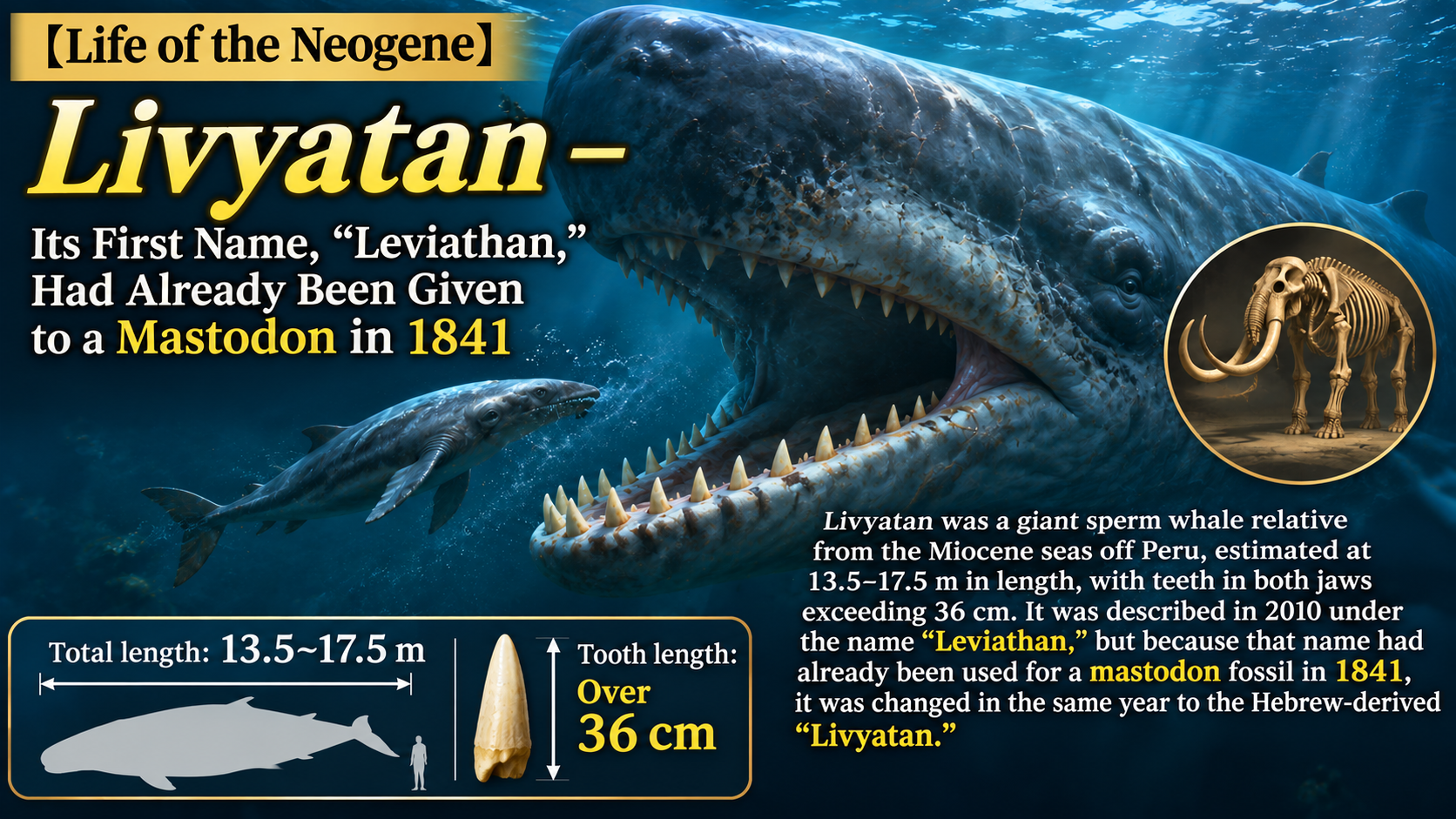
| Name | Livyatan melvillei. The genus name is the Hebrew name of Leviathan, the sea monster of the Hebrew Bible. The species name honors Herman Melville, author of Moby-Dick |
| Classification | Mammalia, Cetacea, Odontoceti (a relative of the sperm whale) |
| Age | Neogene, late Miocene (about 9.9 to 8.9 million years ago; the original description gave about 12 to 13 million years ago) |
| Found in | The coastal desert of southern Peru (Pisco Formation, Cerro Colorado) |
| Length | Estimated at about 13.5 to 17.5 m (type specimen) |
| Skull length | About 3 m |
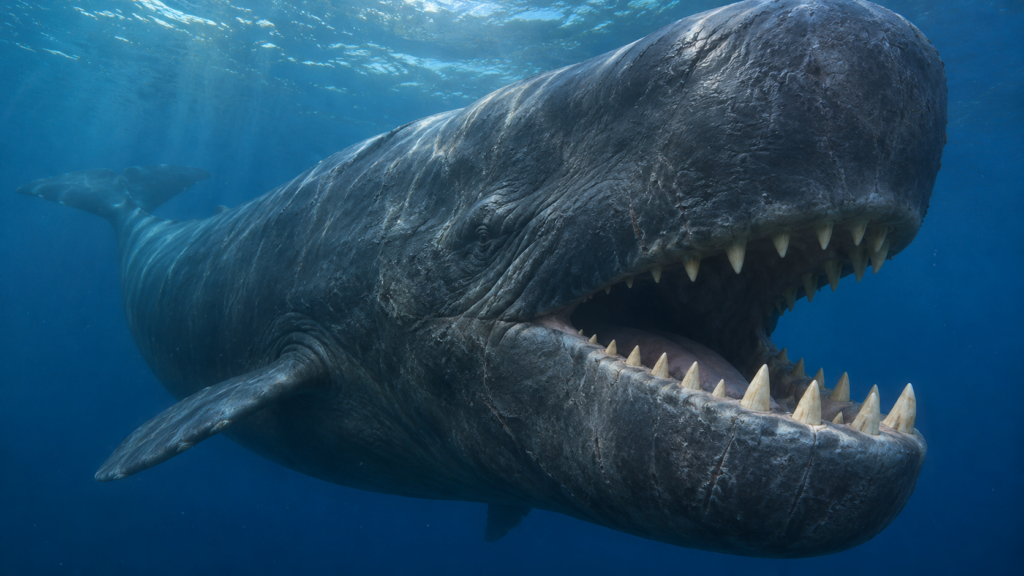
| Teeth | Up to more than 36 cm long and 12 cm in diameter |
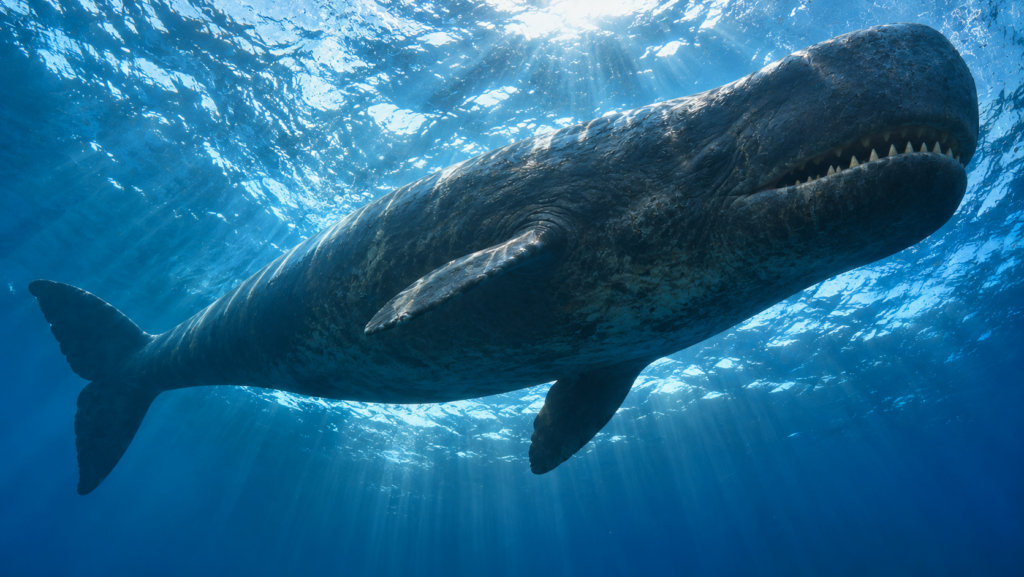
Livyatan was a large relative of the sperm whale that lived in the Miocene seas off the west coast of South America. Its upper and lower jaws were lined with long, thick teeth, and it is thought to have bitten into and eaten large prey. When it was described in 2010, its scientific name was Leviathan, but that name turned out to have been given to mastodon fossils in the 19th century, and it was changed to Livyatan later the same year.
Appearance and Life
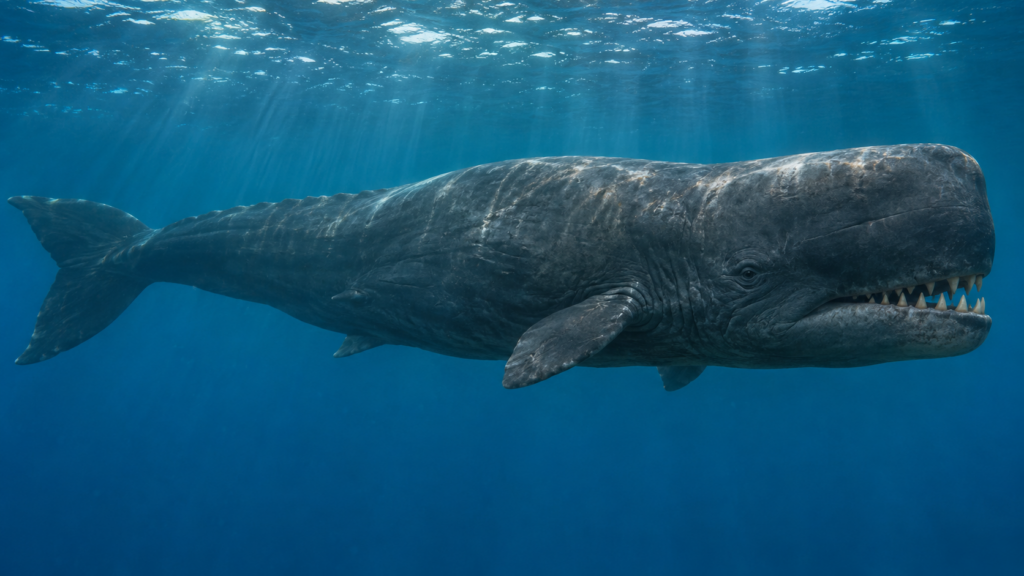
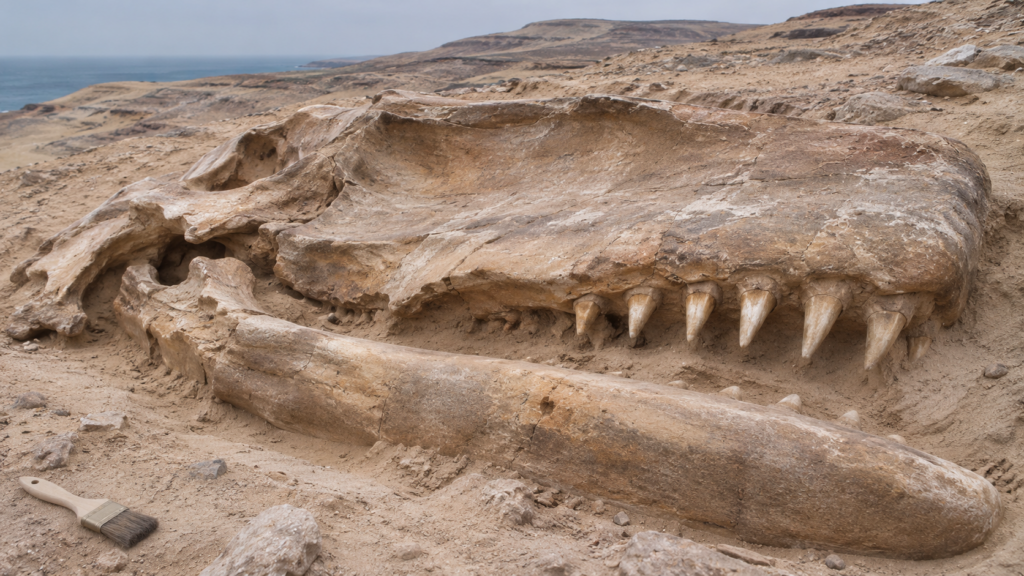
What is known of Livyatan comes mainly from its type specimen, MUSM 1676, which preserves the skull, the lower jaw and teeth. Based on this specimen, its length is estimated at 13.5 to 17.5 m, close to the size of the modern sperm whale. The skull is about 3 m long.
The modern sperm whale has functional teeth only in its lower jaw and feeds mainly on squid. Livyatan had large teeth in both its upper and lower jaws. The largest are more than 36 cm long and 12 cm in diameter. The temporal fossa, the hollow in the skull that holds the jaw-closing muscles, is also much larger than in the modern sperm whale. From these features, the original description concluded that Livyatan fed mainly on medium-sized baleen whales.
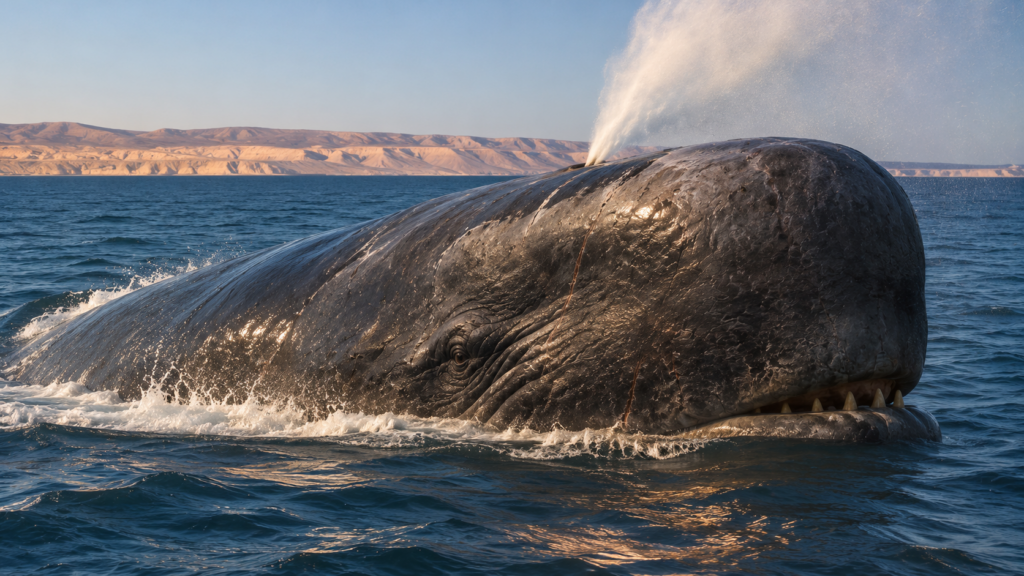
The top of the skull has a large basin that extends onto the snout. In the modern sperm whale, this area holds a large organ made of oil and fat, the spermaceti organ. Livyatan may also have had a large spermaceti organ.
The type specimen was found in 2008 in the Pisco Formation, which spreads across the coastal desert of southern Peru, by Klaas Post, a researcher at the Natural History Museum Rotterdam in the Netherlands. It is kept at the Museum of Natural History of the National University of San Marcos in Lima. The Pisco Formation has yielded large numbers of fossils of whales, sharks and other marine animals. The giant shark megalodon lived in the same sea at the same time.
The original description dated the fossil to about 12 to 13 million years ago, in the middle Miocene. The age of the rock layer was later revised using fossil diatoms and dating of volcanic ash, and it is now placed at about 9.9 to 8.9 million years ago, in the late Miocene (Tortonian stage).
“Leviathan” Was a Mastodon’s Name
In July 2010, a research team led by Olivier Lambert of the Royal Belgian Institute of Natural Sciences published the fossil in the journal Nature as a new genus and species of whale. For the genus they chose Leviathan, the English name of the sea monster of the Hebrew Bible, and named the species Leviathan melvillei. The species name honors Melville, author of Moby-Dick, a novel about a giant sperm whale.
The genus name Leviathan, however, was already taken. In 1841, a man named Koch had given the name Leviathan to mastodon fossils from North America. That name had since come to be treated as a later name for the same animal as the mastodon genus Mammut, named in 1799. Under the rules for animal names, the same genus name cannot be used for two different animals, and the one given first takes priority. This holds even for names that are no longer in use.
In August of the same year, the team published a correction in Nature and renamed the genus Livyatan, the Hebrew name of the sea monster. The species name melvillei stayed the same. News reports of the July 2010 announcement used the name “Leviathan,” so articles survive under both the old name and the new one.
Related products
You can find books and products related to this article on Amazon.
If you buy through the links above, this blog may earn a commission.
About the images
The images in this article are illustrations created with AI (ChatGPT), and you are welcome to use them. If you do, we would appreciate a link back to this article as the source.
Sources
Lambert, O. et al. (2010). The giant bite of a new raptorial sperm whale from the Miocene epoch of Peru. Nature 466, 105–108. https://doi.org/10.1038/nature09067
Lambert, O. et al. (2010). Erratum: The giant bite of a new raptorial sperm whale from the Miocene epoch of Peru. Nature 466, 1134. (the replacement genus name) https://doi.org/10.1038/nature09381
Lambert, O., Bianucci, G. & de Muizon, C. (2017). Macroraptorial sperm whales (Cetacea, Odontoceti, Physeteroidea) from the Miocene of Peru. Zoological Journal of the Linnean Society 179(2). (the revised age) https://doi.org/10.1111/zoj.12456
Wikipedia, Livyatan (discovery, length estimate, origin of the name, repository) https://en.wikipedia.org/wiki/Livyatan


コメント