
This article contains affiliate links. As an Amazon Associate I earn from qualifying purchases.
Teriyaki chicken comes down to two things: browning the skin well, and reducing the sauce until it turns glossy. Here is a basic recipe for one chicken thigh, serving two, along with tips for getting it right.
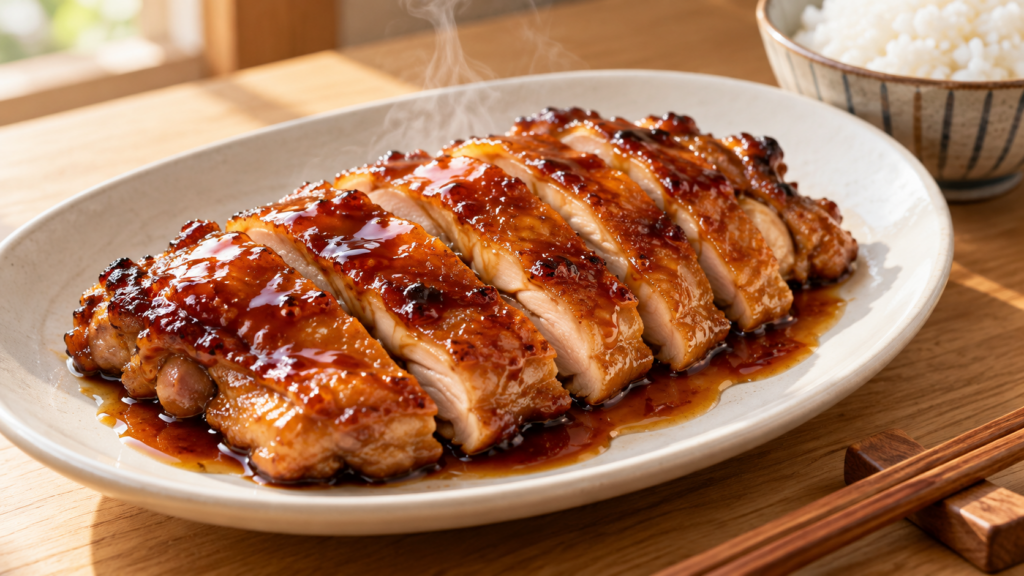
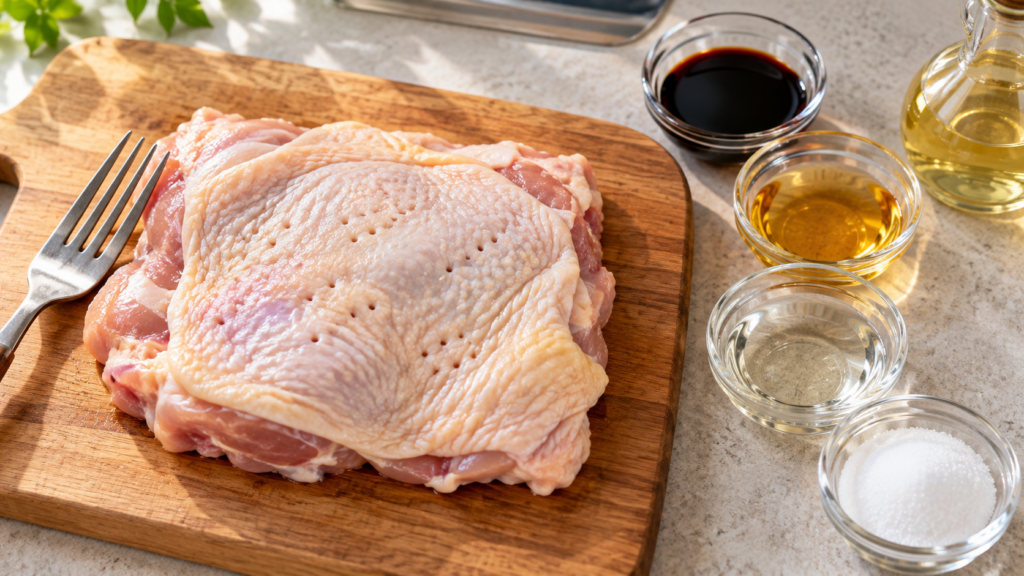
Ingredients (serves 2)
- Boneless chicken thigh, skin on: 1 (about 250–300 g)
- Vegetable oil: 2 tsp
- Soy sauce: 2 tbsp
- Mirin: 2 tbsp
- Sake: 1 tbsp
- Sugar: 1 tbsp
Mirin is a sweet Japanese rice seasoning, and sake is Japanese rice wine. An easy way to remember the sauce is equal amounts of soy sauce and mirin, with half that amount of sugar, which makes it simple to scale up or down. If you have no sake, use the same amount of water. For a less sweet sauce, reduce the sugar.
Method
1. Prepare the chicken
Trim off any excess yellow fat from the chicken, and make a few cuts with the tip of a knife across the white sinews on the meat side. Prick the skin in several places with a fork. Pat the surface dry with paper towels. Combine the soy sauce, mirin, sake and sugar in a small bowl.
2. Cook skin side down
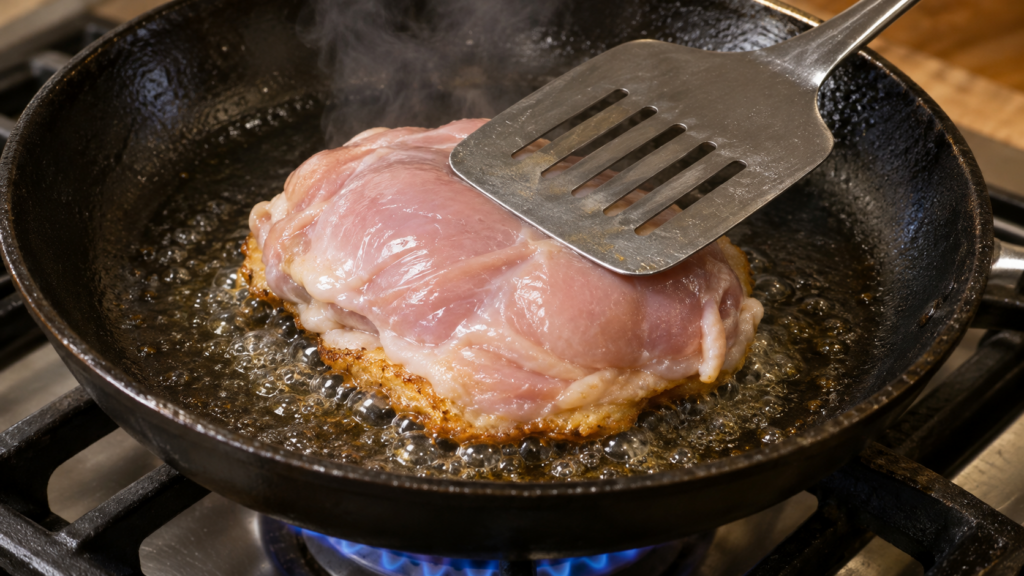
Heat the oil in a frying pan over medium heat and lay the chicken in skin side down. Pressing it lightly with a spatula from time to time, cook for about 5 minutes, until the skin is golden brown.
3. Turn, cover and cook through
Turn the chicken over, cover the pan and cook over medium-low heat for 3–4 minutes, until cooked through.
4. Wipe out the fat and glaze
Remove the lid and wipe away the fat in the pan with paper towels. Pour in the sauce, bring it to a boil over fairly high heat, and cook for 2–3 minutes, turning the chicken, until the sauce thickens and the chicken looks glossy.
5. Slice and serve
Transfer the chicken to a cutting board, slice it into easy-to-eat strips and arrange on a plate. Spoon over the sauce left in the pan.
Tips for Getting It Right
Cut the sinews and prick the skin
As a chicken thigh cooks, the sinews and skin shrink and the meat curls up. Cutting the sinews and pricking the skin keeps the shrinking in check, so the meat stays flat against the pan and the whole skin browns. Patting the surface dry also matters: there is less spattering, and the skin browns more easily.
Leave the skin alone and press it down
Once the chicken is in skin side down, do not move it until it has browned. The fat that renders from the skin cooks the skin itself, leaving it crisp. Pressing with a spatula keeps the whole skin in even contact with the pan. Over high heat the outside burns before the inside is cooked, so keep the heat no higher than medium.
Wipe out the fat before adding the sauce
A chicken thigh releases more fat than you might expect. If the fat is left in the pan, the sauce mixes with it, clings poorly and does not turn glossy. Wiping it out first lets the sauce coat the chicken directly.
Bring the sauce to a boil, then reduce it around the chicken
After adding the sauce, raise the heat and let it boil properly. Boiling drives off the alcohol in the sake and mirin and brings the flavor together. As you reduce it while turning the chicken, the sauce gradually becomes syrupy, coats the surface and gives it a shine.
If Things Go Wrong
The skin is not crisp, or it is flabby. The usual causes are not cooking the skin side long enough or moving the chicken around too often. Leave it in place until the skin is golden brown. If the surface was not patted dry, the skin steams and browns poorly.
The outside is burnt but the inside is underdone. The heat is too high. Cook the skin side over medium heat, and after turning, cover the pan and finish over medium-low heat. If the thigh is thick, make cuts in the thickest parts to even out the thickness before cooking.
The sauce does not cling or turn glossy. Either fat is left in the pan, or the sauce has not reduced enough. Wipe out the fat before adding the sauce, and reduce it until it thickens.
The sauce burned. It was reduced too far. The sugar and mirin in the sauce make it burn easily, so turn off the heat as soon as it thickens.
Related products
You can find books and products related to this article on Amazon.
If you buy through the links above, this blog may earn a commission.
About the images
The images in this article are illustrations created with AI (ChatGPT), and you are welcome to use them. If you do, we would appreciate a link back to this article as the source.
References
- Kikkoman Home Cooking, “Tori no jūshī teriyaki” (in Japanese)
- Kikkoman Home Cooking, “Toriniku no teriyaki-don” (in Japanese)
- nippon.com, Rika Yukimasa, “Tori-momo no teriyaki” (in Japanese)
- Meiji, “Tori no kokuuma teriyaki” (in Japanese)
- DELISH KITCHEN, “Tori-momo-niku no sappari teriyaki” (in Japanese)


コメント