This article contains affiliate links. As an Amazon Associate I earn from qualifying purchases.
| Name | Lingula (Latin for “little tongue”); Japanese name Shamisengai |
| Classification | Phylum Brachiopoda, Class Lingulata, Family Lingulidae |
| Age | Lingula-type brachiopods: Cambrian to present. The genus Lingula itself: latest Cretaceous or Paleogene to present |
| Where found | Worldwide. Living species occur in Japan (Ariake Sea, Seto Inland Sea, Amami Oshima, and elsewhere), the Korean Peninsula, China, Southeast Asia, and the shores of the Indian Ocean |
| Shell length | 3–5 cm (living Lingula anatina) |
| Total length | About 10 cm including the stalk |
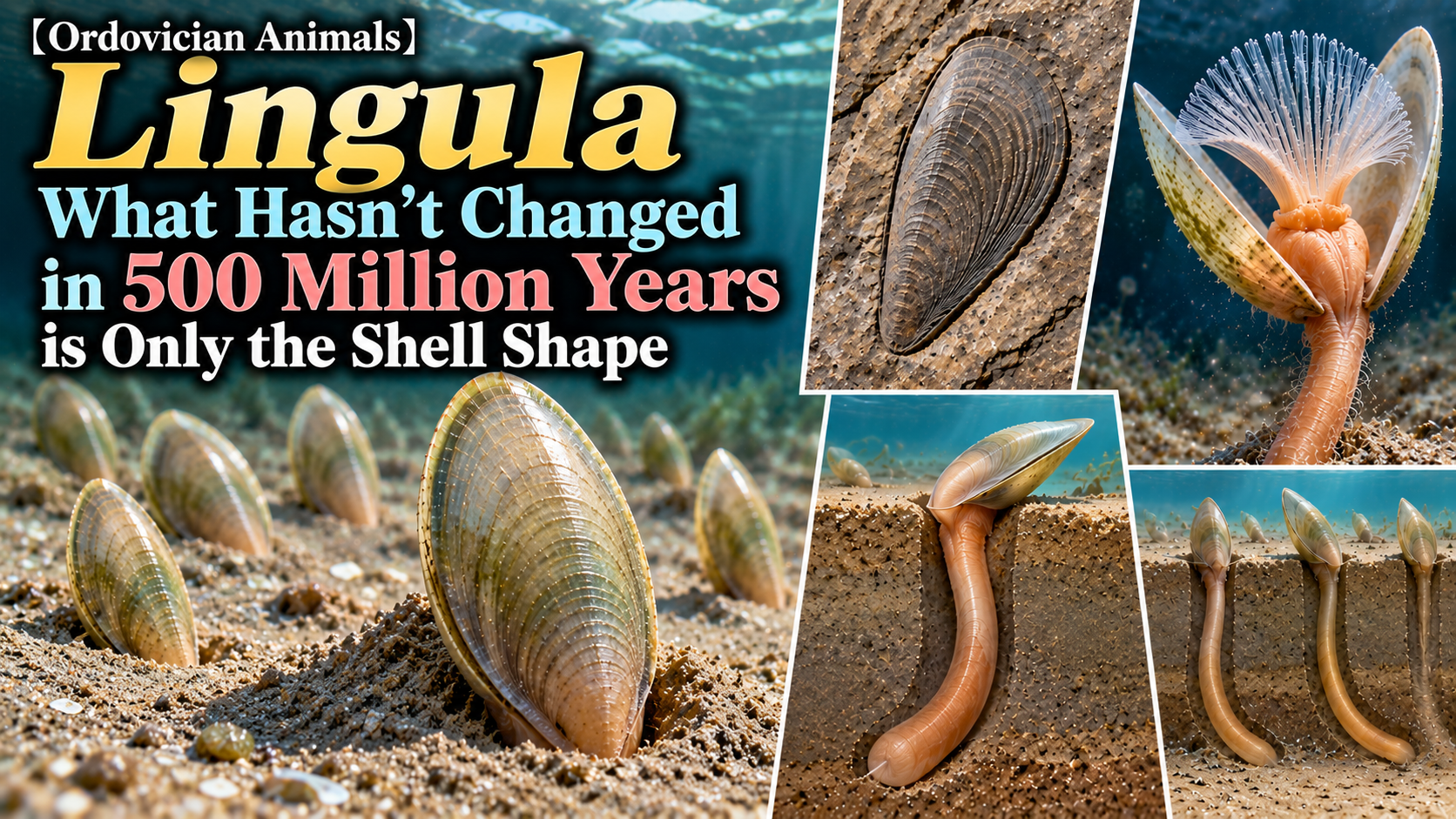
Lingula is a brachiopod. With its two shells it looks like a clam, but it belongs to a completely separate group of animals whose body plan differs from that of clams and mussels at the most basic level. Because shells of the same shape turn up in rocks more than 500 million years old, it has appeared in field guides and textbooks as the classic “living fossil.” In 2003, however, a paper was published rejecting that label altogether.
Appearance and Way of Life
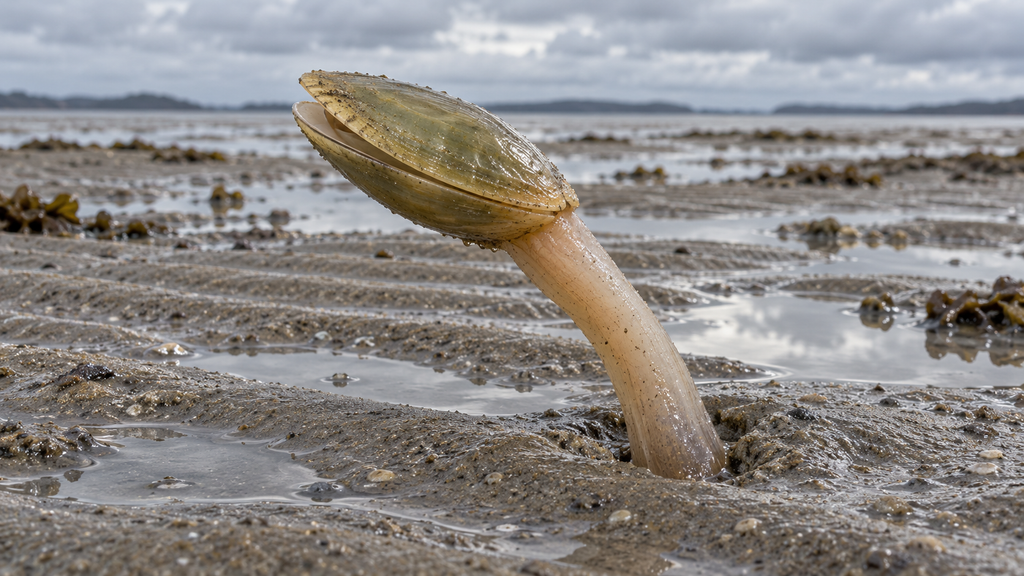
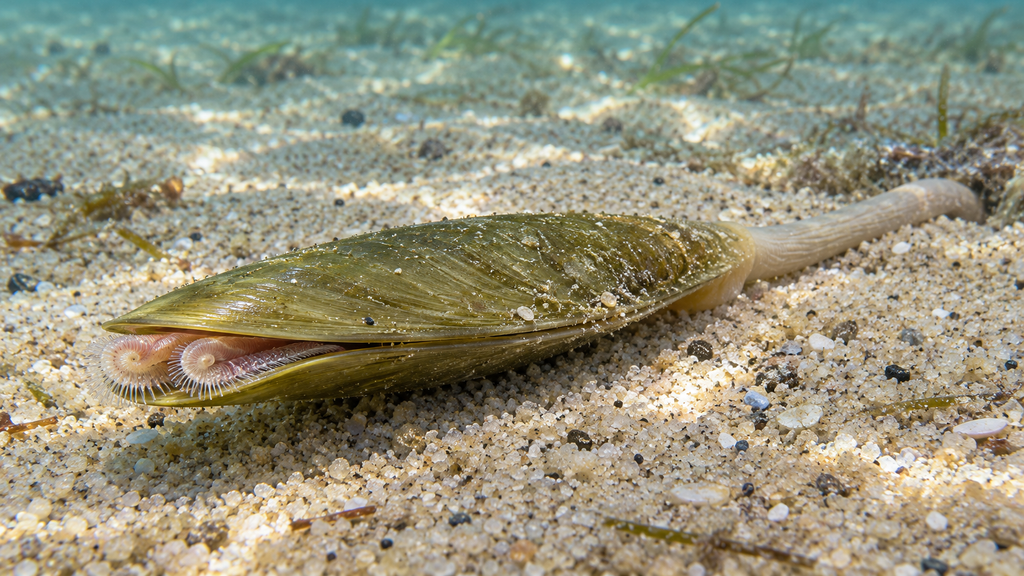
The shell is a long, narrow oval made of two thin, greenish, semi-translucent plates lying one on top of the other. From the rear of the shell extends a fleshy stalk, called the pedicle, about as long as the shell or longer. The Japanese name Shamisengai comes from the resemblance to a shamisen: the shell is the body of the instrument and the pedicle its neck. The scientific name Lingula means “little tongue,” after the outline of the shell.
The decisive difference from a bivalve is where the shells sit. A bivalve’s shells lie on the left and right sides of its body; a brachiopod’s lie on its back and belly. The material is different too. Most brachiopods and molluscs build shells of calcium carbonate, but Lingula’s shell is built from many layers of calcium phosphate, chitin, and organic material, giving it a supple, slightly elastic structure. Calcium phosphate is the same substance found in vertebrate bones and teeth, and it is an unusual choice for a shell.
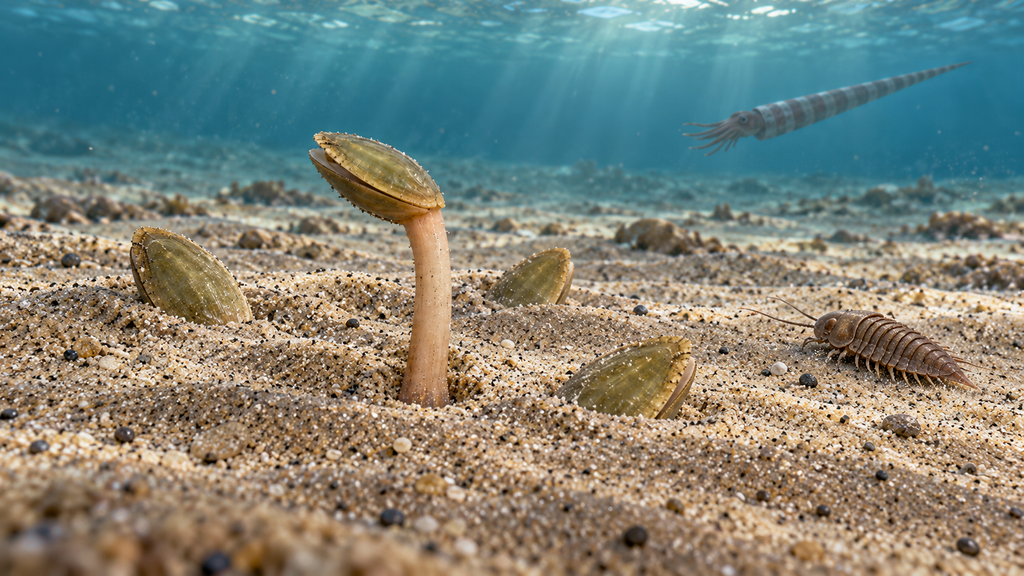
Lingula lives by digging a vertical burrow in the sand or mud of tidal flats and shallow seas. It sits in the burrow shell up and pedicle down, with only the tip of the shell near the surface of the sediment. When the shell opens slightly, an organ called the lophophore, a crown of ciliated tentacles inside the shell, draws in seawater and filters out tiny particles of organic matter for food. When threatened, the animal contracts its pedicle and pulls itself deeper into the burrow. Fishermen on the Ariake Sea look for the oval mark the shell leaves on the sand and dig each animal out by hand.
The name brachiopod, “arm-foot,” comes from an early misreading of the lophophore as a pair of arms. It is neither a leg for walking nor an arm for grasping.
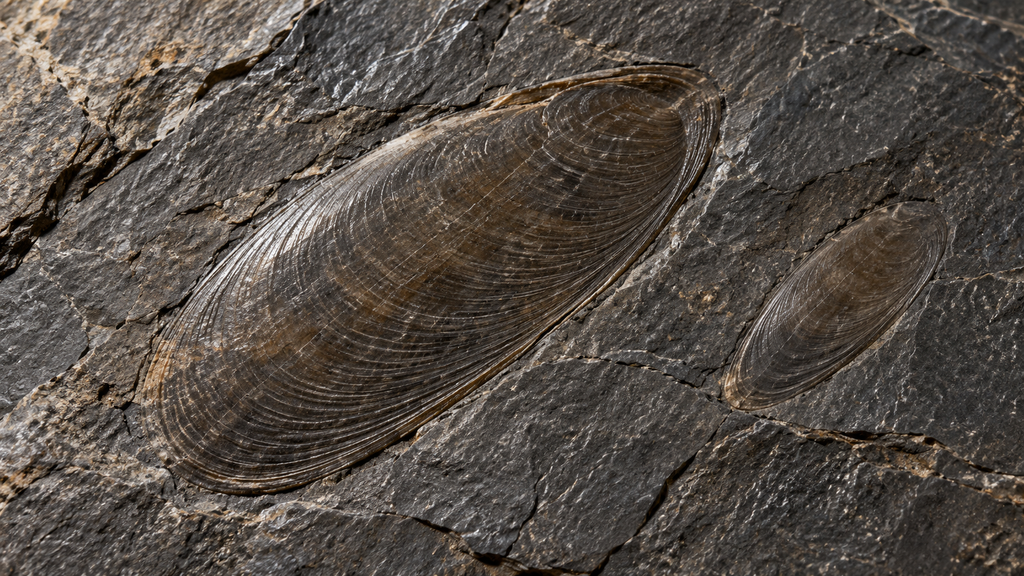
This body plan is extremely old: Lingula-type brachiopods are already present in Cambrian rocks. By the Ordovician, brachiopods had become the most numerous of all shelled animals, carpeting the seafloor. For the burrowing Lingula-type forms, fossil burrows preserved in the sediment and specimens found standing upright in their burrows show that they were living in the same way then as they do now.
Lingula has a long association with Japan. When the American zoologist Edward S. Morse came to Japan in 1877, his purpose was to study this animal; it was during that stay that he discovered the Omori shell mound. Around the Ariake Sea, Lingula anatina is known as mekaja and has long been simmered in soy sauce or added to miso soup, but its numbers have fallen and it is no longer an everyday food.
Where the “Living Fossil” Label Came From
The person who made Lingula the emblem of an unchanging animal was Charles Darwin. In On the Origin of Species (1859), Darwin wrote that some of the animals in the oldest fossil-bearing rocks, such as Nautilus and Lingula, do not differ much from living species. The Cambrian had not yet been defined as a period, so Darwin called them “Silurian” animals. On the strength of this passage, Lingula came to be presented as the animal that had kept its form longer than any other on Earth.
The evidence was the shape of the shell. The long, tongue-shaped shells found in Cambrian and Ordovician rocks are indistinguishable from those of living Lingula. So the ancient fossils and the living species were placed in the same genus, Lingula, and the genus was said to have persisted for more than 500 million years.
A Newcomer as a Genus
In 2003, the French brachiopod specialist Christian C. Emig published a paper that rejected this view head-on. His point was that when the fossils assigned to Lingula purely on the outline of the shell are re-examined one by one, none that actually show the defining features of the genus can be confirmed from rocks older than the latest Cretaceous or earliest Paleogene. The older fossils that had been called “Lingula” differ in the muscle scars on the inside of the shell and in other details, and were reassigned to other genera such as Lingulella and Dignomia. What runs back to the Cambrian, Emig concluded, is a group above the level of the family Lingulidae, not the genus Lingula itself.
The paper made clear that the “400 million years” or “500 million years” attached to Lingula was not the age of a genus but the age of a way of life: a long, narrow shell built for burrowing. Different genera with the same shell shape had replaced one another while carrying on the same existence.
In 2015, a Japanese team led by the Okinawa Institute of Science and Technology Graduate University (OIST) sequenced the genome of Lingula anatina collected at Amami Oshima. The genome turned out to be changing actively, with expansions of gene families and other alterations, showing that an unchanging appearance and an unchanging genome are two different things. The same study found that Lingula’s method of building a calcium phosphate shell arose independently of vertebrate bone, and that in its ancestry Lingula sits close to the molluscs.
The context in which Darwin named Lingula was, in fact, not that of a specimen of changelessness. The example appears in an argument that if animals resembling living ones were already present in the oldest rocks, a still longer stretch of evolutionary time must have come before them. Its use as evidence that Lingula never changed came from the way the passage was read later.

Related products
You can find books and products related to this article on Amazon.
If you buy through the links above, this blog may earn a commission.
Sources
‘Living fossil’ genome decoded — OIST press release (EurekAlert!, September 18, 2015)
Lingula anatina — Jizakanavi Fukuoka, Fukuoka Prefecture (in Japanese)


コメント